US Central Command accused Iran of an egregious ceasefire violation after launching a ballistic missile toward Kuwait at approximately 10:17 p.m. ET on May 27, according to a statement issued on May 28. The missile was successfully intercepted by Kuwaiti air defense forces before it could reach its target, CENTCOM reported. The launch followed Iranian deployment of five one-way attack drones near the Strait of Hormuz that US forces intercepted, with a strike on a ground control site in Bandar Abbas preventing a sixth.
The CENTCOM statement linked the ballistic missile firing directly to the preceding drone launches, describing the combined actions as part of a pattern of Iranian aggression in the region. “This egregious ceasefire violation by the Iranian regime occurred hours after Iranian forces launched five one-way attack drones that posed a clear threat in and near the Strait of Hormuz,” the command posted on X. US forces neutralized all five drones while operating alongside regional partners, the statement added.
American personnel conducted a strike against the Iranian ground control station in Bandar Abbas to block the additional drone from launching, according to the CENTCOM announcement. The command detailed that this action formed part of its immediate response to the threats that unfolded on the evening of May 27. Kuwaiti defenses handled the missile component independently as the events cascaded, CENTCOM noted.
US forces together with their allies maintained a heightened state of alert throughout the incidents, the command said. CENTCOM affirmed that its personnel would continue defending American interests and those of partners against Iranian actions that it characterized as destabilizing. The statement underscored coordination across the Gulf as essential to the successful interceptions that prevented any impact on the ground.
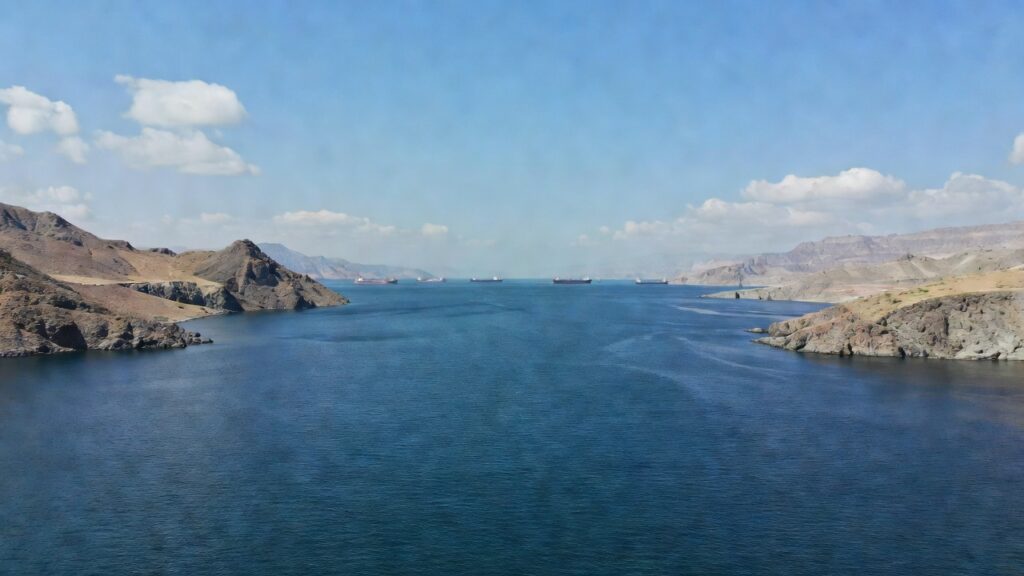
The Strait of Hormuz has figured prominently in these exchanges given its strategic role in global energy flows. US Energy Information Administration data places average daily oil transit through the waterway at 20.9 million barrels in the first half of 2025, equivalent to roughly 20 percent of global petroleum liquids consumption. An EIA assessment found that the volume also represents about one-quarter of total seaborne traded oil, amplifying the significance of any reported threats in the area.
The missile and drone events tested a temporary ceasefire between the United States and Iran that had been arranged after earlier military exchanges, reports from The Hill indicated on May 28. Arab Times reported that Iran had not issued an immediate response to the CENTCOM accusations as diplomatic efforts continued to preserve the agreement. Similar Iranian drone activity near the strait occurred again in mid-June, when US forces intercepted multiple additional one-way systems, a subsequent CENTCOM release stated.