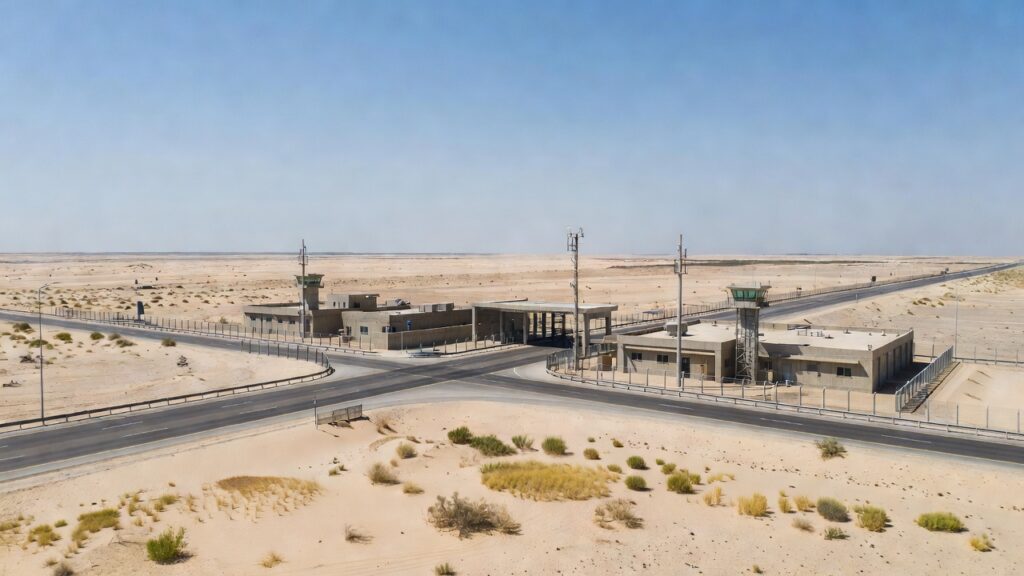
The General Administration of Customs reported that officers at Nuwaiseeb Port identified a suspicious vehicle during standard screening procedures and proceeded with an in-depth physical inspection. This search uncovered 481 cartons of cigarettes distributed across multiple fabricated compartments designed to avoid detection. Authorities immediately impounded the vehicle and referred the matter to the General Department of Criminal Investigation to pursue legal measures against the individuals involved. The incident reflects the sophisticated techniques increasingly used in attempts to move restricted goods across Kuwait’s land borders.
Inspectors at the port relied on a combination of visual examination and scanning equipment to expose the anomalies, although the announcement from the General Administration of Customs did not detail the exact sequence of detection. The modifications extended to nearly every major interior section, transforming the vehicle into a mobile concealment unit that required extensive disassembly to fully inventory the contraband. Such adaptations have become a recurring feature in smuggling cases at this particular crossing, prompting customs teams to maintain heightened alertness during peak traffic periods.
According to a Kuwait Times report, inspectors at the same Nuwaiseeb facility foiled a comparable attempt in August 2025 by locating 620 cartons of cigarettes hidden inside vehicle tires after an X-ray scan flagged irregularities in the wheels. Times Kuwait separately documented a June 2025 seizure of 323 cartons concealed within food containers at the port, illustrating the diverse concealment strategies employed. These examples from the General Administration of Customs’ recent operations demonstrate both the persistence of smuggling networks and the consistent results achieved through layered inspection protocols at key entry points.
Nuwaiseeb Port functions as Kuwait’s primary land border crossing with Saudi Arabia, handling substantial volumes of commercial and private traffic that can obscure illicit movements. The General Administration of Customs, operating under the Ministry of Finance, has responded with sustained enhancements to its detection infrastructure across all ports. Earlier patterns at the site, drawn from official summaries of prior campaigns, show that cigarette shipments frequently surface among the most common targets due to prevailing tax structures and market demand.
The latest interception adds to a series of actions that have disrupted outbound smuggling routes, with the seized cartons now held pending completion of the criminal probe. Coordination between customs officers and investigative units ensures that potential links to larger networks receive full scrutiny beyond the immediate find. Similar cases continue to surface at regular intervals, keeping anti-smuggling resources actively deployed along the southern frontier.