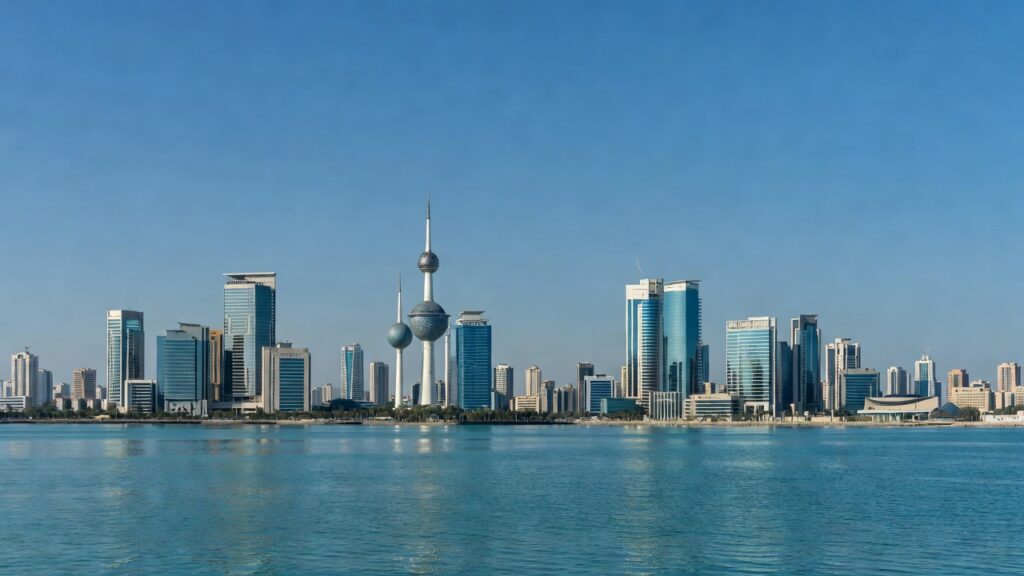
The Kuwaiti Armed Forces said they successfully intercepted two hostile ballistic missiles and 13 drones that entered the country’s airspace early Wednesday. Ministry of Defense spokesperson Col. Staff Saud Al-Otaibi stated that forces remain on continuous operational readiness to safeguard national security and the safety of citizens and residents. The Ministry of Electricity, Water and Renewable Energy reported that debris from the interceptions damaged several overhead power lines although electricity services continued without interruption.
The Kuwaiti Ministry of Foreign Affairs condemned the Iranian action as a violation of sovereignty and international law that undermines de-escalation efforts. The ministry reaffirmed Kuwait’s legitimate right to take all necessary measures to protect its security while expressing full solidarity with Bahrain against the repeated attacks. It stressed the need to respect UN Security Council Resolution 2817 as the basis for regional stability.
GCC Secretary-General Jasem Al-Budaiwi strongly condemned the strikes on Kuwait and Bahrain as blatant violations of sovereignty, international law and the UN Charter. Al-Budaiwi said the actions undermine international and regional initiatives aimed at promoting peace while reaffirming the council’s full solidarity with both states. Arab League Secretary-General Nabil Fahmy renewed his condemnation of the Iranian attacks targeting Gulf states and warned that they threaten regional security.
Qatar, Oman, Egypt and Jordan joined in denouncing the Iranian actions with the Omani Foreign Ministry highlighting risks to maritime safety, international trade and global energy supplies from escalating tensions. Lebanese President Joseph Aoun and Prime Minister Nawaf Salam expressed solidarity with the Gulf states and called for restraint along with diplomacy. EU High Representative Kaja Kallas described Iran’s attacks on Bahrain and Kuwait as unacceptable in a post on X while noting violations of commitments made under a memorandum of understanding regarding the Strait of Hormuz.
US President Donald Trump warned in remarks delivered in Ankara, Turkey, on Wednesday that the United States was preparing for another night of strikes against Iran following the attacks. “We hit them very hard last night,” Trump said when asked about a possible return to hostilities. He indicated the interim ceasefire was over while still allowing for continued negotiations. The US military’s Central Command stated that American forces had launched strikes to impose heavy costs for targeting commercial shipping in an international waterway.
A similar spate of Iranian attacks on shipping and retaliatory strikes took place last month according to regional accounts. US Energy Information Administration figures show that total oil flows through the Strait of Hormuz averaged 20.9 million barrels per day in the first half of 2025 or about 20 percent of global petroleum liquids consumption. Incidents involving a Saudi crude oil tanker and a Qatari LNG carrier in the waterway have added to concerns over energy security. Iranian Parliament Speaker Mohammad Bagher Qalibaf wrote on X that the era of bullying and extortion is over.
Kuwait’s Permanent Representative to the United Nations Nasser Al-Hayen told the 62nd session of the UN Human Rights Council that a Kuwait-sponsored resolution reflected growing international concern over destabilizing regional activities. Al-Hayen condemned the repeated missile and drone attacks on civilian facilities in Kuwait and Bahrain as serious violations of international law and the UN Charter. He urged Iran to immediately cease hostile actions against neighboring states, comply with international maritime obligations and respect the sovereignty of states as the foundation for lasting regional peace and stability.