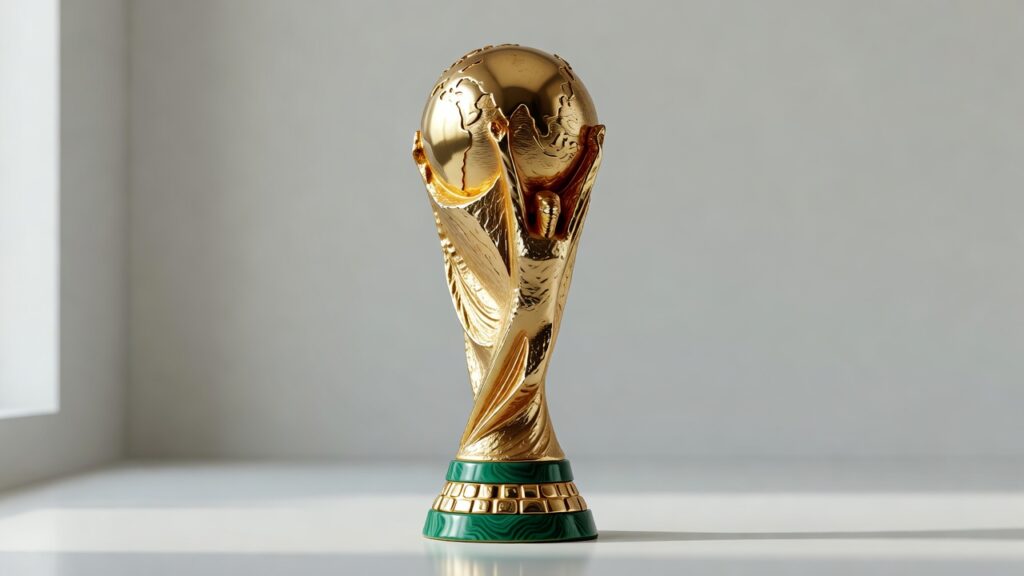
The trophy Gazzaniga designed features two stylized figures spiraling upward to hold aloft a globe representing the Earth, a form intended to capture the athlete’s physical struggle, the ecstasy of fans and the pinnacle of victory in one object. According to the Associated Press, the sculptor developed the concept in his Milan studio after FIFA opened a competition in the wake of Brazil’s third title in 1970, which allowed that nation to keep the original Jules Rimet Trophy permanently. His son Giorgio Gazzaniga, who was a teenager during the design process, told the news agency that his father produced numerous sketches before settling on the DNA-like spirals rising toward the orb. The elder Gazzaniga worked for the G.D.E. Bertoni company and had already produced other major trophies including the UEFA Cup and European Super Cup before his death in 2016.
FIFA Museum records show that more than 50 proposals from around the world were submitted for the new prize, yet only Gazzaniga provided a complete physical model that allowed judges to evaluate both its aesthetics and narrative. The design was selected and first presented at the 1974 tournament in West Germany, where Franz Beckenbauer became the initial captain to lift it. A FIFA historical overview states the trophy stands 36.8 centimeters tall, weighs 6.175 kilograms and is cast in solid 18-carat gold using the ancient lost-wax technique, though it remains hollow inside. Its base consists of two malachite rings that symbolize the pitch, with inscriptions of every winning team since 1974 engraved on panels in their native languages.
The preceding Jules Rimet Trophy, introduced for the inaugural 1930 World Cup and named for the tournament founder, depicted the Greek goddess Nike atop a marble base. FIFA data indicate it was stolen in 1966 ahead of the England-hosted tournament but recovered days later by a dog named Pickles in a London suburb, only to be taken again from Brazilian federation offices in 1983 and never found. The Associated Press noted that the original is widely believed to have been melted down for its precious metal content. Gazzaniga’s creation replaced it permanently after the 1970 edition, with the winner’s captain receiving a replica while the genuine article returns to FIFA headquarters in Zurich between tournaments.
Giorgio Gazzaniga explained the symbolism in remarks quoted by the AP, saying “It is the world, which stands above all else; there is the athlete’s exertion, there is the athlete’s movement within the metal, and the athlete’s body is rough, rugged, for it has suffered, had to fight, and struggled for victory.” He added that “That victory is expressed through arms that resemble the wings of Victory, capturing not only the athlete’s triumph but also the jubilation of the fan.” The family has maintained the sculptor’s original workspace on the outskirts of Milan, preserving drawings, the prototype submitted to FIFA and a wax cast for public viewing. A FIFA Museum exhibit has featured the Gazzaniga family, including grandson Tomaso Bonazzi, to share personal insights into the artist’s legacy.
Captains from winning teams have raised the trophy in memorable moments across 13 editions since 1974, beginning with Beckenbauer and continuing through Lionel Messi in 2022, according to official FIFA tallies. The Associated Press report highlighted that the piece remains the most coveted prize in international soccer, displayed at the sculptor’s former warehouse in Pioltello, Italy, in its original plaster form. Subsequent winners including Diego Maradona in 1986 and Iker Casillas in 2010 have added to its lore, each lifting the 18-carat gold sculpture before tens of thousands of spectators. The design’s enduring visual impact stems from its balance of sculptural beauty and universal symbolism of human achievement, as noted in multiple FIFA retrospectives.