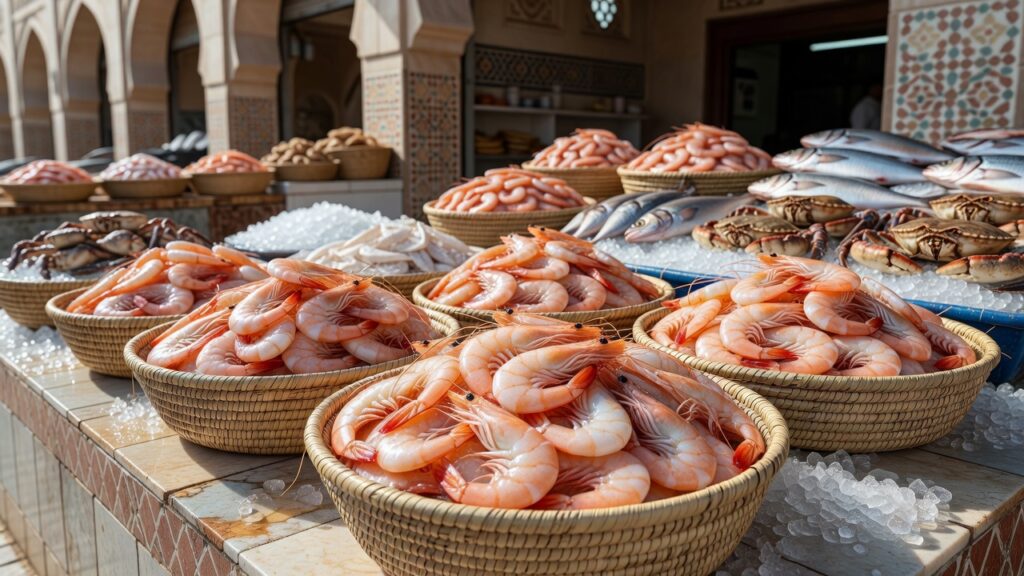
The head of the Fishermen’s Union reported that Kuwaiti fishermen delivered 13.8 tons of local shrimp known as Um Na’eera to markets on the first day of the season that began August 1. Supplies on the second day reached an additional volume reflected in 442 baskets distributed across key outlets, following an initial 600 baskets split between Al-Kout Market and Sharq Market. Abdullah Al-Sarheed noted that availability is set to increase further as more vessels join the effort in the coming days. The union head highlighted that this strong start follows the staggered openings of other fisheries earlier in the summer, setting the stage for a busy second half of the year across multiple species.
Al-Sarheed detailed that local shrimp prices opened in the range of 33 to 40 Kuwaiti dinars per basket. He pointed to upward movement in mullet prices, with baskets now commanding between 75 and 160 dinars depending on daily supply levels. Silver pomfret prices have eased considerably, falling from 24 dinars per kilogram to around 9 dinars per kilogram while basket rates settled between 70 and 100 dinars. These fluctuations reflect the interplay between fresh local catches and consistent market arrivals.
The Fishermen’s Union head explained that the mullet season launched on July 1 while silver pomfret fishing commenced on July 16, with the shrimp window completing the trio of major summer fisheries. Al-Sarheed stated that local markets currently hold sufficient quantities of seafood at generally reasonable prices. Both domestic production and imported products contribute to this balance according to his assessment.
Imported fish continues to reach Kuwaiti shores despite regional tensions, Al-Sarheed said, bolstering overall food security and helping maintain year-round availability. He observed that broader conditions in the Gulf have at times constrained fishing activity across several countries, leading to variable supply and price movements in recent periods. The union head stressed the importance of these imports in supplementing local efforts during the seasonal cycles.
A Food and Agriculture Organization assessment found that Kuwait’s shrimp landings have averaged roughly 1,740 tonnes per year over the past decade while total capture fisheries production has held steady between 4,000 and 4,500 tonnes annually. The figures underscore the sector’s role in national protein supply even as aquaculture development gains ground through government hatchery programs. Such baseline data places the current season’s early volumes in longer-term perspective for an industry that supports both commercial operators and household consumption.
Al-Sarheed indicated that the Fishermen’s Union monitors daily market inflows closely to track progress against seasonal expectations. His office continues to coordinate with participants to ensure orderly distribution at the main seafood outlets. These efforts align with established patterns that have governed Kuwait’s fishing calendar for years.