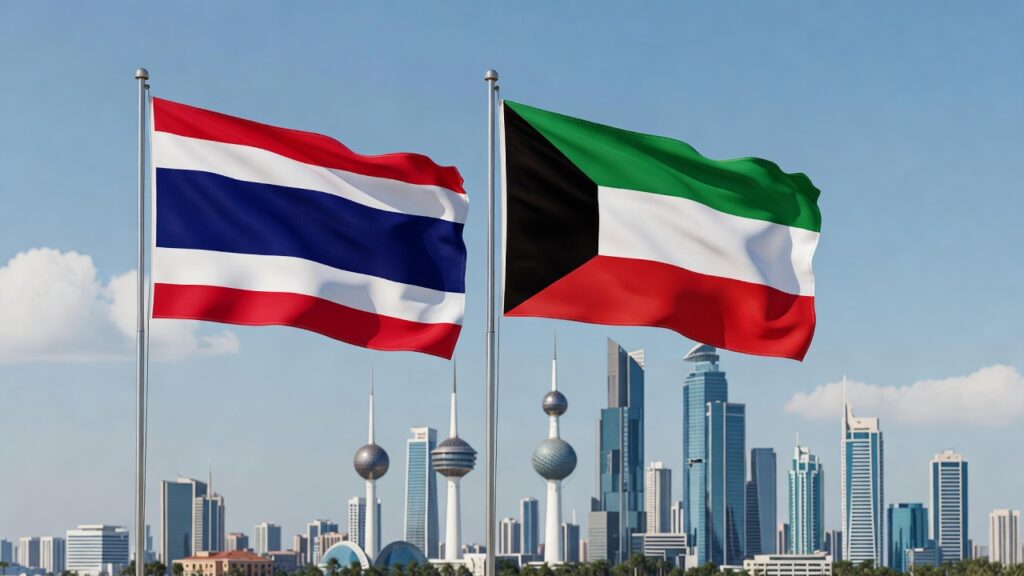
The Thai ambassador to Kuwait Songchai Chaipatiyut disclosed that the bilateral relationship is entering a new phase of development rooted in 63 years of mutual trust and respect. According to the envoy, both sides seek to move beyond traditional trade ties toward a strategic partnership that aligns with Kuwait Vision 2035, which official government publications describe as a plan to transform the country into a regional financial and commercial hub while diversifying away from oil dependence. He noted that this evolution would cover food security, investment, healthcare, education and tourism while creating benefits not only for citizens of the two countries but for global stability as well.
Songchai Chaipatiyut reported that trade volume between the nations reached about $947 million in 2025, with Thailand shipping automobiles, auto parts, wood products, precious stones and jewelry to Kuwait. United Nations COMTRADE data places Kuwait’s exports to Thailand at roughly $43 million in 2025, consisting mainly of refined petroleum products, crude oil and chemical goods. The ambassador asserted that the real opportunity lies in shifting from a buyer-seller dynamic to a value-added partnership capable of delivering sustainable growth for both economies.
The envoy stated that bilateral investment flows remain limited yet hold considerable potential, particularly in areas that support Kuwait Vision 2035 priorities such as food processing, agribusiness, healthcare, tourism and hospitality. A United Nations national commitments overview links the Kuwaiti development plan to sustainable development goals that emphasize food security and responsible production. Songchai Chaipatiyut added that Thailand’s Board of Investment provides incentives, modern infrastructure and access to the ASEAN market, and that his embassy is engaging the Kuwait Direct Investment Promotion Authority as well as the Kuwait Investment Authority to explore new opportunities in both directions.
Two years after the first political consultation, the ambassador is coordinating with Kuwaiti authorities to organize a second meeting in Kuwait while advancing discussions between the foreign ministries. He expressed interest in expanding cooperation across government entities and advancing negotiations on bilateral agreements to create a supportive environment for joint projects. According to the envoy, five direct flights operate weekly between the countries, with efforts underway to add routes to destinations including Phuket and Chiang Mai.
Songchai Chaipatiyut highlighted Thailand’s medical tourism sector, which welcomed more than 580,000 international visitors in 2025 and features 61 hospitals accredited by the Joint Commission International. The ambassador noted that many patients from the Gulf region, including Kuwait, travel there for treatment each year, positioning healthcare as a natural pillar of expanded ties. He pointed out that Kuwaiti citizens enjoy visa-free entry for tourism or short-term business and can utilize an e-Visa system launched in January 2025.
Thailand received around 87,000 visitors from Kuwait in 2025, an increase from 44,000 in 2022 and equivalent to about 5.8 percent of Kuwait’s citizen population, the ambassador reported. Roughly 1,080 Thai citizens reside in Kuwait, including those married to locals, and the envoy thanked Kuwaiti authorities for ensuring their safety amid regional monitoring that includes developments around the Strait of Hormuz. Songchai Chaipatiyut welcomed the recent agreement between the United States and Iran while urging respect for international law to protect civilians and maintain supply chains.