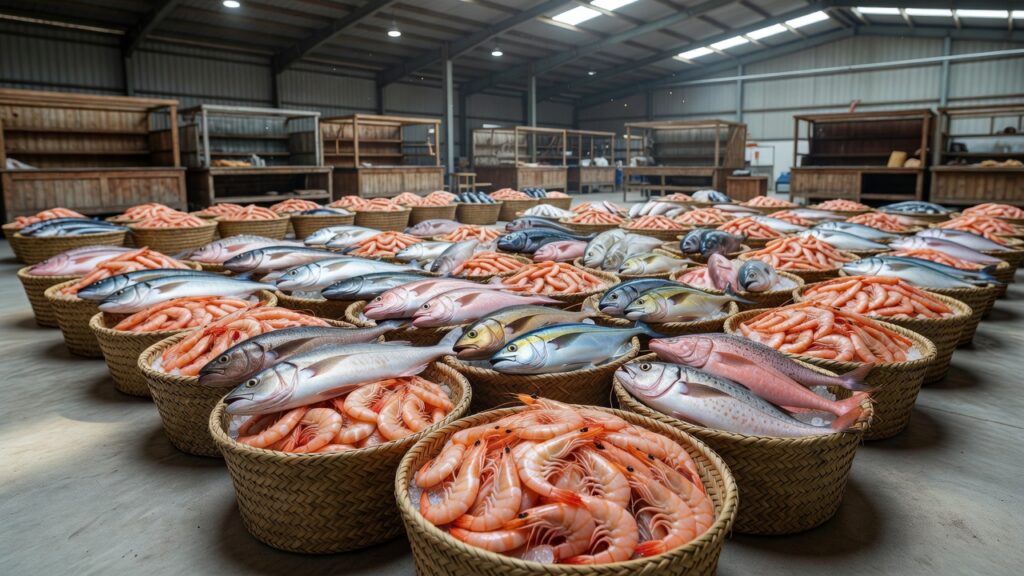
The Ministry of Commerce and Industry intensified inspections of fish and shrimp markets this week under directives from Minister Osama Boodai, dispatching teams to the Al-Kout market in Ahmadi Governorate to monitor auctions and enforce regulations. Faisal Al-Ansari, director of the Commercial Control Department, reported that inspection staff had been on site since early morning to oversee sales procedures and confirm compliance. Al-Ansari added that more than 200 baskets of shrimp changed hands at the auction with prices between KD 40 and KD 45 per basket while describing overall supplies as plentiful and current price levels as affordable for consumers.
Hamoud Al-Hamdi, supervisor of Shift A at the East Market, stated that 826.317 tons of combined local and imported seafood had reached Kuwait markets during the roughly 40 days since the local fishing season opened on July 1. The ministry’s data break down the total into 201.450 tons of local fish and 58.367 tons of local shrimp landed in the first nine days of August together with 449.800 tons of imported fish and 116.700 tons of imported shrimp across the period. These volumes have kept product readily available yet failed to ease prices from levels seen before the season began, according to Al-Hamdi.
Restricted fishing zones explain much of the price stability because current rules limit operations to waters about 12 miles from shore and prohibit entry into deeper areas amid regional geopolitical tensions. The constraints have kept local catches modest and prevented the surplus that might otherwise push costs lower for shoppers. Al-Hamdi identified the limited domestic harvest as the leading factor behind the market’s resistance to price declines.
Widespread use of deferred-payment sales has accelerated the drawdown of available stock, with restaurants, companies and vendors buying large quantities on credit and leaving little inventory to exert competitive pressure. This system reduces the cushion of supply that normally encourages discounting once imports and local landings accumulate. The East Market supervisor called for expanded use of K-Net electronic payments to improve traceability, price monitoring and overall transparency in transactions.
Auctions of imported seafood add further upward pressure because bidding among buyers frequently raises the entry cost before the product reaches retail shelves. Since these imports compete directly with local catches, higher import prices help anchor the broader market rate at elevated levels. Al-Hamdi suggested that regulators reconsider mandatory auctions for imported fish and shrimp, allowing direct sales under continued oversight of invoices, origins and safety standards to foster competition.
United Nations COMTRADE figures show Kuwait imported meat, fish and seafood preparations valued at nearly $216 million in 2025, illustrating the country’s structural dependence on foreign supply to meet demand. That reliance has prompted the ministry to balance sustainability measures, including seasonal fishing closures that protect stocks, against the need for steady market availability. The latest supply data and inspection campaign underscore the ministry’s continued emphasis on consumer protection and regulatory compliance in the seafood sector.