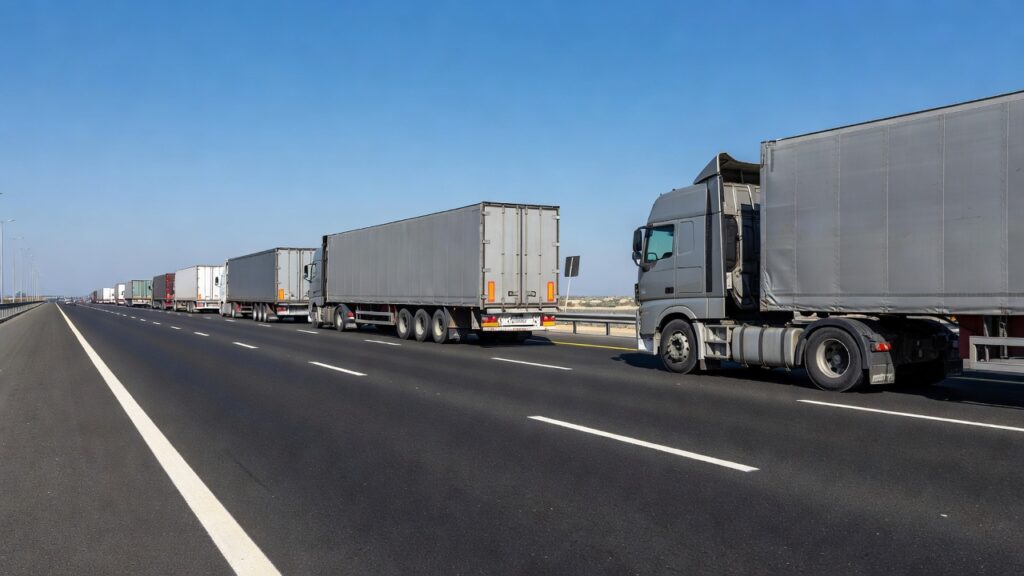
The Ministry of Interior said in a statement that Sheikh Fahad chaired the session with relevant government bodies and representatives of transport companies in the presence of Public Works Minister Dr Noura Al-Mashaan. Discussions centered on a mechanism to fine companies or truck owners as soon as overloading is proven to have damaged a road. This would allow repairs to proceed without waiting for court proceedings to finish.
Sheikh Fahad reviewed a presentation that detailed how overloaded trucks contribute to road deterioration and outlined methods to curb the problem. Proposals included setting construction standards for heavy vehicle lanes that align with legally permitted weights. Officials also examined technical requirements for trucks and their loads to reduce pavement stress.
Participants considered tougher penalties for exceeding weight limits, failing to use designated truck lanes and neglecting brake and tire maintenance. The meeting weighed the possibility of deporting drivers who commit serious violations under existing regulations. Al-Mashaan joined the deliberations on protecting the road network from avoidable harm.
These talks build on the weigh-in-motion system the Public Works Ministry began rolling out in July on the Seventh Ring Road. The technology automatically identifies overloaded trucks traveling at normal speeds and links electronically to interior ministry enforcement systems. Officials have said the network will help preserve infrastructure and lower future maintenance costs.
Transport firms and state contractors took part in identifying reasons for overloading and potential solutions. Ideas included organizing weighing station locations and monitoring loads when tractors are changed. The group drew on Gulf experiences to suggest suitable routes for heavy vehicles.
The meeting highlighted the need for collaboration between government entities and transport companies to safeguard the road network. The Public Works Ministry has previously noted that overloaded trucks cause subsidence, potholes and other damage costing the state millions of Kuwaiti dinars annually. By implementing faster enforcement and technical standards, authorities expect to extend road life and reduce repair expenditures.