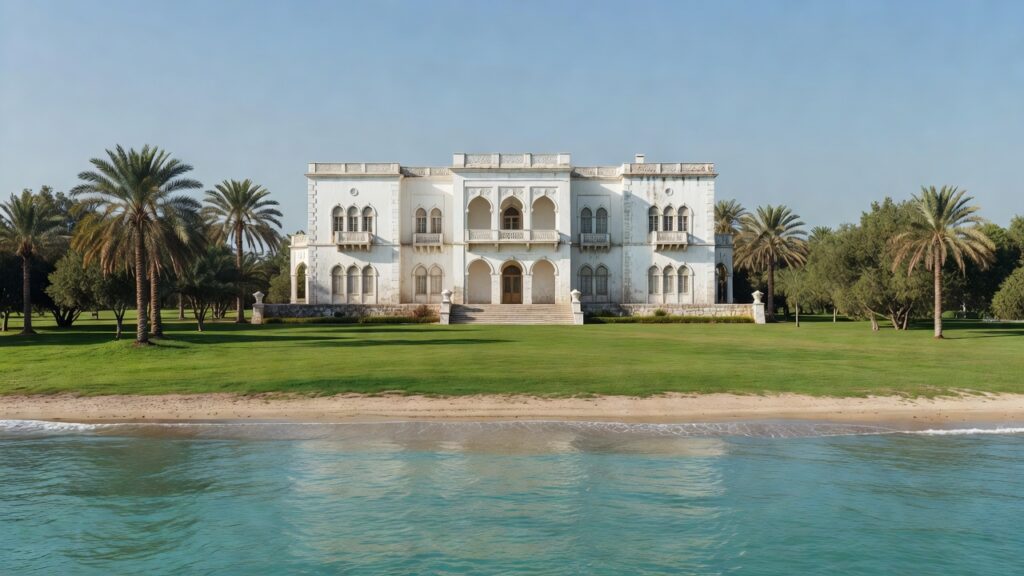
British Ambassador Qudsi Rasheed outlined the strength of bilateral relations during a reception hosted by the UK Embassy in Kuwait on November 18, 2026, that coincided with celebrations for King Charles III’s birthday and the 90th anniversary of the ambassador’s historic residence. Rasheed, who took up his post in September 2025 according to a Foreign, Commonwealth and Development Office announcement, described the ties as rooted in mutual trust, friendship and shared cooperation that have withstood regional shifts and challenges over decades. The event drew Kuwaiti Foreign Minister Sheikh Jarrah Jaber Al-Ahmad Al-Sabah along with heads of diplomatic missions, representatives of international organisations, government officials and business figures.
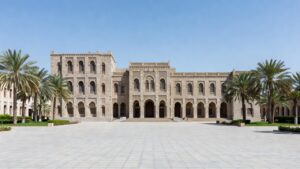
In his address at the residence, Rasheed stated that the building, constructed in 1935, stands as a living witness to the depth of historical relations between the two countries and embodies a partnership that has evolved across generations. The ambassador recalled how the residence originated in the era of Colonel Harold Dickson, the British political agent whose close personal relationship with the late Sheikh Ahmed Al-Jaber Al-Sabah helped establish foundations of trust and collaboration. Rasheed noted that Kuwait’s independence in 1961 marked a pivotal transition, with Sir John Richmond moving from the role of last political resident to the first British ambassador to the newly sovereign state.
Rasheed pointed to the United Kingdom’s supportive stance during Iraq’s 1990 invasion of Kuwait, when the British flag remained raised over the residence throughout the months of occupation, as evidence of the partnership’s durability. The ambassador praised the continued military and security cooperation between Kuwait and the UK that has contributed to stability amid recent regional tensions, including coordination on visits and joint efforts. KUNA reported that Rasheed emphasised the relations have remained firm despite transformations in the region over past decades.
A report published by Al Jarida on the building’s heritage detailed that the residence was the first structure in Kuwait built with reinforced concrete and cement, designed by engineer Robert Busle from the British government in India with input from Dickson to face the sea. Construction incorporated Scottish iron frameworks, bricks from Basra and fresh water from the Shatt al-Arab to avoid corrosion, creating a blend of English and Middle Eastern architectural styles on a plot exceeding 12,000 square metres in the Dasman area. The residence replaced an earlier, inadequate political agency house in the Sharq district and remains the only British-owned property retained in Kuwait after independence.
Diplomatic records show formal UK-Kuwait relations trace to a 1899 agreement that established Kuwait as a British protectorate to guard against external threats, a framework that lasted until the 1961 independence that elevated ties to equal state partnership. The UK played a key role in the 1991 liberation of Kuwait as part of an international coalition, an episode Rasheed referenced in his remarks as reinforcing long-term bonds. The Foreign, Commonwealth and Development Office lists a succession of ambassadors, with Rasheed succeeding Belinda Lewis in the position.
Rasheed told those gathered that the personal friendships of early years, such as between Dickson and Kuwaiti rulers, facilitated practical advances in governance and security that have carried forward into modern defence and economic cooperation. The ambassador added that high-level engagements and training initiatives have sustained the alliance through periods of geopolitical strain. The reception provided a platform to reflect on these shared elements of history while looking toward continued collaboration.