KNETCO and Skyports Infrastructure announced a strategic memorandum of understanding on August 16 to collaborate on developing advanced air mobility infrastructure across Kuwait. Under the agreement Skyports will function as the local specialist partner handling vertiport development along with joint market cultivation stakeholder coordination and assessment of additional commercial prospects. The alliance unites KNETCO’s proficiency in digital communications and critical infrastructure projects with Skyports’ international track record in designing and managing vertiport facilities for electric vertical takeoff and landing aircraft while targeting the full ecosystem required for viable operations.
The companies’ statement highlighted that successful commercial rollout of eVTOL services hinges on an extensive supporting network rather than the aircraft alone. Essential components encompass helipads integrated with charging stations power management systems ultra-reliable communication links digital booking and tracking platforms dedicated operations hubs and comprehensive safety plus regulatory protocols. Such groundwork forms the core of the new aviation economy where the majority of long-term value is expected to accrue from infrastructure services energy solutions software and operational expertise rather than vehicle production.
Morgan Stanley research has projected the global advanced air mobility sector could attain 1.5 trillion dollars annually by 2040 while a Market Research Future assessment forecasts expansion from 30 billion dollars in 2025 to 224 billion dollars by 2035 at a compound annual growth rate of 22 percent. These outlooks explain the intense regional interest in early positioning for what many view as a transformative transport mode. Kuwait’s move seeks to capture a share of this expanding market by prioritising the enabling infrastructure that will allow future eVTOL routes to integrate seamlessly with existing transport systems.
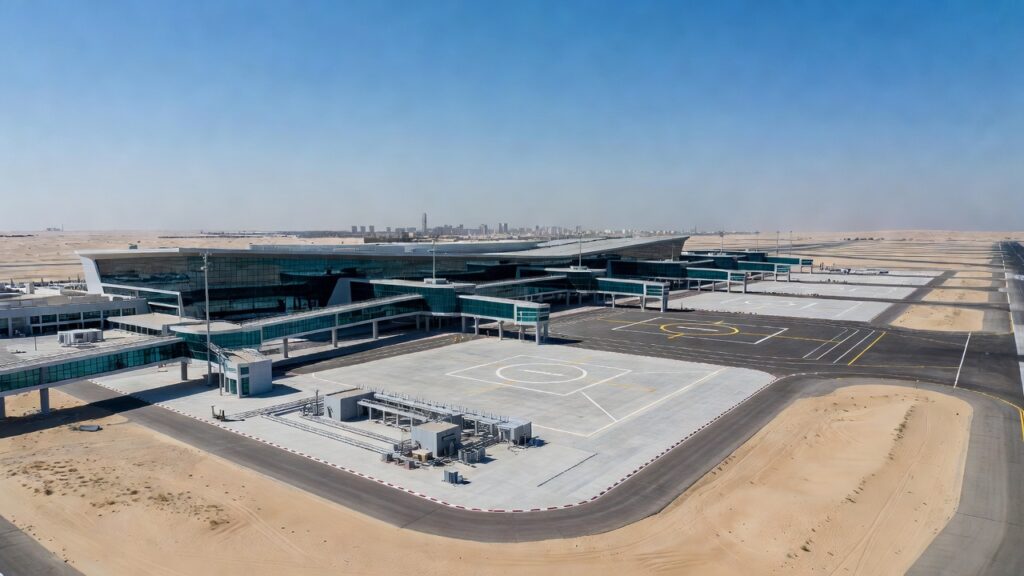
The timing coincides with ongoing construction of Terminal Two at Kuwait International Airport which the companies’ announcement framed as a natural hub for vertiport connectivity. Planners foresee not only direct links between the new terminal and advanced air mobility facilities but also the eventual emergence of a multimodal short-haul network connecting airports seaports commercial zones and populated districts. Realisation of this vision will depend on parallel advances in regulatory approval processes technical standardisation and public acceptance according to details outlined in the joint release.
Skyports has already secured a role developing a vertiport network for Dubai’s Roads and Transport Authority with commercial air taxi services slated to commence in the near future. Both the United Arab Emirates and Saudi Arabia have meanwhile accelerated national strategies focused on electric aviation and advanced air mobility deployment. The competitive dynamic across the Gulf underscores the importance of swift infrastructure rollout and coordinated policymaking if Kuwait is to participate effectively in the emerging sector.
Kuwait’s economic diversification drive stands to benefit should the memorandum progress beyond planning into tangible projects. Local enterprises could secure contracts spanning engineering construction telecommunications energy systems software cybersecurity and logistics while entirely new specialisms in low-altitude traffic control electric aircraft servicing battery infrastructure data management insurance and workforce training may also materialise. The companies noted that the initial agreement establishes a framework for opportunity exploration without committing to any defined capital expenditure at this stage.