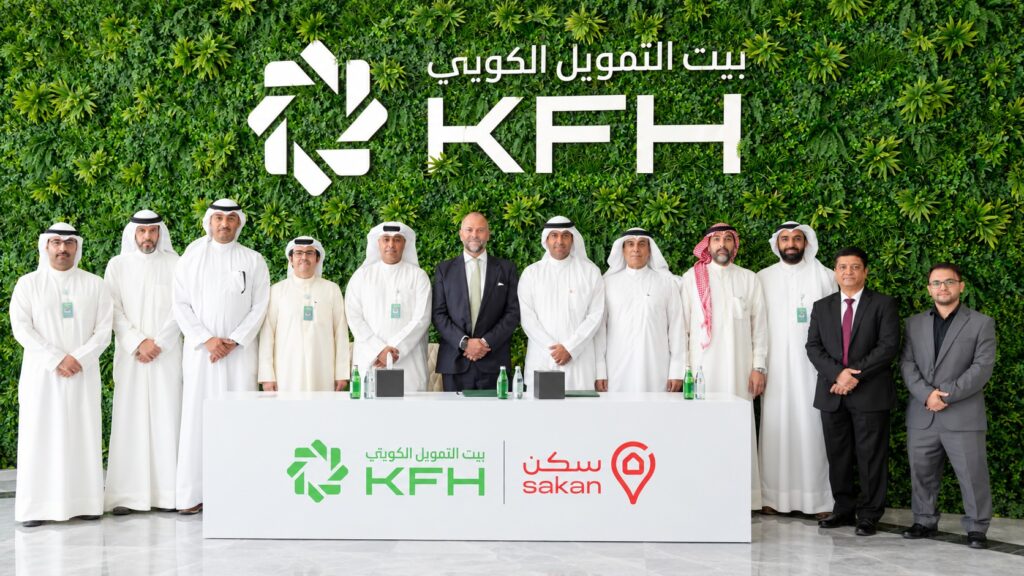
A partnership with Kuwait Finance House and the acquisition of Qatar’s Hapondo show how Sakan is pursuing a larger role in property transactions, extending beyond the initial search.
Finding a property online is only the beginning of a transaction. A prospective buyer still needs to establish what they can finance, assess the property and complete the necessary paperwork. The distance between an attractive listing and a completed purchase is where Kuwait-founded Sakan has been directing its expansion.
Its agreement with Kuwait Finance House, announced in August 2025, provides a concrete example. The partnership set out to connect properties listed on Sakan with the bank’s real estate financing services, bringing the search and financing stages closer together.
That approach sits alongside Sakan’s acquisition of Qatar’s Hapondo in 2024 and its broader regional presence. Together, the developments show a company seeking both greater geographical reach and more involvement in what happens after a customer finds a property.
Connecting the search with financing
The KFH partnership announcement described collaboration serving retail and corporate customers across property search, purchasing, selling and management. Sakan chief executive Abdullah Alsaleh said the agreement would link listings to financing services, provide instalment calculation tools and accelerate pre-approvals.
Those objectives address a specific handover in property transactions. A listing communicates an asking price and property details; a financing assessment establishes whether a particular customer can proceed. Connecting the two stages gives a platform a role beyond displaying available stock.
The announcement establishes the intended scope of the partnership. It does not provide figures for completed financing transactions or measured reductions in approval times. Those outcomes remain distinct from the agreement itself.
For customers, that distinction matters. An instalment estimate can inform a search, while a financing decision remains a separate assessment. The significance of the partnership lies in bringing those processes into a connected service, rather than treating the appearance of a property online as the end of the platform’s involvement.
A strategy that predates the bank agreement
Alsaleh had outlined that direction before the KFH partnership. In an interview published by The Business Year in August 2024, he described a business intended to support transactions as well as property discovery.
“Looking for a property is a journey that starts with searches and ends with property management,” he said.
He also described work involving contracting, authentication and settlement. For online rentals in Kuwait, he discussed using the national electronic identity system to support applications, alongside online contracts and upfront payments. These were company descriptions of its work and plans at the time, rather than independent measurements of adoption.
Sakan’s current Kuwait website reflects that broader scope. Alongside property searches, it presents a broker network, market insights, a mortgage calculator and property-management services. The interface places several stages of the property process within the same platform.
The commercial question is therefore more specific than whether people will browse homes online. It is how much of the subsequent process a property platform can support, and which responsibilities remain with brokers, owners, lenders and other participants.
Regional expansion through acquisition
Sakan’s purchase of Hapondo added a different route to growth. Rather than entering Qatar solely through a new country page, it acquired an existing property platform with local relationships.
The transaction is documented in Qatar Development Bank and MAGNiTT’s 2024 venture investment report. The report identifies the acquisition as taking place in August 2024 and describes Hapondo as a platform connecting property seekers with real estate professionals.
A property marketplace depends on the businesses supplying its listings as well as the people searching them. Acquiring an established local operator therefore involves a network of market participants, not simply software or a domain name.
Sakan’s own announcement framed the deal as combining Hapondo’s capabilities with its technology and real estate network. That describes the rationale for the acquisition; it does not, by itself, establish the financial return from it.
The company’s published office network now includes Kuwait, Saudi Arabia, Oman, Bahrain and Qatar. Its Kuwait contact address is in Sharq. The regional footprint helps explain why its strategy combines local banking relationships with expansion into neighbouring markets: access to listings and the process of completing a transaction both require market-specific connections.
Funding provides context, transactions provide the test
Lucidity Insights records a $12 million Series A for Sakan in 2024. That funding history provides context for the company’s expansion, but it should not be confused with revenue, profitability or money available today.
For property platforms, several measures describe different forms of progress. A larger inventory expands the selection available to users. More enquiries indicate interest. Completed leases or purchases establish that activity has moved further through the transaction process. None of those measures can automatically substitute for another.
The same distinction applies to regional scale. Operating in more countries broadens a company’s potential market, while activity within each country determines how much that presence contributes to the business.
Sakan’s KFH relationship is particularly relevant to its Kuwait operations because it addresses a defined stage between discovery and purchase. Its Hapondo acquisition addresses another requirement: establishing local reach in a neighbouring market.
The two developments give Sakan’s expansion a clear shape. One extends the services surrounding a property transaction; the other extends the markets in which the company participates. The next substantive measure is how those connections translate into completed transactions, with country-level results showing where the model is gaining traction.