The Ministry of Interior has reported a sharp decline in speeding and red light violations across Kuwait, attributing the improvement to motorists’ response to tougher penalties and wider use of surveillance cameras. Speeding offences fell by 43 percent while red light violations dropped 55 percent in the first quarter of 2025 compared with the same period in 2024, according to the ministry’s figures. The reductions followed the introduction of amended traffic laws on April 22, 2025 that raised fines substantially and in some cases added the possibility of imprisonment.
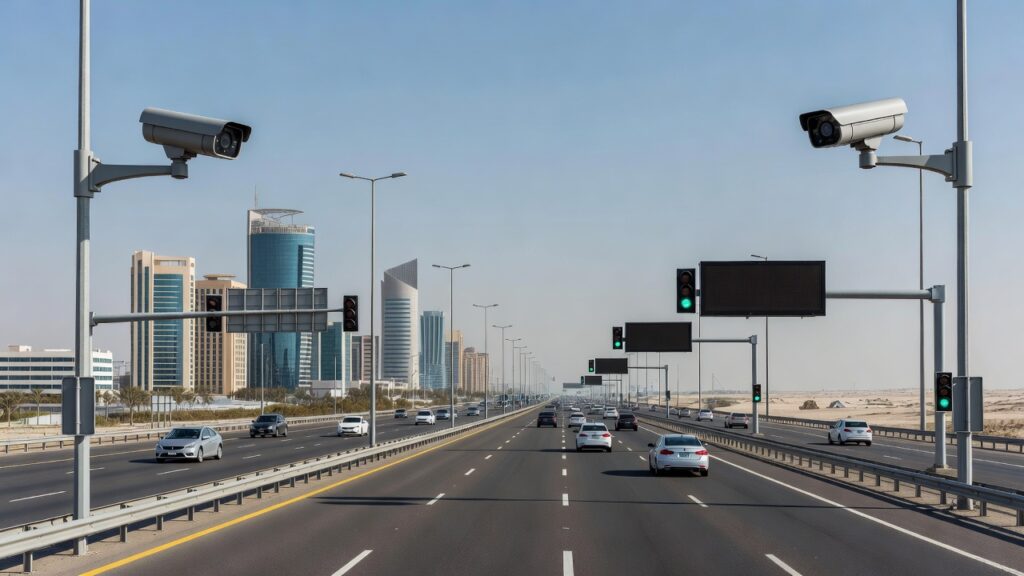
The ministry’s deployment of AI-powered cameras and mobile radar units has enabled consistent automated enforcement that records multiple types of infractions and lessens the need for routine patrols, a ministry assessment found. Camera-detected offences plunged to 28,464 in May 2025 from 168,208 in May 2024, an 83 percent decrease that Arab Times reported citing official statistics. The network includes dedicated units for seatbelt and mobile phone violations along with 161 variable message boards that warn drivers of enforcement activity.
Fines for running a red light now stand at KD 150 and can be treated as a felony carrying up to three years in prison under the updated regulations, the General Department of Traffic stated. Speeding penalties are calibrated according to the extent of the excess and range from KD 70 to KD 150 while using a mobile phone behind the wheel incurs a KD 75 fine. These increases from earlier levels appear connected to the observed change in driver behavior according to the ministry’s quarterly comparisons.
Major-General Yousef Al-Khaddah highlighted the impact of combined legal and technological measures in remarks covered by local media. The senior traffic official noted that the cameras had already documented thousands of seatbelt and phone-use violations in the months after wider rollout. Such tools have directly supported the 55 percent reduction in red light offences recorded in early 2025, ministry data shows.
Kuwait’s efforts reflect broader GCC moves toward automated traffic management, a PwC Middle East review of regional digital transformation indicated. Public Authority for Civil Information figures place the expatriate population at roughly 3.3 million, the majority of the driving community and a group directly affected by the enforcement changes. Traffic authorities had previously recorded persistently high violation rates tied to speeding and signal breaches before the 2025 law amendments.
The ministry has expanded its system with panoramic cameras capable of identifying illegal parking, wrong-direction travel and additional breaches beyond the initial focus areas. Officials have stated that repeat or severe offenders face vehicle impoundment in addition to fines, with expatriates potentially subject to deportation proceedings in extreme cases. Ministry statistics from the first months under the new regime confirm measurable progress in lowering overall violation numbers.