Yahya Al-Sumait, former board member of Kuwait Petroleum Corporation and a onetime housing minister, has called for the Gulf Cooperation Council to urgently redraw oil export routes to counter security risks in traditional maritime pathways. In his assessment, current conditions necessitate flexible approaches that safeguard economies from volatility in chokepoints such as the Strait of Hormuz, through which the bulk of the region’s crude shipments pass. The oil expert advocated diversifying export markets toward Europe and Africa rather than concentrating on Asia, while pushing for activation of a long-stalled GCC pipeline grid that could reroute flows to safer terminals.
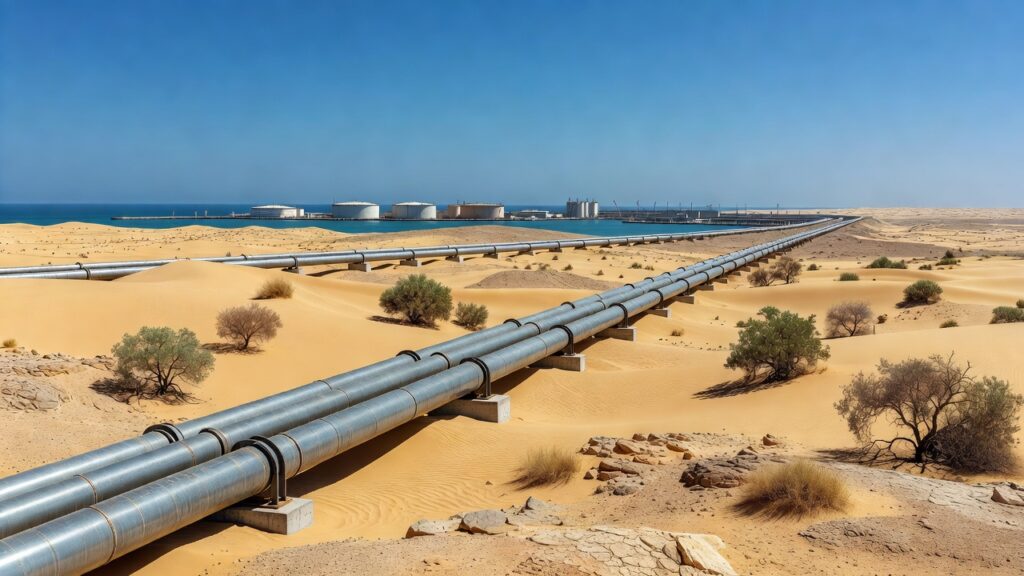
Al-Sumait noted that the proposed pipeline network, discussed for almost 50 years, would transport Kuwaiti and Saudi oil via land corridors to Oman’s Duqm port on the Arabian Sea and the UAE’s Fujairah facility on the Gulf of Oman. This setup would maintain uninterrupted energy supplies to global buyers independent of disturbances around the Strait of Hormuz. He further argued that deepening economic ties among GCC members requires swift progress on collective projects to overcome obstacles and construct a strong bloc capable of defending shared interests.
According to the US Energy Information Administration, Saudi Arabia represented 38 percent of Hormuz crude flows in 2024, while available bypass capacity through existing Saudi and UAE pipelines stands at about 2.6 million barrels per day, insufficient to fully replace volumes from Kuwait, Qatar and Bahrain in a major disruption. An International Energy Agency report on the crisis indicated that the closure of the strait has already prompted accelerated investments in alternative infrastructure across the Middle East. IEA Executive Director Fatih Birol described the situation as the largest energy security crisis in history, likely to reshape investment strategies in a manner reminiscent of the 1970s oil shocks.
Al-Sumait pointed to the economic toll of ongoing conflicts involving the United States, Israel and Iran, which have inflated security expenditures, strained budgets and fractured supply chains. He cautioned that postponing structural integration in energy and related sectors would only heighten the price of future vulnerabilities for Gulf states. The expert maintained that enhanced coordination would deliver benefits including unified negotiating strength in international energy forums and localized oil technology development.
A Reuters commentary has shown that while Saudi Arabia has expanded its East-West pipeline to Yanbu and the UAE has bolstered capacity to Fujairah, full regional rerouting would demand new cross-border links and significant capital outlays estimated in the billions of dollars. Projects under discussion include multi-fuel lines and fortified terminals to secure supplies against potential attacks. Such measures align with Al-Sumait’s vision for a comprehensive overhaul of export logistics to ensure long-term stability.
The former KPC official emphasized that eliminating currency and exchange barriers could see intra-GCC trade volumes double, underscoring the timeliness of his proposals for integrated pipelines and diversified outlets. His statement reflects broader industry conversations on fortifying energy security in response to repeated threats to the Strait of Hormuz over the past year. Implementation of these ideas stands as a strategic imperative for protecting the region’s economic future.