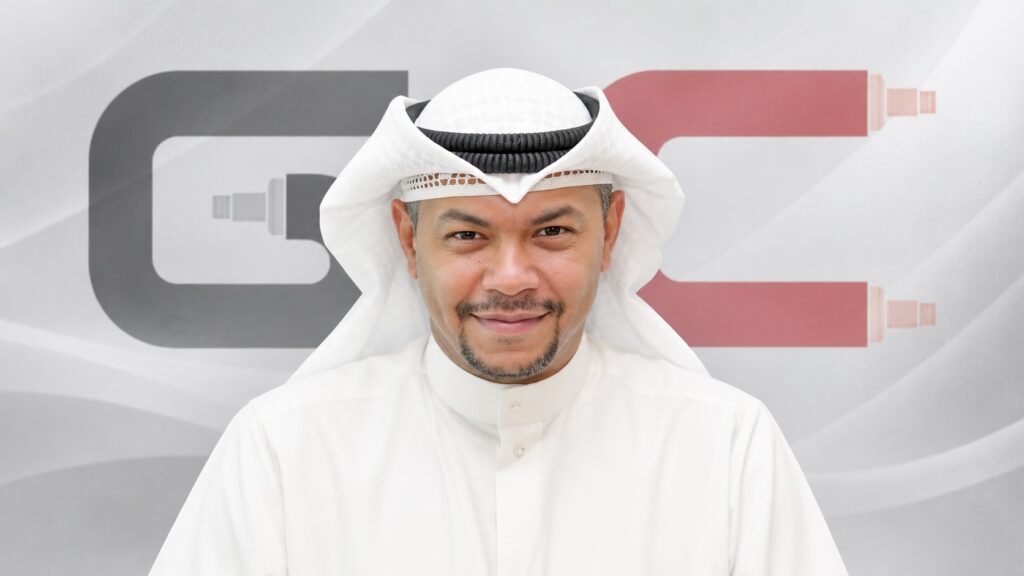
Kuwait is moving into a power pipeline spanning more than 16 GW of planned or tendered capacity as Gulf Cables, led by Acting Chief Executive Officer Abdulrazaq Zaid Al-Dobayan, enters the cycle with KD300.9 million in investments, a growing contracting business and its established cable manufacturing operations.
Kuwait’s electricity system faced renewed pressure in 2025. In April, supply was temporarily cut to some industrial and agricultural areas after demand exceeded restricted generating capacity during scheduled maintenance. By the end of the summer, peak load had reached 17,610 MW, just 30 MW below the record set in 2024.
The country’s response now extends beyond demand management. New generation, renewable-energy and desalination projects are moving through procurement and development, bringing with them requirements for transmission, substations, distribution networks and associated electrical infrastructure.
More than 16 GW in the pipeline
The second and third phases of Al-Zour North are expected to add more than 2,700 MW of generation capacity and 120 million imperial gallons a day of desalinated water under a 25-year public-private partnership. The project agreements signed in February 2026 moved the development into its next implementation stage.
Al-Zour forms part of a wider programme. The Ministry of Electricity, Water and Renewable Energy lists around 4,900 MW across the second and third phases of the Shagaya renewable-energy complex, Al-Khairan Phase One at 1,800 MW and Al-Nuwaiseeb at 7,200 MW among its major projects. Taken together with Al-Zour, the ministry’s published project pipeline exceeds 16 GW.
Those projects will require infrastructure beyond the generating plants themselves. New capacity has to be connected to the transmission system and distributed to residential, commercial and industrial users. That creates demand across substations, conductors, power cables and related installation and contracting work.
Gulf Cables enters the cycle with a broader business
Gulf Cables was established in 1975 and manufactures power cables, control cables, telecommunications cables and overhead conductors in Kuwait. The group Al-Dobayan now leads, however, has a wider revenue and asset base than its manufacturing operations alone.
Investment revenue rose 21.8% to KD21.8 million and services and contracting revenue increased 54.8% to KD11.3 million. The figures show manufacturing remaining the group’s largest source of operating revenue while investments and contracting contributed a larger share of overall performance.
By 30 June 2026, Gulf Cables reported total assets of KD367.7 million. Investments accounted for KD300.9 million, equivalent to about 82% of the total based on the group’s disclosed figures. Contracting subsidiaries generated KD6.4 million of first-half revenue, compared with KD5.1 million a year earlier.
The Kuwait parent company’s private-sector cable sales also increased slightly to KD23.9 million in the first half, while public-sector sales reached KD1.8 million.
Al-Dobayan points to infrastructure investment
Al-Dobayan directly addressed the investment environment during Gulf Cables’ 16 August 2026 earnings call.
“We expect renewed business confidence, accelerated investment in infrastructure and energy projects,” he said in the company’s published conference transcript.
The comment comes as Kuwait advances several large electricity projects and Gulf Cables continues to operate across manufacturing, investments and contracting.
The group also holds substantial stakes in listed and associated companies, alongside its regional manufacturing interests and building-services operations. That means future performance will depend on more than cable volumes or government tenders alone. Investment income, associate performance, contracting activity and manufacturing margins all contribute to the group’s results.
Orders remain the key measure
The scale of Kuwait’s planned power programme does not guarantee a corresponding increase in Gulf Cables’ revenue.
In the first half of 2026, total cable manufacturing volumes fell 36.9% year on year and medium-voltage cable sales by weight declined 23.3%. Large power projects also include high-voltage and specialist packages that are open to competition from manufacturers across the region.
The relevant measure will therefore be how much of Kuwait’s planned generation and grid investment progresses into procurement packages that match Gulf Cables’ manufacturing and contracting capabilities.
Some activity is already visible. The company has continued to disclose local orders connected to electricity infrastructure, while its contracting subsidiaries have secured additional work in building systems. These contracts remain modest relative to the scale of the national project pipeline, but they indicate the areas in which the group is participating.
Kuwait’s electricity expansion is now moving from planning into a period of project execution. Gulf Cables enters that period under Al-Dobayan with its original manufacturing business still central to the group, but alongside a significantly larger investment portfolio and a growing services and contracting operation.
The coming project cycle will show how much of that national infrastructure spending translates into manufacturing and contracting activity for the group, and how those operating businesses perform alongside its investment portfolio.