Sales reached KD 4.4 billion in 2025 while a mortgage law, a developer framework and a 170,000-unit state plan line up behind them. The next constraint is not finance. It is drawings.
Kuwait’s property market closed 2025 at KD 4.4 billion in total sales, up 27 percent on the year and the strongest result in more than two decades of available data, according to the National Bank of Kuwait. The fourth quarter alone reached KD 1.3 billion, surpassing a peak that had stood since 2014, and residential sales for the year rose 14.3 percent to KD 1.75 billion. Behind the headline number sits a legislative stack designed to keep it climbing.
The Reform Stack
The residential land monopoly rules took effect in January to push idle plots toward market, and Decree 89 of 2025 established Kuwait’s first real estate developer framework, part of what Al Jarida’s review counted among 157 decree-laws issued in 2025. The centrepiece, though, is the mortgage and real estate finance law. “The mortgage law is now in its final stages,” Minister of Economic Affairs Noura Al-Fassam said last year, warning that a backlog above 100,000 housing applications could otherwise cost the state KD 29 billion within five years. The cabinet cleared a version in October, the Central Bank of Kuwait is drafting the credit framework, and NBK’s January report still lists final approval among 2026’s expected supports. The draft parameters, reported by Al Rai, run to KD 200,000 over 25 years, KD 130,000 of it at 2 percent and KD 70,000 state-guaranteed, with the repayment ceiling moving from 40 to 50 percent of income. “That’s a game changer for banks in Kuwait,” Al Ahli Bank’s Ahmed Al-Duwaisan told Global Finance, while Bloomberg’s Asharq Business has sized the potential mortgage market at some $65 billion, against state housing waits that can stretch to a decade.
Where the Money Lands Next
Kuwaiti housing has a peculiarity the financing debate tends to skip: the state distributes plots, and families commission the villa. Every financed plot is a design brief before it is a construction site. Al Qabas reports the Public Authority for Housing Welfare is working to a ten-year plan of roughly 170,000 units, opening with some 5,000 in Mutlaa, Saad Al-Abdullah and Jaber Al-Ahmad, while Markaz’s review, citing MEED, recorded project awards of KD 2.8 billion in 2024, up 44 percent, before a near tripling year on year in early 2025. NBK adds the most telling detail for designers: the average residential transaction fell 5.2 percent in value, a shift toward smaller plots in outer areas, exactly the geometry where a design must work hardest per square metre. Consortia will fight over the megaprojects. The plot-by-plot private market, the segment the mortgage law actually targets, belongs to design offices.
A Practice Built for the First-Time Builder
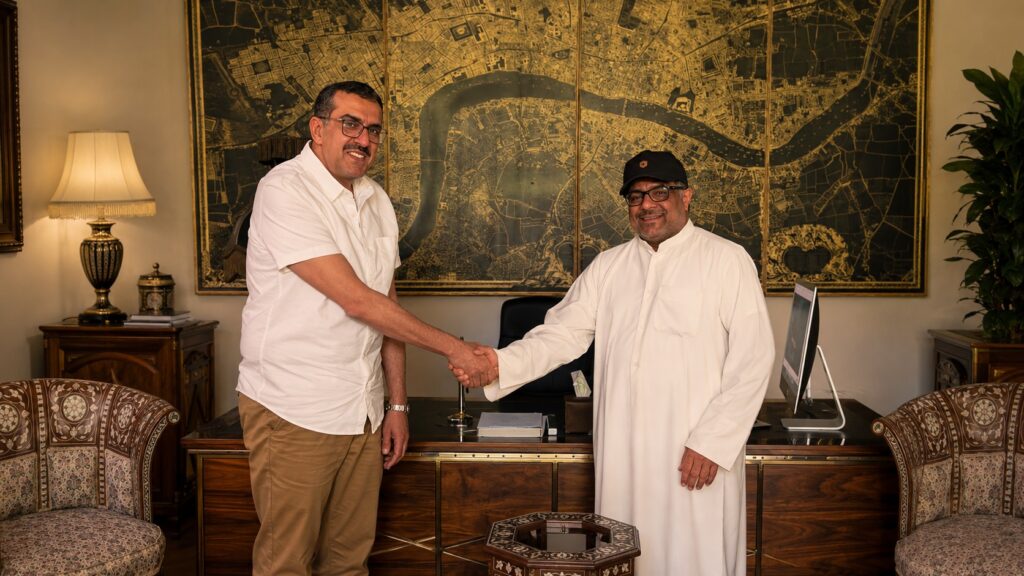
That is the queue Kayan Office has spent two decades standing in. Founded in 2006 by architect Bashar Al-Salem, the firm says it has delivered more than 100 projects, beginning in custom homes and chalets before expanding into commercial, mixed-use and educational work, and it runs a single-window model from concept through permitting, supervision and handover. For a household holding a 25-year facility and no construction experience, that model sells the scarcest commodity in self-building: certainty. The firm’s stated language joins modern simplicity with local tradition, a vocabulary Al-Salem has framed publicly as an “architectural identity tied to Kuwait’s history,” with practical value on tighter outer-area plots where the courtyard and liwan solved privacy and climate at once. His profile extends beyond client work: he founded Gardenia, the design and outdoor living exhibition at the Kuwait National Museum now past its fourth season, and Dar Al Uloom University in Riyadh has hosted him to address its architecture students.
The Fine Print That Decides It
One honest caveat tempers the enthusiasm. The head of Kuwait’s Real Estate Union called the circulated mortgage text a preliminary draft as late as November, and as drafted, supported finance is confined to housing-eligible citizens building on state plots or buying from developers, with the CBK’s rules yet to determine how much of any KD 200,000 facility reaches a design fee. A record sales year is demand for land first; converting it into commissions is the industry’s work, not the law’s.
The direction of travel is still unambiguous. Kuwait’s housing story has been counted in applications for a decade. The reforms now moving are built to convert that queue into building sites by the thousand, and when the conversion starts, the first call a family makes is not to a bank. It is to whoever draws the house.