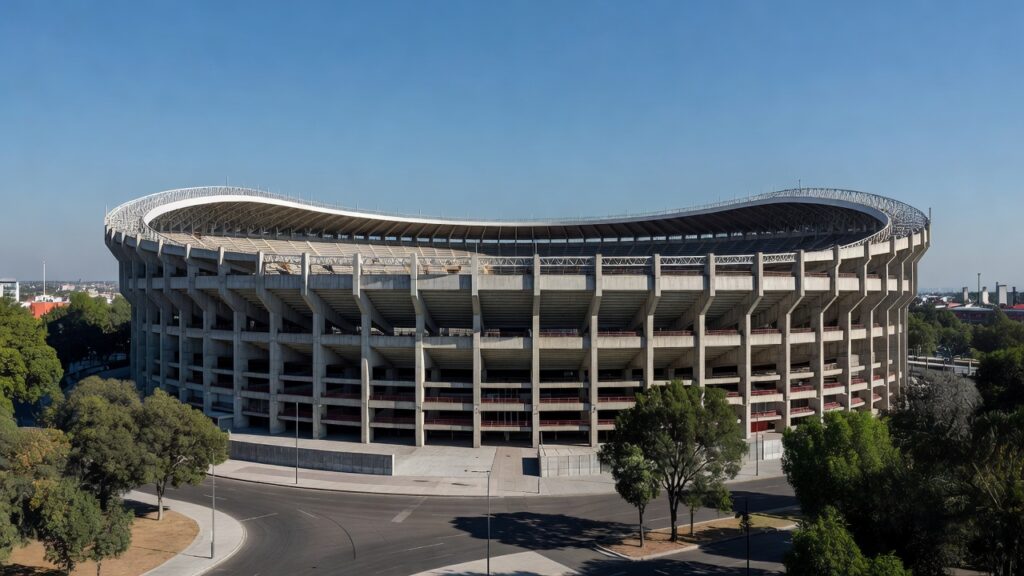
Mexican fans directed a homophobic chant at Czech Republic goalkeeper Matej Kovar during the national team’s final Group A match on June 24, 2026, at Estadio Azteca in Mexico City, according to an Associated Press report. The slur could be heard toward the end of the first half as Kovar took a goal kick, even though Mexico had already advanced to the knockout stage as group winners. The chant has triggered repeated FIFA sanctions against Mexico’s soccer federation in past tournaments.
The Associated Press reported that the Spanish slur, which literally translates to male prostitute and is commonly vocalized after a prolonged “eh” call, has featured in Mexican soccer crowds for roughly 25 years. It gained international prominence during the 2014 World Cup in Brazil before resurfacing at the 2018 tournament in Russia and again in Qatar in 2022. The Mexican Football Federation has conducted multiple campaigns, including stadium announcements and supporter education programs, to discourage the practice.
FIFA has issued fines against the Mexican federation that total hundreds of thousands of dollars for such incidents, the dispatch from the Associated Press noted. These penalties have at times been accompanied by partial stadium closures as further disciplinary steps. The organization’s disciplinary records indicate at least a dozen sanctions tied to discriminatory chanting since the 2014 finals.
Data compiled by FIFA from the 2022 World Cup shows the federation received multiple fines for the same chant during group-stage matches, including one against Poland. Subsequent penalties followed additional games in that tournament. Such patterns have led FIFA to strengthen monitoring protocols at its competitions.
The 2026 World Cup, jointly hosted by Mexico, the United States and Canada, has placed added emphasis on fan behavior standards across venues, a FIFA assessment found. Estadio Azteca, which holds more than 80,000 spectators, served as the setting for the match that carried no bearing on Mexico’s qualification status. Czech Republic faced the home crowd’s vocal presence throughout the Group A fixture.
Partnerships between the Mexican federation and anti-discrimination groups have produced educational materials distributed at international matches, the Associated Press reported. Public-address messages have also been deployed prior to games to deter the behavior. Despite these initiatives, portions of the crowd have continued the chant in subsequent high-profile encounters.
FIFA’s internal figures place the number of related disciplinary cases across World Cup qualifiers and tournament matches in the dozens over the past decade. The governing body has maintained consistent enforcement to address discriminatory conduct at its events. Officials continue to review fan behavior data from the current tournament to determine any additional measures.