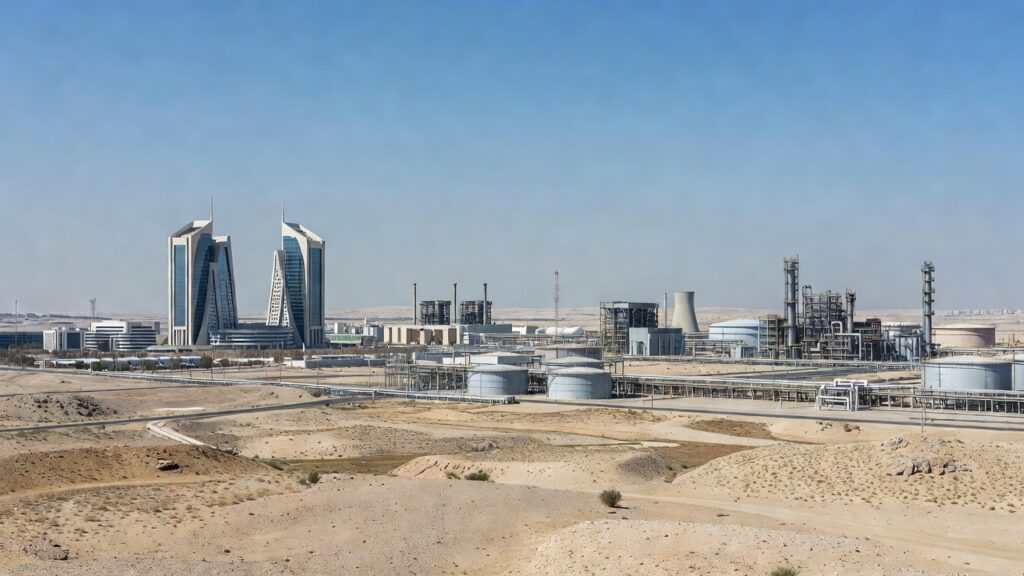
Kuwait’s Armed Forces intercepted nine ballistic missiles, four cruise missiles and 31 drones after an attack targeted critical infrastructure on April 5, the Ministry of Defense reported. Colonel Saud Abdulaziz Al-Otaibi, the ministry’s spokesperson, said the air defenses monitored and responded to the threats within Kuwaiti airspace in line with established procedures. The strikes affected two power stations, water distillation plants, oil sector facilities including those of the Kuwait Petroleum Corporation and a building in the Ministries Complex, producing significant material damage but resulting in no casualties.
The Ministry of Defense detailed that the attacks struck power stations along with water distillation plants and multiple oil facilities affiliated with the Kuwait Petroleum Corporation. A building inside the Ministries Complex sustained direct hits amid the coordinated strikes. Competent authorities controlled the resulting scattered fires in the affected areas. The official statement confirmed that no casualties arose from any of the impacts across the targeted sites.
Arab Times reported that the armed forces urged citizens and residents not to circulate images or videos from the targeted locations due to potential effects on public security. Officials cautioned against spreading rumors or engaging with unverified social media accounts in the aftermath of the incident. The military directed the public to rely solely on information from official sources. This guidance formed part of broader efforts to maintain stability while the armed forces stayed on high alert. The statement added that responsible information sharing supports national defense objectives.
Kuwait has deployed MIM-104 Patriot PAC-2 and PAC-3 systems as part of defense procurements exceeding $14 billion according to the Missile Defense Advocacy Alliance. These capabilities have formed the backbone of the country’s air defense network against regional ballistic and drone threats. A June 2026 assessment indicated that Kuwait had further reinforced its systems with cost-effective counter-drone technology to address evolving risks. The April 5 interceptions demonstrated the operational effectiveness of these layered defenses in real-time conditions.
Data from Kayrros released after the incident revealed significant damage to Kuwaiti refineries and the Kuwait Petroleum Corporation headquarters that prompted precautionary shutdowns. The analysis aligned with the Ministry of Defense account by confirming no fatalities while documenting operational interruptions at key oil sites. Kuwait Petroleum Corporation statements issued via its LinkedIn channel and other platforms described drone strikes on the Shuwaikh oil sector complex that sparked fires and required evacuations. Recovery teams focused on containing the impacts and evaluating infrastructure integrity in the days that followed. These developments occurred against a backdrop of similar aerial threats reported in Bahrain and other Gulf states around the same period according to India TV News coverage.
The Ministry of Defense emphasized that the armed forces continue to perform their duties with vigilance while prioritizing citizen and resident safety in the wake of the April 5 events. Public awareness initiatives formed a key element of the post-incident response to prevent misinformation from circulating. The military’s high-alert status has been maintained without interruption since the initial attack. This approach integrates both defensive operations and coordinated communication strategies across government bodies.