The multinational poll covering 2,043 active investors in the United States, Britain, Germany, France and China showed that China, the US and the UK registered the strongest bullish sentiment toward the Gulf. Seventy percent of respondents anticipated that the GCC’s weight in the global economy would continue expanding over the next five years. A parallel May survey of residents in Saudi Arabia, the UAE, Qatar and Bahrain found that 90 percent believed their country was heading in the right direction while 89 percent voiced confidence in the local economic outlook, according to the Arab News report on the Consulum and HarrisX findings.
Saudi Arabia’s Business Confidence Index climbed to 56.6 points in June after recovering from a March low of 52.1 linked to regional tensions with Iran, the same report indicated. The index had reached 61.6 in January before the dip and posted steady gains from April onward. James Davies, CEO of Consulum, said investors were looking beyond short-term geopolitical volatility and taking a long-term view of economies with clear reform agendas, substantial investment capacity and proven government resilience.
Davies added that investors wanted to see national programs adapting to the realities of the Iran conflict while governments stayed committed to their broader visions. Liam Bates, co-founder and CEO of environmental technology firm Kaiterra, told Arab News that the Saudi opportunity had grown faster than the company could service from its Dubai base, prompting the opening of a Riyadh office. Bates noted that Vision 2030 timelines left no room for teams flying in for every meeting and highlighted a sharp rise in demand from government and semi-government infrastructure projects that had been barely on the radar a year earlier.
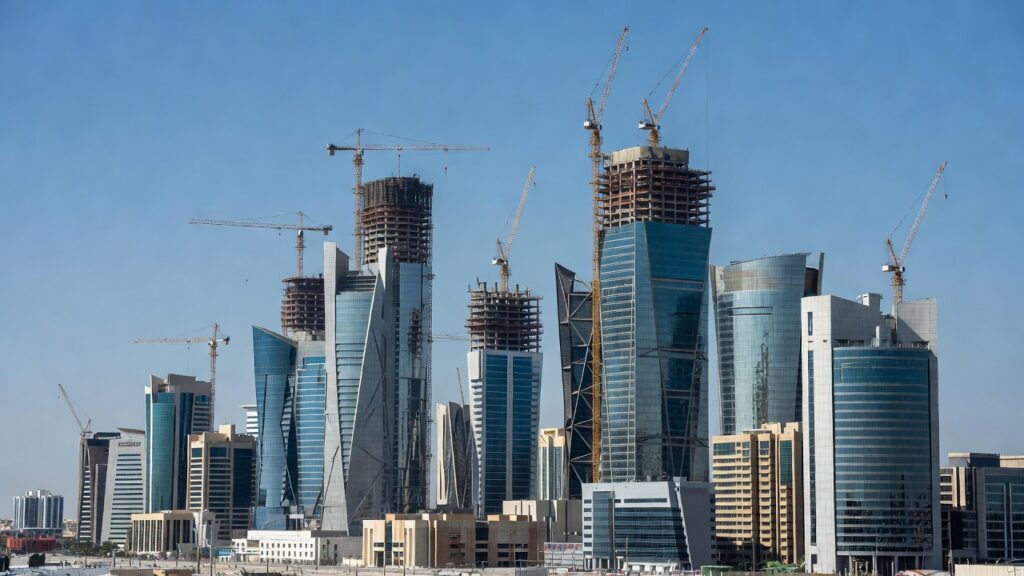
Bates pointed to the extensive construction cranes visible across Riyadh as evidence of development scale while expressing confidence in the leadership’s understanding of environmental priorities for the country’s future. Organisers of the LEAP technology conference reported that the 2025 edition generated $14.9 billion in deals, including a $1.5 billion agreement between Groq and Aramco and a $2 billion pact between Alat and Lenovo. Mike Champion, CEO of Tahaluf which runs LEAP, stated that the exhibitions industry relies on mobility and flexibility, leading the team to reschedule the 2026 event to late August after the spring regional situation shifted rather than scaling back.
Champion added that bookings and registrations continued arriving with confidence in travel to Riyadh remaining strong and that the situation had proved less challenging than initially feared. Tahaluf events between 2023 and 2025 produced a $17.6 billion economic impact, more than $10 billion in property transactions and over 250,000 jobs while sustaining expected annual growth of 18 to 21 percent, the company reported. Rachel Sturgess, Tahaluf’s senior vice president, said investors had moved past questioning whether Saudi Arabia offered opportunity and were now seeking direct access to the projects, partners and markets fueling growth there.
Foreign direct investment into Saudi Arabia reached $31.7 billion in 2024, marking a 24 percent rise from the prior year, according to an Oxford Business Group assessment of the Kingdom’s diversification drive. Vision 2030 has targeted annual FDI inflows exceeding $100 billion by 2030 to lift the private sector’s contribution to 65 percent of GDP and expand non-oil exports, the strategy’s official documentation shows. A 2025 study in the Sustainability journal underscored how investment protection agreements and regulatory reforms have nearly tripled FDI inflows since the program’s 2016 launch while emphasising the need to close the gap between current trajectories and long-term goals.