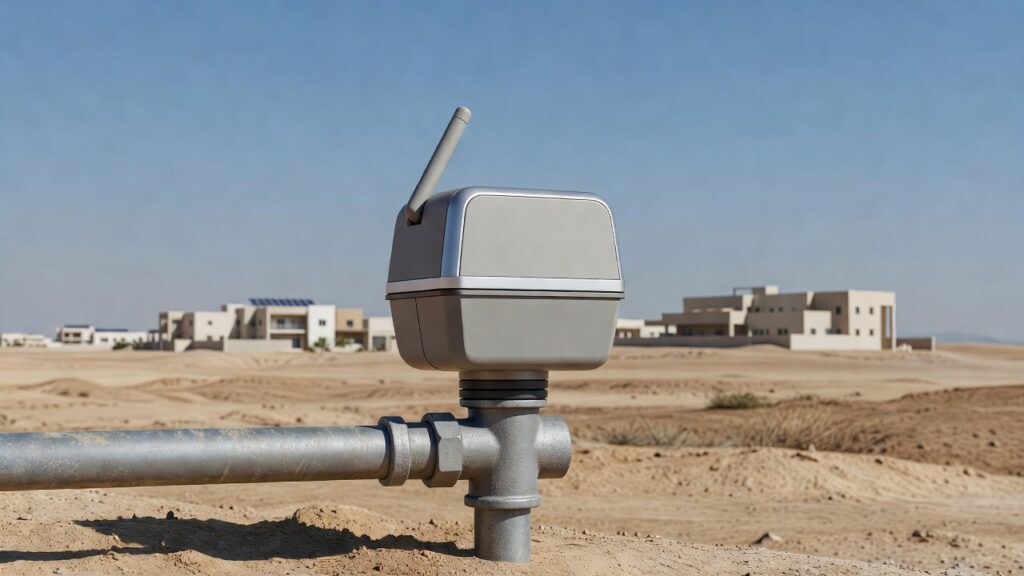
The Central Agency for Public Tenders extended the bidding deadline to June 23 for a tender to supply 300,000 smart water meters for residential areas, the Arab Times reported on June 21, 2026. The Ministry of Electricity, Water and Renewable Energy originally issued the tender on May 24 as part of its digital transformation strategy. The meters are intended to cut water waste, prevent tampering and allow for early detection of leaks in residences.
According to the Arab Times, bids will be opened on the designated date and referred to the ministry for technical review, with a recommendation to be prepared within 30 days leading to contract award for the best compliant offer. The ministry formed a specialized committee to determine the meters’ required capabilities, including resilience to extreme heat and integration of advanced monitoring technologies. This forms a key element in achieving automated, intervention-free consumption tracking across residential zones.
Ministry of Electricity and Water figures compiled by the KAPSARC data portal show consistently elevated per capita fresh water consumption in the residential sector over the past three decades. Multiple studies, including one published in Desalination in 2024, place Kuwait’s per capita water consumption at 447 liters per day, well above global averages, with the municipal sector responsible for up to 75 percent of desalinated water use. Such levels have driven efforts to curb waste, where non-revenue water from leaks and inefficiencies can account for 30 to 40 percent of supply in aging networks.
The Arab Times report noted that the ministry has commenced laying fiber optic cables to link primary substations, involving excavation in selected residential blocks including Ahmadi Block One, Hawally Block One, Yarmouk Block Two, and Salwa Blocks Four and Five, continuing until Saturday. Authorities have requested resident cooperation during the construction phase to support the digital backbone for the smart metering network. This infrastructure will enable seamless data transmission from the new devices to central systems.
A GMI Research evaluation of the Saudi Arabian smart water meter market forecast expansion at a 3.2 percent compound annual growth rate between 2025 and 2032, reflecting regional emphasis on water conservation tools. Case studies from infrastructure projects indicate that smart metering can reduce overall consumption by approximately 5 percent through prompt leak alerts and heightened user awareness, according to analyses by the Global Infrastructure Hub. These precedents suggest potential benefits for Kuwait’s deployment in managing high residential demand.
The initial phase targets replacement of mechanical meters in homes, with the chosen operator responsible for installation, operation and long-term maintenance to guarantee system effectiveness. Technical assessments will prioritize solutions that deliver precise readings and rapid anomaly detection to aid resource sustainability. The project timeline anticipates full evaluation of proposals before proceeding to deployment in priority residential districts.