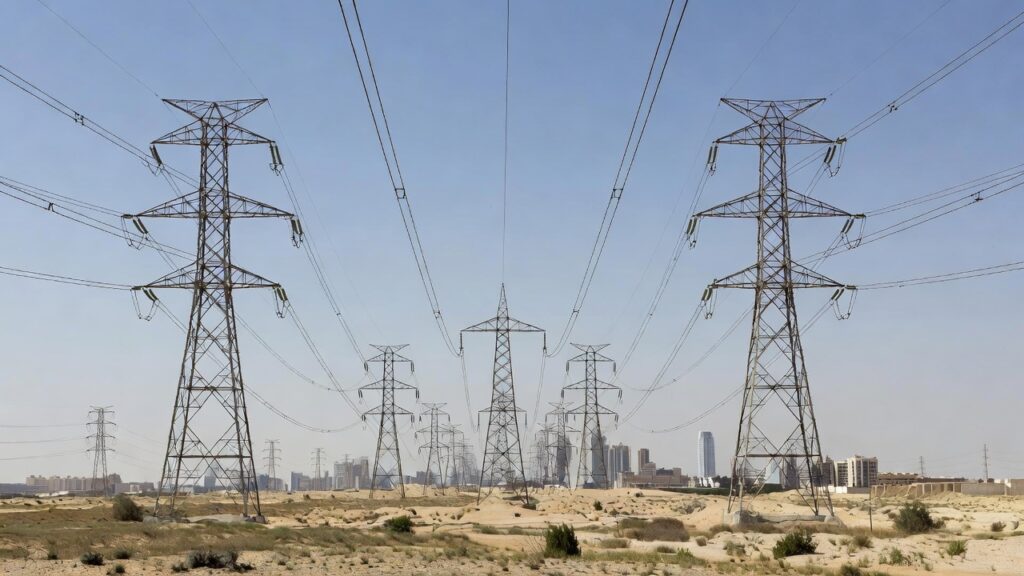
Kuwait’s Ministry of Electricity, Water and Renewable Energy said in a statement that a number of overhead power transmission lines sustained damage from shrapnel generated during the air defense response to attacks in the preceding hours. The ministry stressed that the incident produced no interruption to electricity or water services anywhere in the country. Emergency teams moved quickly to evaluate the affected infrastructure and begin repairs, according to the statement. The development follows a pattern of similar debris-related impacts recorded earlier in 2026 amid regional tensions.
According to the ministry, coordination with relevant security authorities enabled rapid deployment of repair crews to the sites. Officials reassured residents that essential services continued without disruption while work proceeded to restore the lines in the shortest time possible. The statement underscored ongoing efforts to return all transmission infrastructure to full capacity. Anadolu Agency reported comparable events in March when the same ministry noted seven overhead lines taken out of service by falling debris from interception operations, which produced partial outages in affected regions.
Kuwait’s Armed Forces separately announced the successful interception of two hostile ballistic missiles and 13 drones that had breached national airspace during the same period. No casualties or material damage resulted from those incoming threats, the military statement indicated. The operations formed part of defensive measures against repeated aerial incursions, a Wikipedia compilation of 2026 events in Kuwait during the Iran conflict shows multiple prior episodes of drone and missile activity prompting similar responses. Public Authority for Civil Information data places Kuwait’s population at more than 4.8 million, heightening the stakes for uninterrupted power supply in urban centers.
The Ministry of Electricity, Water and Renewable Energy has faced recurring challenges to its transmission network from such incidents since early 2026. A Anadolu Agency dispatch from March 24 detailed how shrapnel led to temporary outages before full restoration, with spokeswoman Fatima Abbas Jawhar Hayat cited in official updates. Repair protocols established in those earlier cases appear to have informed the swift response outlined in Wednesday’s statement. Industry assessments from the Gulf Cooperation Council have highlighted the resilience of Kuwait’s power grid, which maintains substantial reserve capacity according to Central Statistical Bureau figures.
Further updates on restoration timelines will come from the ministry as assessment work concludes. The Armed Forces continue monitoring airspace threats in coordination with regional partners, past statements show. No additional details on the precise locations of the damaged lines or the origins of the intercepted projectiles appeared in the initial announcements from either body.