The operation fell under the direct supervision of First Deputy Prime Minister and Minister of Interior Sheikh Fahad Al-Yousef Al-Sabah, who deployed the Kuwait Army, National Guard, General Fire Force and multiple civilian agencies including the municipalities, manpower authority, commerce ministry and health services. Teams sealed off sections of the district, disconnected utilities to violating properties, evacuated hundreds of unsafe structures and directed displaced families to equipped reception centres. Al-Sabah stated that the campaign marked the beginning of a continuous nationwide phase with no leniency for owners who ignored safety rules for profit, adding that all legal measures including demolitions would protect lives and Kuwait’s reputation.
According to the interior ministry, inspections revealed severe environmental and health hazards ranging from accumulated waste and pest infestations to structures altered without permits and used for overcrowded living or unlicensed commerce. Sheikh Fahad Al-Yousef noted that poor conditions could aid disease transmission, especially since many residents worked in hospitals and food outlets. The ministry reported that procedures refined during the Jleeb effort would expand to every governorate to systematically remove threats to public safety.
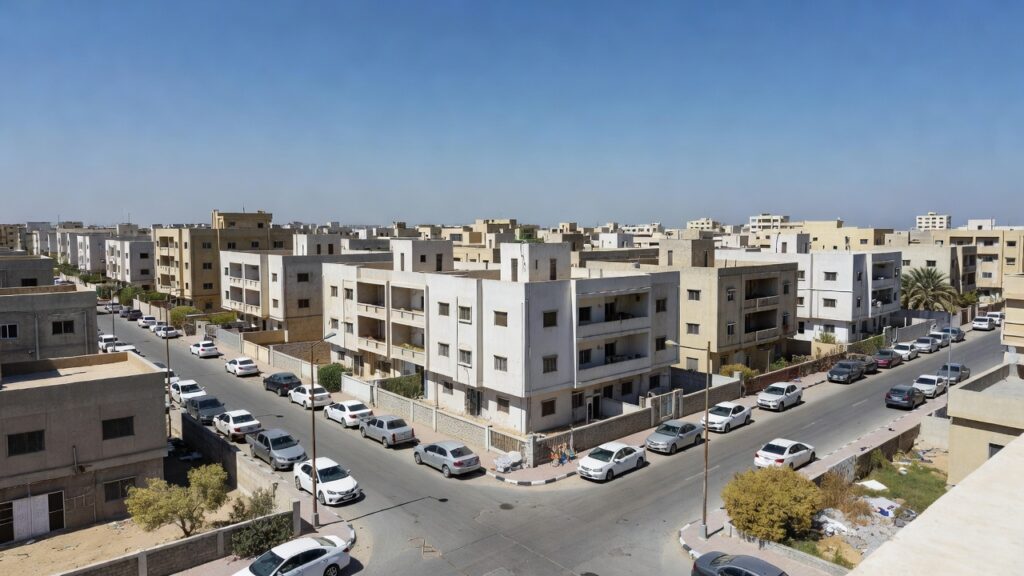
Official estimates place the population of Jleeb Al-Shuyoukh at 266,883 as of June 2024, yielding a density of 27,000 people per square kilometre that has exacerbated infrastructure decay and regulatory breaches. The majority of inhabitants are expatriates from South Asia and Arab countries, a demographic profile that earlier municipal warnings issued over two years failed to correct as landlords continued renting modified units in defiance of building codes and residency rules. A fatal building collapse earlier in 2026 finally overcame previous delays rooted in social pressures and political resistance.
Kuwait Municipality had already demolished 42 unsafe buildings across six blocks of the district in May as an initial remedial step. The July campaign scaled that action by integrating security, labour, food safety and environmental inspections in a single coordinated push. Commerce and industry teams alone recorded 152 violations and closed 10 shops during the first days, while parallel actions addressed residency overstayers, wanted individuals and illegal commercial use of residential spaces.
The interior ministry framed the drive as an accountability test that would succeed only if monitoring prevented violators from returning once forces shifted focus. Al-Sabah emphasised that protecting residents and maintaining order ranked among the government’s highest priorities across all regions. Subsequent phases are expected to apply the same multi-agency template to comparable areas identified in other governorates.