Figures presented at Real Madrid’s board meeting on July 28, 2026, show the club generated €1.221 billion in revenue for the 2025-26 financial year excluding income from player transfers. The total marks the first time any sports organization has exceeded €1.2 billion in a single season and represents a 3.1 percent rise over the prior year. President Florentino Pérez chaired the session that approved the results and highlighted sustained commercial momentum.
Stadium income rose 11 percent while marketing revenues increased 6 percent thanks to renewed sponsorship agreements, according to the club. Those partnerships have reinforced Real Madrid’s position atop global football economics and helped drive overall commercial activity higher. The board heard that such gains reflect confidence from major partners in the club’s long-term strategy.
Operating earnings climbed 18 percent to approximately €285 million with net profit after tax reaching roughly €26 million, the club stated. The performance extended Real Madrid’s streak of profitable seasons to 26. Balance-sheet metrics presented at the meeting included shareholders’ equity of €660 million, cash reserves near €88 million and minimal net debt when stadium financing was excluded.
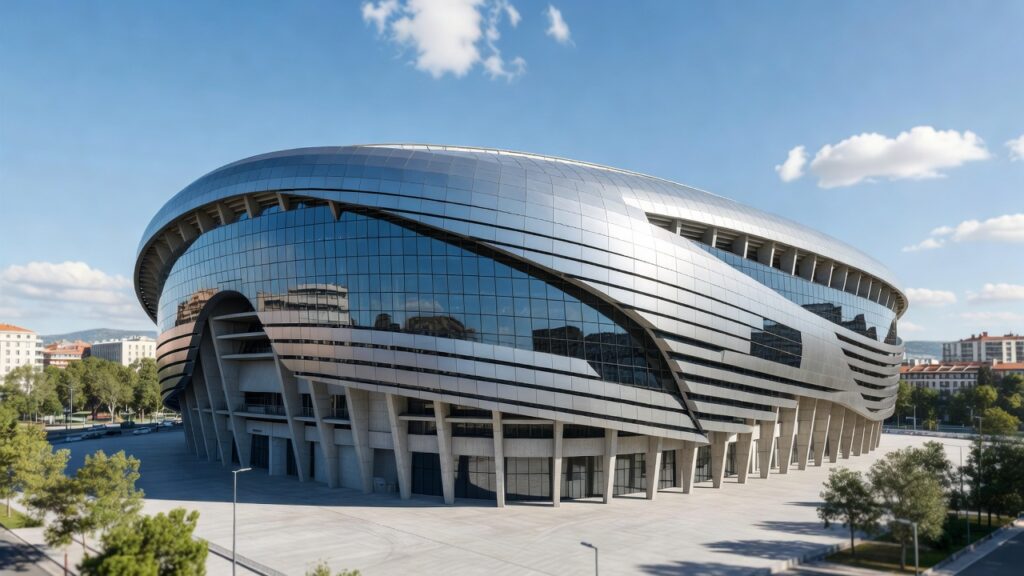
Revenue has grown 61 percent over the past seven years with stadium income doubling during that span, Real Madrid’s data shows. The figures come as the club completes a €1.6 billion renovation of the Santiago Bernabéu stadium that has expanded match-day capacity and hospitality offerings. Earlier seasons laid the foundation, with the club first surpassing €1 billion in 2023-24 before reaching €1.185 billion in 2024-25 according to successive annual reports.
The latest results cement Real Madrid’s status as the world’s highest-revenue-generating sports club, a distinction it has held for several years. Industry analyses have consistently placed the club at the top of football’s financial rankings, ahead of rivals whose revenues remain below the €1 billion mark. Available credit lines totaling more than €500 million provide additional financial flexibility for future investment.
Board members reviewed salary expenditures that rose 37 percent over seven years to support the squad, yet the club maintained strict cost controls. New player acquisitions in the most recent window totaled around €170 million while the overall financial model continues to emphasize revenue diversification beyond broadcasting rights. These outcomes were formally recorded in the minutes of the July 28 meeting presided over by Pérez.