The Kuwait-founded platform’s reported activity spans vehicle financing, test drives and thousands of after-sales jobs, revealing a business that extends well beyond helping customers choose a car.
Motery’s account of its business in Kuwait includes a figure that sits outside the usual measures of an online car marketplace: more than 22,500 car washes delivered during 2025.
In its published review of the year, the company also reported financing more than 3,200 cars, completing 10,000 test drives and valuing more than 5,000 vehicles. These are company-reported figures, rather than independently audited results, but their breadth helps explain the business Motery is attempting to build.
The platform connects the purchase of a vehicle with the services required to keep it on the road. Its commercial proposition therefore reaches across several different transactions, from arranging finance before delivery to dealing with tyres, cleaning and breakdowns afterwards.
A banking background shapes the approach
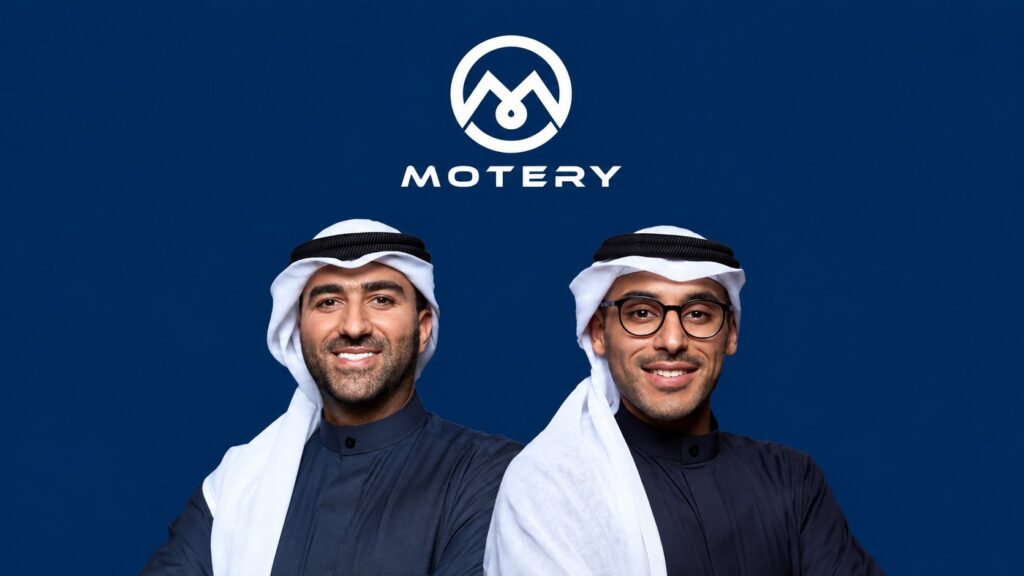
Founded in 2019 by Mohammad Al Abdulsalam and Abdulla Al Ateeqi, Motery entered a market in which buying a car involves relationships with several separate businesses. The dealership supplies the vehicle, a lender assesses finance, and other providers handle insurance and subsequent care.
In a May 2025 interview with E-Commerce بالعربي, Al Ateeqi said the founders’ experience in banking and finance had shaped their understanding of both customer requirements and the gaps between those stages.
He described two substantial challenges: persuading customers to buy and finance a vehicle through an application, and connecting banks, dealerships and insurance businesses within the same digital process.
That account places coordination at the centre of Motery’s work. Publishing a vehicle listing is one task; making the availability, financing and delivery processes correspond is a different undertaking involving organisations with their own systems and responsibilities.
Al Ateeqi also distinguished Motery’s emphasis on new vehicles from dealerships from platforms primarily concerned with classified advertisements or used cars. That distinction matters because the company’s model depends on connections to the businesses supplying and financing the vehicles, alongside attracting prospective buyers.
Ownership creates a longer relationship
Motery’s reported 2025 activity included 4,000 tyre replacements, 1,200 towing assists and more than 2,000 accessory deliveries. The company also said it had reached more than 300,000 downloads, although downloads do not establish how many people regularly use the service.
The figures describe activities with very different frequencies and values. A financed vehicle purchase represents a major commitment. A wash or replacement accessory is a smaller transaction, while towing addresses an immediate problem rather than a planned purchase.
For an automotive platform, those differences create separate reasons for a customer to return. They also make it important to distinguish transaction volume from financial performance: a large number of service bookings does not, by itself, reveal the revenue or margin retained by the platform.
Its current application listing brings those activities together, describing vehicle reservation, test-drive booking and financing alongside maintenance, insurance and other after-sales services. The listing was updated in September 2026.
This combination changes the scope of the customer relationship. The purchase is a starting point for some users, while others may first encounter the platform through an existing vehicle that needs attention. The commercial connection between those groups cannot be measured from downloads alone.
Financing remains a decision about affordability
Bringing finance into a purchasing application does not remove the underlying lending assessment. A customer’s choice of vehicle and the amount a lender will approve remain related but separate decisions.
The Central Bank of Kuwait’s published guidance states that consumer financing is capped at 25 times a customer’s net monthly salary, subject to a maximum of KD25,000 and a repayment period of five years. Applicable debt-service limits and the lender’s assessment also apply.
The guidance places responsibility for granting credit with the lender under its own credit policy. It also explains why lenders require information about existing obligations and a customer’s financial position.
For digital automotive businesses, this means the financing component is more substantial than displaying an estimated monthly payment. A calculation helps describe a possible commitment; approval depends on the customer and the lending institution.
Motery’s application describes loan-calculation and financing tools, but those features should not be read as an assurance that every applicant qualifies. The distinction is particularly relevant when vehicle selection, trade-in valuation and finance appear within the same interface.
A lower purchase price, a higher valuation for an existing car and a longer repayment period affect a transaction in different ways. Presenting them together makes the relationship between the vehicle and its financing more visible, without making those financial choices interchangeable.
Investment supports a wider operating model
Motery’s seed financing was reported in March 2025 at an $8 million valuation. The amount invested was not disclosed. The valuation should therefore not be described as an $8 million funding round.
The announcement positioned the investment around developing the company’s online purchasing and financing services. In his subsequent interview, Al Ateeqi also identified more dealership relationships, additional after-sales providers and improvements to the application as priorities.
He discussed ambitions to enter Saudi Arabia and the UAE. Those comments established an intended direction, rather than evidence of completed launches in either market.
Meanwhile, Motery’s Kuwait-facing website continues to connect dealership inventory with services for vehicles already owned. The distinction between those two activities remains central to understanding the company: one concerns converting interest into a purchase, while the other concerns work carried out over the vehicle’s life.
Its reported operating figures now provide a starting point for examining that relationship. The next useful measure is how purchasing, financing and subsequent service use connect, including how many customers move between them. That would show how much of Motery’s business extends beyond the original car sale.