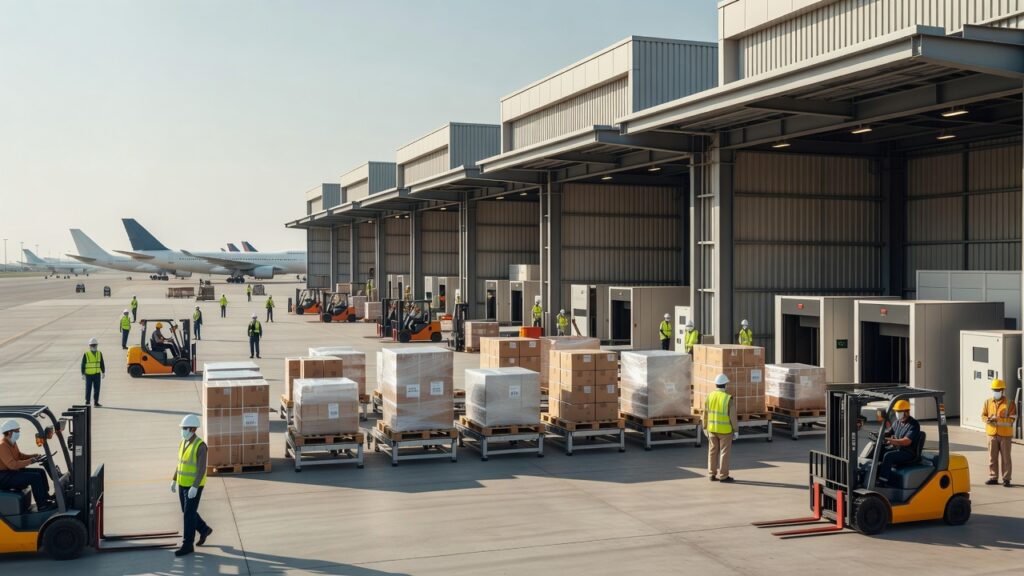
The General Administration of Customs announced the seizure of 5.65 kilograms of suspected marijuana in a statement released on November 9, 2026. Inspectors at the air cargo terminal discovered the substance in two parcels arriving from South Africa. The items had been declared as ceiling lights, prompting further scrutiny when anomalies were detected during screening and physical checks. The total weight of the two bags containing the suspected narcotic was precisely 5.65 kilograms.
The operation followed directives issued by First Deputy Prime Minister and Minister of Interior Sheikh Fahad Yusuf Saud Al-Sabah to strengthen inspection protocols at all entry points. Following the find, customs officials from the Search and Investigation Department coordinated directly with the General Department for Drug Control. This inter-agency collaboration ensures that all necessary forensic tests and legal steps are completed promptly. The parcels have been secured as evidence in the developing case.
Similar drug interdictions have occurred in recent weeks at Kuwait’s airport facilities. Customs officers seized 1.763 kilograms of marijuana from a passenger arriving from Ethiopia in early October 2026, according to a prior statement from the same administration. Additional substances including heroin and hashish were recovered in that instance, illustrating the variety of smuggling methods employed.
Kuwait maintains one of the region’s strictest legal regimes against drug offenses. Under provisions of Law No. 74 of 1983 on Combatting Narcotic Drugs and its subsequent amendments, penalties for trafficking can include life imprisonment or the death penalty in aggravated circumstances, regulatory analyses have noted. Possession alone carries prison terms of two to 10 years along with fines up to 10,000 Kuwaiti dinars.
The latest seizure adds to cumulative efforts aimed at disrupting supply chains for illicit substances entering through commercial cargo channels. Air cargo from various international origins undergoes layered inspection including canine units and advanced imaging equipment, the administration has indicated in past briefings. The case remains under active investigation by specialized drug control units.