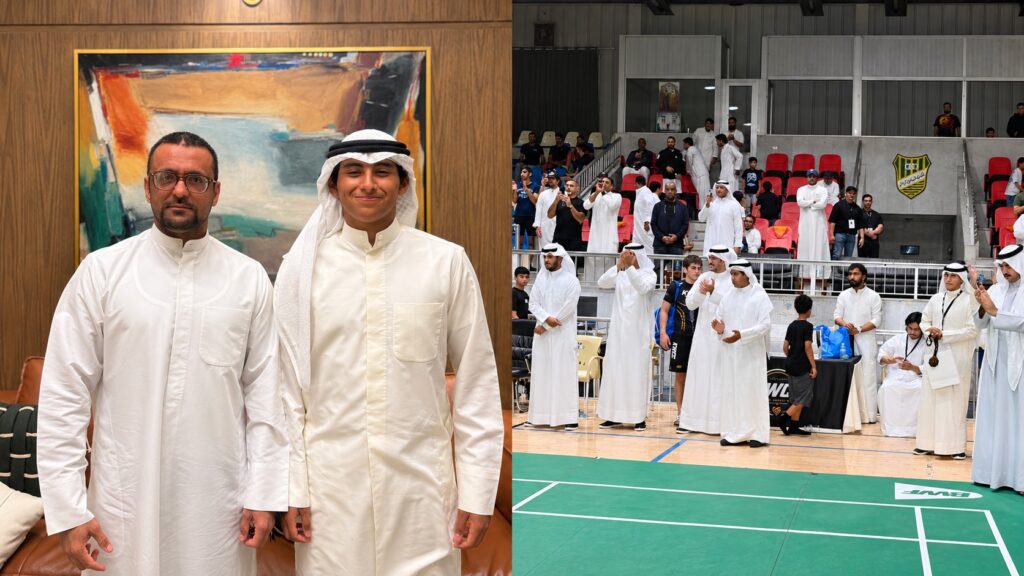
Abdullah Al Sabah brought the ambition to organise a combat-sport event. Kasim brought experience in interviewing athletes and telling their stories through K-Pod. Their collaboration at Kuwait Combat Club grew from a training partnership into work spanning competition, commentary and media.
When Abdullah Al Sabah approached Kasim about Kuwait Combat Club, the two already knew each other through training. But according to Kasim, it was his work outside the gym that helped turn their sporting connection into an organising partnership.
Abdullah had seen K-Pod, Kasim’s podcast, and wanted to involve him in the project’s commentary and media. Kasim describes the collaboration as a meeting of different skills: Abdullah’s entrepreneurial ambition and interest in jiu-jitsu, alongside his own experience presenting sporting stories.
“He believed in my skillset and what media does,” Kasim explained. “That’s why he wanted me to be part of it and to do all the commentary and media.”
That background gives a fuller picture of the partnership behind KWCC. Abdullah, whom Kasim describes as 17, was taking on the challenge of organising a competition. Kasim was helping shape how the event and its athletes would be presented to an audience.
From training partners to working together
Kasim recalls Abdullah approaching him with the idea several months earlier. Their existing relationship meant the conversation began between people who already shared time in combat sport. The proposed event gave that relationship a different purpose.
According to Kasim, the competition came together in roughly a month. What stayed with him was Abdullah’s involvement throughout the preparation, including the hours they spent working together.
“I was really surprised that a 17-year-old could actually work this hard,” Kasim recalled. “He was grinding with me at six o’clock in the morning.”
The recollection places Abdullah inside the work of putting the event together, with Kasim remembering the effort as much as the finished competition.
Kasim’s own contribution drew on the media experience that had attracted Abdullah to the collaboration. In his follow-up, he explained that Abdullah wanted him involved in commentary and media because he had seen what Kasim was doing through K-Pod.
Their partnership therefore connected two parts of the same event: creating an occasion for athletes to compete and giving that competition a voice. Kasim’s account makes clear that his involvement extended beyond discussing the project afterwards on his podcast.
The athletes at the centre of the event
The public competition record gives that behind-the-scenes account a concrete setting. BJJ Arabia’s listing for Kuwait Combat Club’s June 2026 SuperFights programme describes a submission-only event with a free YouTube stream and a card divided into early preliminaries, preliminaries and main-card bouts.
The programme included Abdullah Al Mansouri against Ali Al Whair, alongside contests across several weight categories. The listing gave spectators a way to follow the match-ups and watch the competition beyond the venue.
Coverage of the teenage bout reported that Al Mansouri defeated Al-Wuhair at Al-Sahel Sports Club as part of the KWCC 2026 event. It identified his team as GFT Samurai Kuwait and named his coach, Abdullah Dagash Al-Hajri.
For the athletes, the event produced something specific: an opponent, a performance and a result. For Abdullah and Kasim, it brought their collaboration into a setting where the competition and its presentation had to come together.
What K-Pod brought to the partnership
Kasim’s podcast helps explain both his role at KWCC and Abdullah’s decision to involve him.
In the original conversation, Kasim described K-Pod as a project built around his own editorial interests, with Kuwait central to its direction. His priority is finding accomplished guests with credible stories. Maintaining a weekly release schedule matters less to him than having a conversation worth recording.
That work was already visible to Abdullah before the event partnership developed. According to Kasim, Abdullah recognised the role media could play and wanted those skills involved in KWCC.
Kasim also interviewed Abdullah for the podcast, describing him as well spoken. The discussion gave them space to explore the experience behind the competition, including Abdullah’s interests as an athlete and young organiser.
It fits a wider development in Kasim’s work. He said he has been taking on interviews and commentary at sporting events, where he can speak with the next generation of fighters. The podcast offers a longer format; event work puts him alongside athletes as they compete.
A partnership with further plans
Kasim said he and Abdullah have discussed further jiu-jitsu competitions together. The conversation did not establish a confirmed schedule, but it did identify a working relationship they intend to continue.
His account of the first collaboration rests on practical details: Abdullah approaching him after seeing K-Pod, a division of contributions around organising and media, and the early-morning work involved in getting the event ready.
Those details explain what each brought to Kuwait Combat Club. Abdullah’s ambition gave the project its direction. Kasim’s experience helped give it a public voice. Their next plans would build on a partnership already tested through the work of putting a competition in front of athletes and spectators.