A photographer’s encounter with a young owl highlights the work connecting Kuwait’s wildlife observers with specialist care.
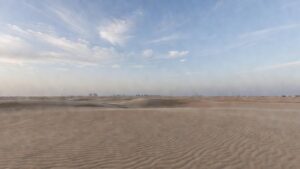
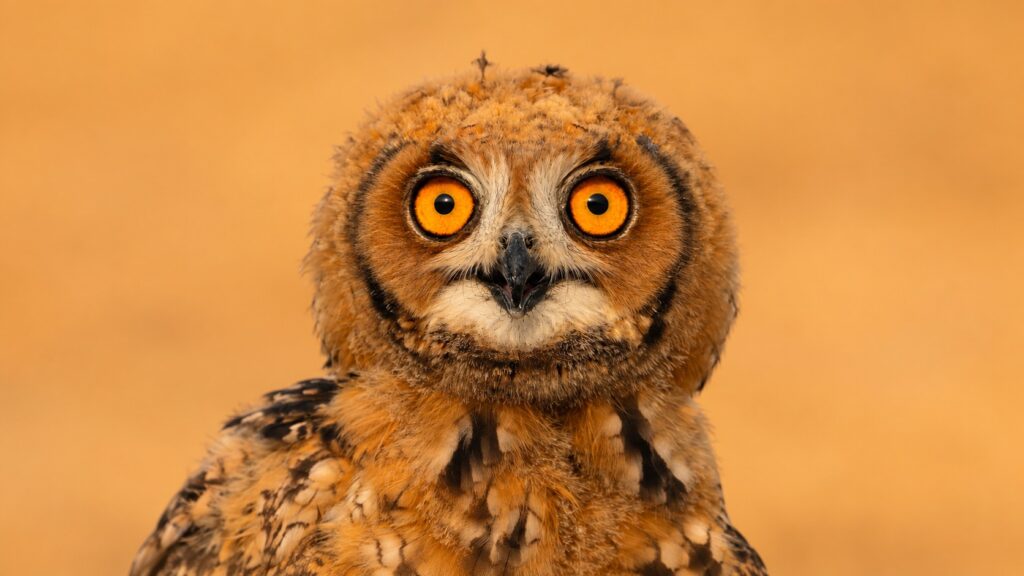
An injured young pharaoh eagle-owl has been taken to Kuwait’s Scientific Center after photographer Shatti Al-Shatti and Dr Mohammed Al-Matrouk found it unable to fly in the northern desert.
In an account published on November 10, Al-Shatti described a wing injury and the bird’s mother circling nearby. The two men took the juvenile for care after weighing the risks of leaving it behind. He withheld the location to protect other birds from hunters.
The rescue brings attention to a species that breeds in Kuwait but is considered rare locally, and to the work connecting field observers with wildlife rehabilitation.
The photographer behind the rescue
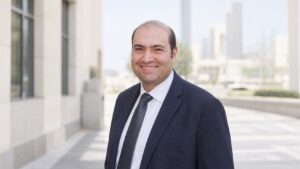
Al-Shatti’s involvement comes after years spent documenting subjects across Kuwait. A 2017 profile identified him as Shatti Abdulhamid Al-Shatti and described a photography book bringing together his pictures of people, places, sport and wildlife. Birds were among the subjects featured in that collection.
The profile also recorded his graduation from Kuwait University in 2000 and his work in special education. These details place his photography within a longer personal and professional history, rather than treating the recent encounter as the beginning of his interest in the natural world.
His published work has therefore reached beyond individual sightings. The book provided a record of a photographer working across different environments and subjects, with wildlife forming part of that practice well before the latest rescue drew attention.
A rare resident of Kuwait’s desert
The pharaoh eagle-owl, scientifically known as Bubo ascalaphus, is a resident breeder in Kuwait. The local reference KuwaitBirds classifies it as rare and a rare breeder, and identifies disturbance around breeding sites as a concern.
This is therefore a story about one of Kuwait’s own breeding birds, rather than simply a migrant passing through the country.
Its habitat includes open desert and rocky terrain. It hunts birds and mammals at night, spending daylight hours concealed. These habits help explain why a bird that lives in the country may remain unfamiliar to people who rarely encounter wildlife after dark.
The same reference lists persecution, habitat loss, human disturbance and pesticides among local threats. Those pressures concern the places where owls live as well as individual birds that need treatment.
Local rarity also needs to be distinguished from global conservation status. A species occurring across North Africa and the Middle East can still face pressures within a particular country. Its wider distribution does not make Kuwait’s breeding sites interchangeable or their protection unnecessary.
Earlier rescues show an established route to care
The Scientific Center has previously received young owls from field observers. In March 2018, photographer and bird observer Dalal Al-Mazid, working with the Kuwait Environment Protection Society’s bird monitoring and protection team, recorded two eagle-owl nests in the desert.
A report published that May described three young birds at each site. At one, the mother was present. At the other, observers had not found the mother over the course of a day, and the three juveniles were handed to the center for care and rehabilitation.
That earlier account records a different set of circumstances, rather than establishing a general rule for when a young bird should be removed. It does, however, show that the connection between Kuwait’s bird observers and the center predates the latest case by several years. It also demonstrates the importance of recording what was observed before describing an intervention as a rescue.
The two nests illustrate how sightings can produce more than photographs: they can record family groups, the presence of adults and the circumstances behind subsequent action.
There is a documented release history too. On January 22, 2024, the Scientific Center and the Environment Public Authority released rehabilitated birds of prey at Jahra Reserve. The species named in KUNA’s report included the pharaoh eagle-owl.
Musaid Al-Yasin, the center’s director general at the time, described treatment, study and rehabilitation as work undertaken before birds were returned to their natural environment. Environment Public Authority official Dr Abdullah Al-Zeidan said cooperation between the authority and the center had continued for more than a decade.
That sequence gives rehabilitation a specific meaning: admission and care are stages in a process that may lead to release. A bird arriving at the center and a bird returning to the wild are separate outcomes. The 2024 release establishes a precedent for this species, without determining what will happen to any newly admitted individual.
Protecting the birds beyond the photograph
KuwaitBirds’ code of conduct sets out why restraint matters when watching or photographing birds. Disturbance can keep adults away from nests, leaving young without food or exposing eggs and chicks to predators.
The guidance calls for distance from nesting and roosting sites, caution with artificial lighting, and avoidance of repeated chasing or flushing. It also advises birders to consider the consequences before publicising the presence of a rare bird.
These recommendations give the public a way to understand wildlife photography beyond the finished image. The observer’s distance, use of light and decision about sharing a location can all affect the animal being photographed. A widely circulated picture need not be accompanied by directions that bring more people to a sensitive site.
For the rescued juvenile, the next development to establish is its condition after treatment and whether it can eventually be released. Neither outcome was confirmed in the November 10 account.