Long before his current gym and social-media work, Redha Alqabandi appeared in Kuwait’s competition results. Those records trace a career through the country’s bodybuilding scene.
Redha Alqabandi’s bodybuilding story can be followed through competition reports that predate his current social-media presence. In May 2011, Kuwait reporting placed him first in the under-85-kilogram category at the Kuwait International Open Bodybuilding Championship.
Four years later, the International Federation of Bodybuilding and Fitness recorded him among the leading competitors in the under-90-kilogram division at the Arnold Classic in North America. These results provide a documented sporting history behind a public profile that today includes gym ownership, training-related content and business enquiries.
The distinction matters for a sport often encountered through short training clips or promotional posts. Alqabandi’s archive offers a more specific account: named competitions, dates, divisions and results that show where he stood within the competitive field.
A Kuwait result from 2011
Al-Jarida’s report of the May 2011 championship identifies Alqabandi as the winner of the under-85-kilogram class. It also records winners in the other divisions, placing his result within a particular event rather than presenting it as an undifferentiated title.
The competition was organised by Oxygen, according to the report. Its results included athletes whose careers would become familiar to followers of the sport, among them Rami Elssbiay in the heavier category. That shared event is part of the historical setting, not evidence of a training or business relationship between every athlete who competed there.
Weight divisions matter in bodybuilding, and a first place in one class is not interchangeable with an overall championship. Reporting the category preserves what the result establishes without enlarging it into a different achievement.
An earlier KUNA report also documented Alqabandi’s preparations for the Kuwait competition. Taken together, the contemporaneous reports show an athlete participating in an organised competitive scene, years before the current volume of fitness content on social platforms.
On the international stage
The IFBB’s account of the 2015 Arnold Classic North America places Alqabandi in the under-90-kilogram class. It describes him as an Asian Championships bronze medallist and records him behind runner-up Chakib Bouhlal in that Arnold division.
This is a different competitive setting from the Kuwait event. The report names athletes from several countries and describes a field with previous international results. Alqabandi’s appearance establishes participation and a placing in a specific international contest, without requiring a broader claim about his world ranking.
Historical results are a useful corrective to the way sporting biographies can compress an entire career into a few labels. “Champion” may refer to different events, categories and years. A result tied to the federation’s account tells the reader precisely which achievement is being discussed.
For Alqabandi, the records connect the local and international parts of his career. They provide points that can be checked independently of a current profile, and distinguish competition history from the later work of running a gym or communicating with an audience.
A sport building its events at home
Alqabandi also appeared in Al-Rai’s reporting on Kuwait’s 2015 amateur Olympia physique event. In that coverage, he discussed Kuwait’s capacity to stage major bodybuilding events and the presence of local athletes capable of competing internationally.
The article describes a competition awarding professional cards and involving international officials. The development of a sporting scene includes the events and qualification routes available at home, as well as the athletes who travel abroad.
A subsequent Al-Jarida report from April 2016 records professional cards earned by Kuwaiti athletes at the amateur Olympia competition in Mangaf, including Alqabandi in bodybuilding. It places the result within an event offering routes into professional competition.
These reports document the infrastructure around competition: organisers, divisions, judges, venues and qualification. An athlete’s career develops within that structure, even when the public remembers the individual image on stage.
From results to present-day work
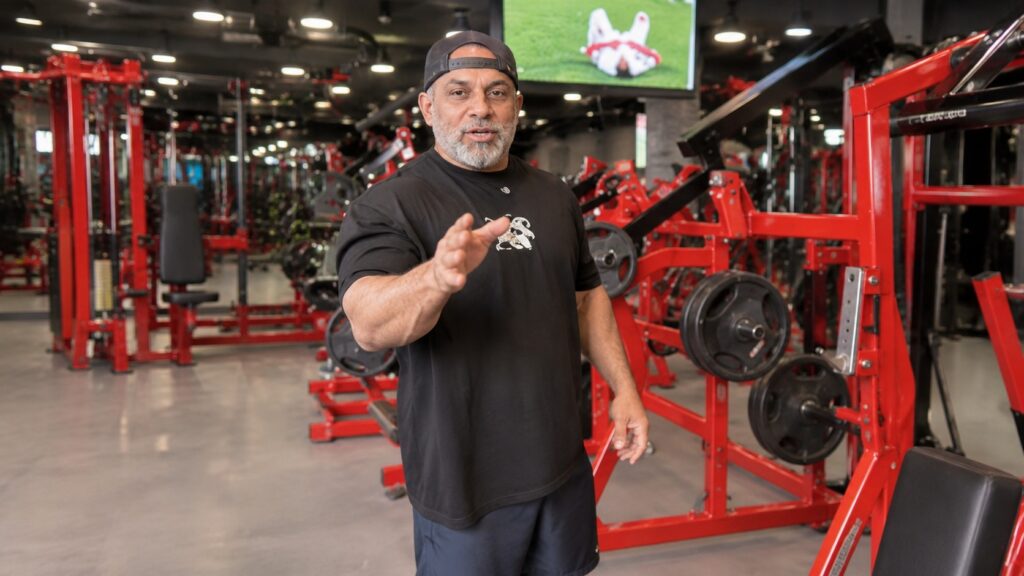
Alqabandi’s public Instagram profile identifies him as the owner of Plage Gym and associates him with the Oxygen team. It provides a present-day professional context for the earlier competition record.
Gym ownership and competition results describe different parts of a career. The archive establishes what happened at named contests; the profile identifies the business activity through which he now presents himself to his audience.
Keeping those parts distinct makes the history more informative than an unqualified success profile. A competition placing is a sporting result, while the operation of a gym involves a separate set of responsibilities and commercial decisions.
For readers encountering Alqabandi through a current video or photograph, the archive supplies the missing chronology. His public presence rests alongside a record of competition in Kuwait and abroad, with named results that remain available long after the original event has ended.