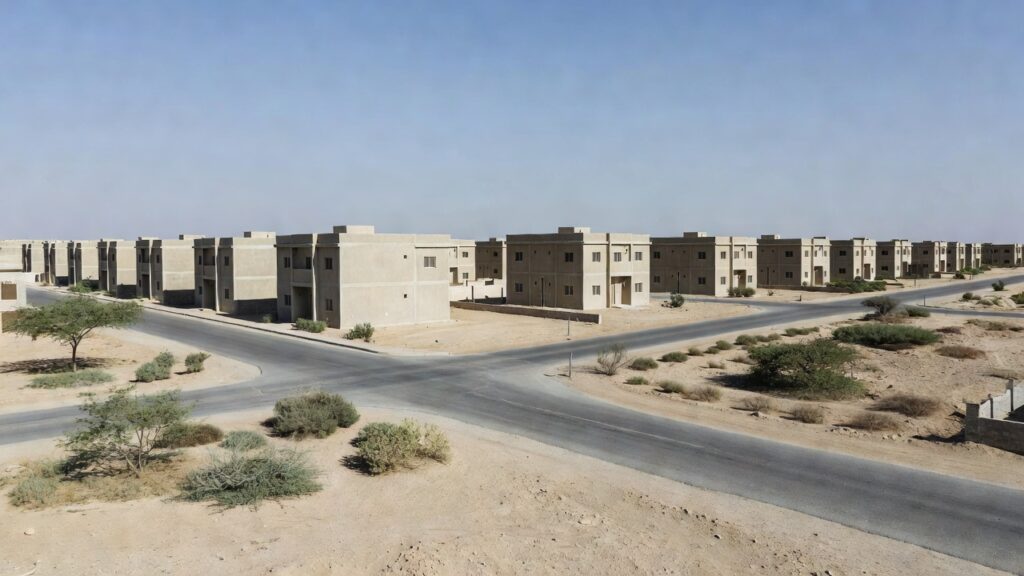
The Administrative Court upheld the Public Authority for Housing Welfare decision to withdraw government homes in East Taima, ruling that residents have no absolute right to retain the state-owned properties without a valid legal basis. Chaired by Counselor Abdulaziz Al-Khayyat, the court found that rental arrangements remain conditional upon compliance with applicable laws and regulations, which do not create any independent entitlement for occupants. The lawsuit was dismissed after judges determined that the plaintiffs’ claims had lapsed with recent changes to housing legislation, confirming the authority’s action as legally sound.
According to the ruling, the repeal of Article 29 via Legislative Decree No. 83 of 2025 eliminated the previous foundation that some residents had invoked for continued occupancy. This decree, approved last year and published in the Official Gazette, canceled provisions known in connection with the “He Who Sold His House” policy that had previously allowed tenancy in certain cases. The court stressed that public properties and funds must be managed strictly according to statutory authority, leaving the East Taima units available for reallocation based on current eligibility rules rather than assumed permanent rights.
The Public Authority for Housing Welfare notified 509 beneficiaries in early August to vacate their East Taima units by September 1 after canceling the associated lease agreements through the Sahel electronic platform. The action forms part of a wider recovery effort targeting arrangements where beneficiaries no longer meet required conditions, including instances of unauthorized subletting or extended time away from Kuwait. Local announcements indicate the authority aims to redirect the units toward eligible citizens, particularly military personnel and others awaiting formal housing allocations.
Reuters reported in September 2025 that Kuwait faces a longstanding housing crisis despite a constitutional requirement for the state to assist all citizen families in obtaining accommodation. The agency noted that demand has far outstripped supply for decades, resulting in extended waiting periods for many applicants and prompting a restructuring of the Public Authority for Housing Welfare. Officials have increasingly looked to private sector partnerships to expand capacity and address the accumulated backlog estimated in the tens of thousands of families.
The court’s assessment found the authority’s decision consistent with prevailing legislation while underscoring that government housing leases do not confer ownership-style permanence once supporting conditions change. This clarification supports parallel initiatives to update beneficiary records and remove applications from those who fail to provide timely documentation updates within mandated windows. Statements from the Ministry of Defense and Ministry of Interior have affirmed that leases terminate when eligibility lapses, aligning with regulations designed to prioritize housing for those in genuine need.