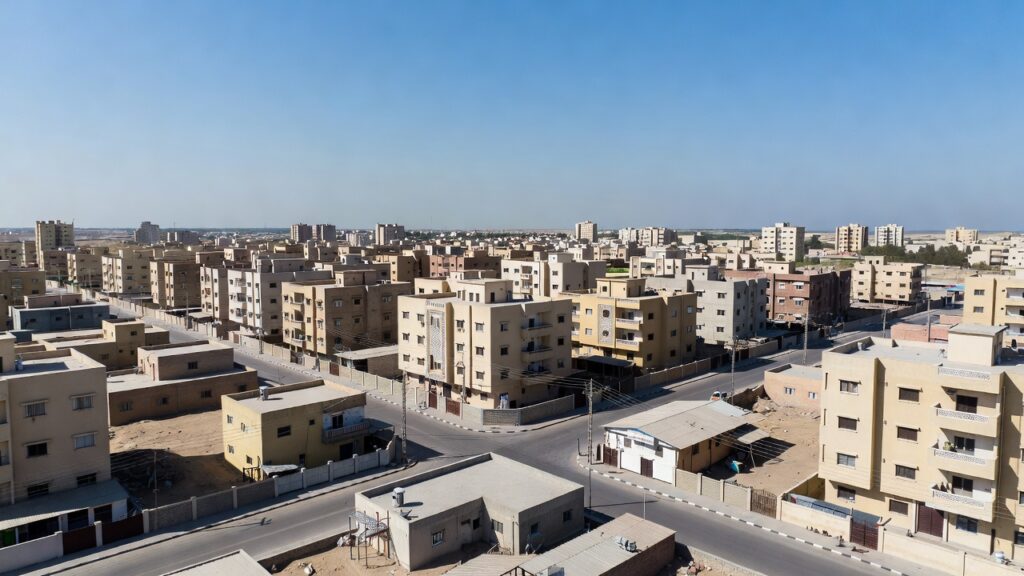
The Ministry of Interior said in a statement that the campaign represented the first time all four military agencies had joined forces on such an initiative, encompassing the Kuwait Army, National Guard, General Fire Force and interior ministry units. Senior officials joining Deputy Prime Minister and Minister of Interior Sheikh Fahd Yousef Saud Al-Sabah included Undersecretary Major General Abdulwahab Ahmed Al-Wahaib and Acting Assistant Undersecretary for General Security Affairs Major General Hamad Ahmed Al-Munifi. Additional participants drawn from the Ministry of Electricity Water and Renewable Energy, Ministry of Public Works, Ministry of Commerce and Industry, Public Authority for Manpower, Public Authority for Food and Nutrition, Kuwait Municipality and the Ministry of Health’s Medical Emergency Department provided specialized support during the operation.
The ministry’s statement listed key targets as illegal constructions, encroachments on state property, overcrowded and substandard residential units, unlicensed businesses operating from homes, commercial regulatory violations, residency law infractions and individuals sought on legal warrants. Enforcement actions included cordoning off affected zones, disconnecting utilities from non-compliant properties, documenting each case and initiating legal referrals that could result in demolitions where warranted. Pre-positioned reception centers stood ready to receive any residents displaced by the measures, while the statement underscored associated public health risks stemming from pollution and inadequate sanitation in zones where many inhabitants work in hospitals or restaurants.
Sheikh Fahd Yousef Saud Al-Sabah stated, “This campaign is the start of ongoing efforts that will expand to all governorates of Kuwait.” He added that preserving Kuwait’s reputation and ensuring the safety and security of everyone living in the country remain top priorities. The minister further declared there will be no leniency toward violating properties and all legal measures will be taken, including the demolition.
Public Authority for Civil Information figures place Kuwait’s expatriate population at roughly 3.3 million, a demographic that has intensified demand for housing in districts such as Jleeb Al-Shuyoukh and contributed to the proliferation of informal settlements. The Public Authority for Manpower has reported in prior years that comparable inspection drives across labor accommodations identified and corrected thousands of violations annually through inter-agency coordination. Such data underscores the scale of regulatory challenges that the current campaign seeks to confront in one of the country’s most densely settled areas.
The Ministry of Interior indicated that the Jleeb Al-Shuyoukh operation will serve as a model for expanded efforts throughout Kuwait’s governorates in the coming period. Previous security assessments by the same ministry have repeatedly flagged environmental and safety shortcomings in similar urban pockets as factors requiring sustained enforcement. Coordination among the participating bodies is intended to streamline both immediate enforcement and longer-term compliance improvements.