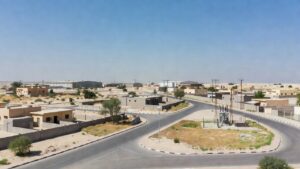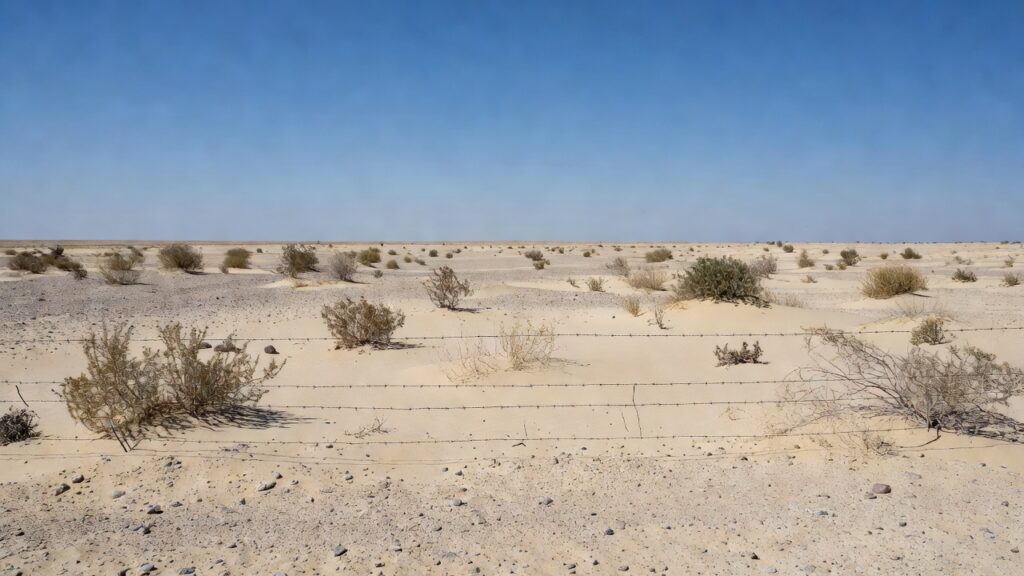
The Ministry of Interior reported that the General Department of Criminal Investigation working through the Jahra Investigation Department took the Egyptian man in his forties into custody just hours after the Saturday evening attack in the desert area of Kabad. Officers from the General Department of Border Security spotted the suspect attempting to cross into Iraq through a barbed-wire fence and stopped him before he could leave the country. The ministry stated that the suspect was transferred to Jahra Hospital for treatment of his injuries under heavy guard and then handed over for interrogation. Initial ministry findings pointed to a financial dispute as the underlying cause although later questioning uncovered a more personal motive.
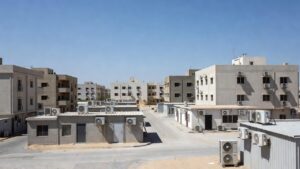
According to a security source familiar with the probe the accused confessed that his intended targets had been a Jordanian expatriate in his forties and the Jordanian’s son following an insult that cost the Egyptian his job at a company roughly one year earlier. The source said the suspect purchased a knife specifically for the attack and returned to the workers’ accommodation where he had lived for several years to locate the room he believed the pair occupied. In the darkness he stabbed one victim multiple times assuming it was his target only to discover afterward that the man was an Indian national born in 1992. When the Indian’s Iranian roommate born in 1957 awoke and tried to summon help the attacker stabbed him as well before fleeing.
The security source confirmed the Egyptian had no previous connection to either victim and insisted their deaths resulted from mistaken identity rather than any direct conflict. Investigators took the suspect back to the scene to reconstruct the events and recovered the knife from the room adding it to the case file. The source added that the accused admitted to being under the influence of narcotics at the time but emphasised this would not reduce his liability leading to separate drug-use charges alongside the murder count.
Public Authority for Civil Information figures place Kuwait’s expatriate population at more than 3.3 million representing over two-thirds of all residents and creating a large diverse labour force where personal and financial disputes occasionally escalate. The Ministry of Interior has in recent years expanded border monitoring and rapid-response capabilities to prevent suspects from fleeing through remote desert crossings such as the one used in this case. Jahra Investigation Department officers completed the initial probe swiftly ensuring the suspect remained in custody pending full legal proceedings.
The incident marks one of several expatriate-linked violent cases handled by the Jahra authorities this year although ministry statistics show overall crime rates in such labour accommodations remain low relative to population size. The ministry noted that the swift arrest prevented the suspect from evading justice and underscored coordination between criminal investigators and border security units. Further forensic work and witness statements continue to build the case file for prosecution.