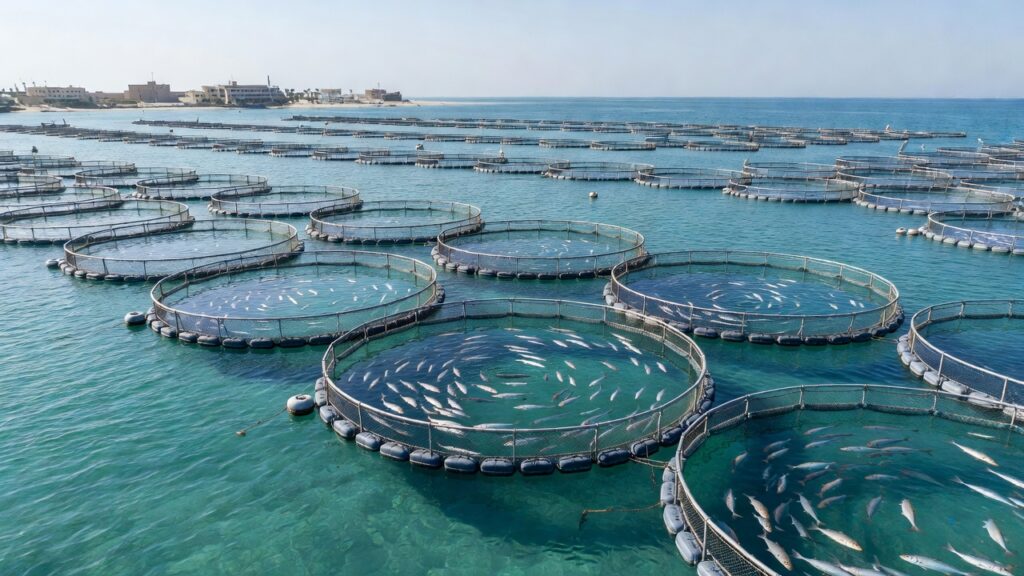
A government report has placed the Economic Production of Multiple Marine Fish project, which covers fish, crustaceans, molluscs and coral, at 67 percent completion with full operation scheduled for 2030 under a KD 24 million budget. The initiative seeks to stabilize consumer prices for seafood, counter monopolistic practices and establish a strategic reserve capable of insulating the local market from geopolitical shocks or global supply disruptions. It further aims to advance Kuwait’s aquaculture capabilities, deliver a reliable stream of fresh produce and curb unwarranted price surges while easing pressure on depleted natural stocks.
Economic expert Salem Al-Kandari stated that the aquaculture project is expected to help stabilize fish prices in the local market. He noted that locally caught fish, such as zubaidi and hamour, are among the most expensive here compared to other Gulf Cooperation Council countries. Al-Kandari predicted that the availability of integrated fish farms covering all species would lead to a price reduction of up to 50 percent, as has happened in Saudi Arabia and Oman, and he stressed that recent shortages of local supply have boosted imports including Iranian fish that many consumers favor for its similar environment.
Public Authority for Agriculture Affairs and Fish Resources and Central Statistical Bureau figures show a substantial drop in domestic fish and shrimp production over recent decades, with shrimp landings falling from 3,900 tons in the 1980s to around 600 tons by 2018. This shortfall has driven greater dependence on imported fish. A recent CNN report from Kuwait’s fish market underscored how regional tensions have curtailed fishing permits and local catches, exerting upward pressure on prices.
The report indicated that the project will alleviate strain on wild fish stocks by closing the supply-demand divide while generating jobs for young nationals and nurturing linked industries such as canning, marketing, transport and marine feed manufacturing. Al-Kandari highlighted the project’s significant role in supporting the pharmaceutical and cosmetics industries through production of nutritional supplements such as Omega-3 oil extracted from fish liver and tissues as well as collagen from fish scales used in skin care products. He pointed out that increased fish production will positively impact the retail and food sectors, leading to the opening of more seafood restaurants and the expansion of retail markets across Kuwait.
Al-Kandari stressed that this growth will create a supportive environment for young Kuwaitis to establish their own small and medium-sized enterprises related to the sector. He affirmed that the project will provide strong support for Kuwait’s industrial sector because many vital economic industries are directly linked to the fish sector including processing, packaging and related manufacturing. An IMARC Group assessment projects Saudi Arabia’s aquaculture output to climb to 850,500 tons by 2034 at a compound annual growth rate of 6.34 percent.
Mordor Intelligence data places Oman’s aquaculture market at USD 672.2 million in 2026 on course to reach USD 858.83 million by 2031 with annual expansion of 5.03 percent fueled by export opportunities and value-added processing. The Kuwaiti effort mirrors wider regional strategies to enhance food security and lessen pressure on traditional fisheries. Completion of the project by 2030 is expected to restore market balance toward premium domestic offerings.