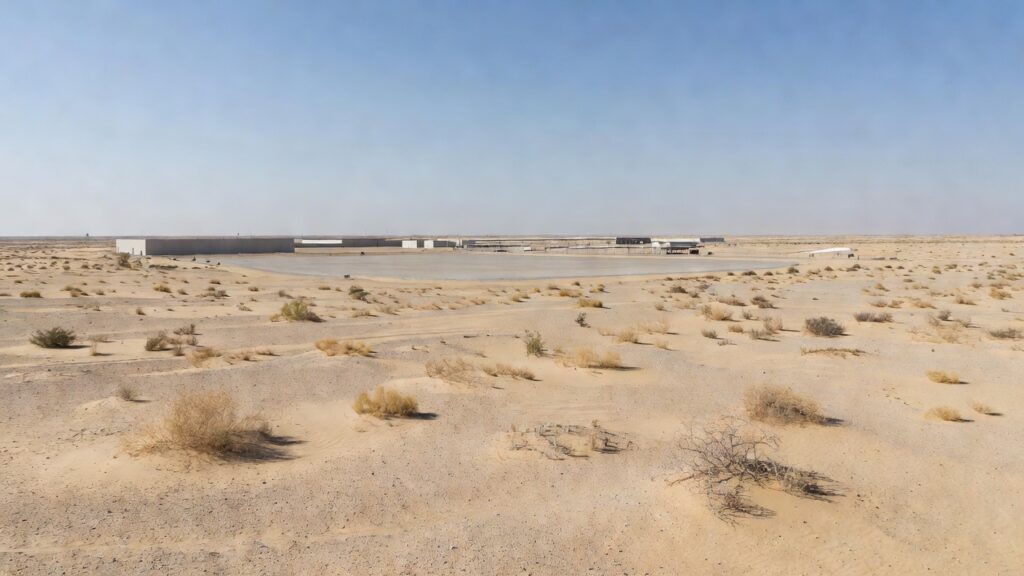
The Kuwait Municipal Council approved a request from the General Administration of Customs during its session on June 29 to expand facilities at the Nuwaiseeb border crossing with Saudi Arabia. Council chairman Abdullah Al-Muhairi chaired the meeting that designated two additional sites measuring 99,828 square meters and 1,320,172 square meters respectively. These plots will accommodate dry and wet storage along with shaded and open areas plus supporting services according to the council’s decision. The approval raises the crossing’s overall footprint to 2,580,700 square meters while targeting improvements in logistics flow and operational efficiency.
Council documents detail that the expansion addresses growing demands at one of Kuwait’s primary land gateways. The new allocations focus on reorganizing parking, assembly and storage functions to reduce bottlenecks. This step builds on prior infrastructure work at the site including a 2025 renovation completed in 14 days by NBTC Group which the company described as exemplifying rapid national development efforts.
Nuwaiseeb has handled significant commercial traffic in recent years with border operations updates showing around 500 trucks processed daily to sustain supplies of food and essential goods. Regional developments added pressure after Saudi Arabia opened all land borders in March 2026 to ease movement amid disruptions according to reports from Arab News. The Municipal Council’s allocation supports these volumes by expanding dedicated customs zones.
The decision aligns with wider transportation projects including the Gulf Railway initiative that originates near Nuwaiseeb and stretches 111 kilometers to a main station in Shaddadiyah as outlined in updates from the Ministry of Public Works. Such connectivity enhances the border’s strategic role within GCC trade networks. Coordination among government bodies has been central to integrating the expansion with these longer-term plans.
Additional proposals were reviewed in the same session though the Nuwaiseeb project stood out for its direct impact on cross-border commerce. The General Administration of Customs had emphasized the need for extra space to manage increased activity with GCC partners. Council members endorsed the plan following technical assessments that confirmed compliance with planning requirements and potential efficiency gains.
State-owned land forms the basis of the two new sites now repurposed for customs operations under the approved framework. This move forms part of ongoing border management modernization across Kuwait’s entry points. The council’s action provides a foundation for sustained improvements in trade facilitation at the Nuwaiseeb crossing.