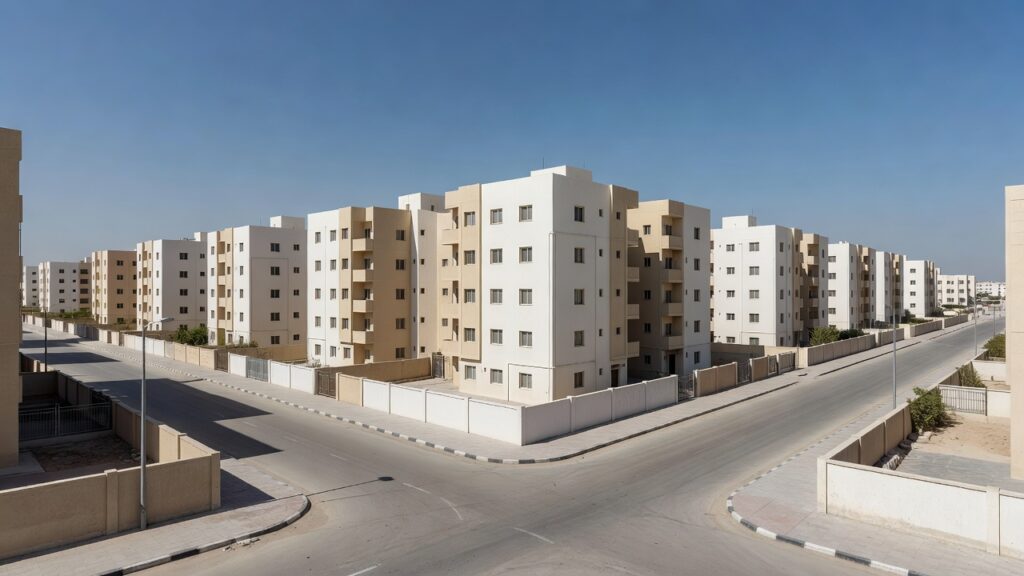
The Ministry of Interior has documented the closure of numerous non-compliant buildings in Jleeb Al-Shuyoukh after nearly two years of warnings that owners and caretakers often failed to relay to tenants living in deteriorating conditions. These properties had become severely overcrowded as low-income expatriate workers prioritized cheap rents that enabled them to remit more earnings to families overseas over adequate living standards. The campaign also uncovered hundreds of commercial and food-safety violations resulting in the shutdown of associated shops and establishments while officials arranged temporary shelters equipped with basic services for those immediately displaced.
Utility services including electricity were disconnected from hazardous structures to enforce compliance during the multi-agency operation that involved 11 government entities and was overseen by First Deputy Prime Minister and Minister of Interior Sheikh Fahad Al-Yousef Al-Sabah. The minister stated that there will be no leniency toward buildings that violate safety regulations and that authorities will take all necessary legal measures including demolishing dilapidated properties whenever necessary to protect lives and property. Inspections revealed the serious scale of environmental and public health hazards in the area with some residents working in hospitals and restaurants raising concerns about potential disease transmission.
Displaced occupants have since moved into neighboring areas where rooms intended for far fewer people are now housing eight to 10 individuals and beds are being rented individually for between KD 40 and KD 50 per month. This relocation is recreating patterns of extreme density that strain infrastructure and recreate the very risks the original enforcement sought to eliminate. Information gathered during the campaign indicates that the closures have simply redistributed rather than resolved the longstanding overcrowding issue in the wider vicinity.
The Ministry of Interior is extending its monitoring to track buildings suspected of exceeding permitted occupancy levels or presenting similar safety concerns in these adjacent neighborhoods. Public Authority for Civil Information figures place Kuwait’s expatriate population at roughly 3.3 million more than two-thirds of the total residents many of whom depend on such affordable but often substandard housing particularly single male laborers. Related assessments have flagged at least 42 unsafe structures for potential demolition as part of sustained efforts to address urban violations.
Sheikh Fahad Al-Yousef Al-Sabah emphasized that Kuwait’s reputation ranks among its highest priorities and that protecting the safety and security of everyone living on this land allows no compromise. The operation marked the start of a nationwide drive that will expand across all governorates to enforce housing safety and public health regulations consistently. Officials continue to balance regulatory enforcement with the practical needs of a large expatriate workforce integral to multiple economic sectors.