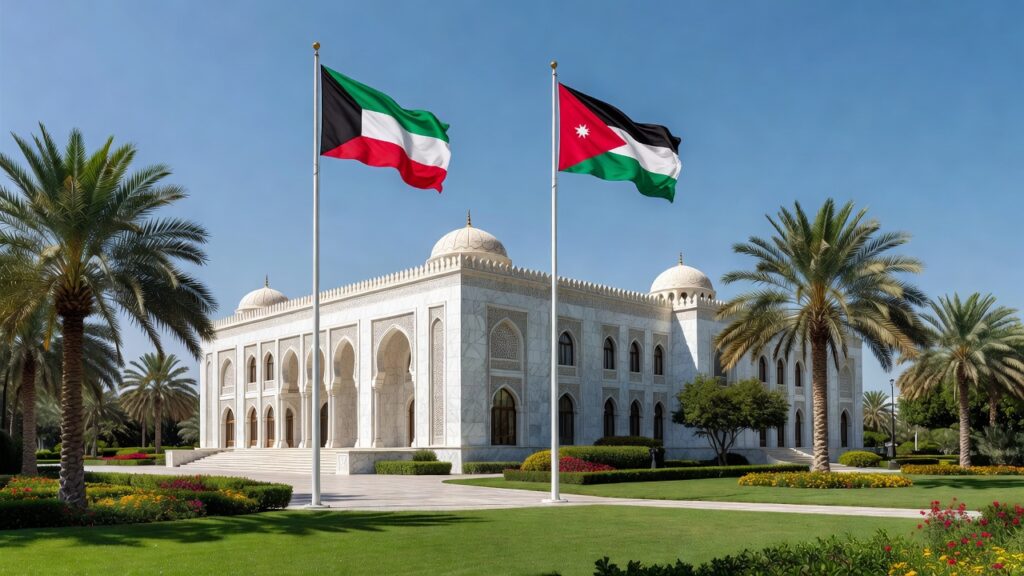
The Interior Ministry issued a press statement detailing how Sheikh Fahad Al-Yousef Al-Sabah hosted Maj Gen Ahmad Husni and his delegation at Bayan Palace. Discussions centered on developing coordination between the security agencies of both nations and exchanging expertise on matters of mutual interest. These talks are expected to contribute to broader security and stability while reviewing the deep historical and fraternal relations between Kuwait and Jordan.
This meeting builds upon an earlier visit by Sheikh Fahad to Amman in June 2026 where he held talks with Jordanian Interior Minister Mazen Al-Faraya on regional security developments. KUNA reported at the time that the Kuwaiti minister lauded the longstanding cooperation between the two interior ministries. Both sides then stressed the importance of sustained coordination to enhance overall stability in the face of shared challenges.
Sheikh Fahad Al-Yousef has repeatedly emphasized collaborative security frameworks across the region. When he chaired the 42nd GCC Interior Ministers’ meeting at Bayan Palace in November 2025, he described GCC security and stability as an integrated system based on shared destiny. KUNA covered his remarks that called for intensified cooperation as a strategic necessity amid fast-evolving regional and global shifts.
The minister outlined in that session how joint Gulf efforts serve as protection against terrorism, extremism and drug trafficking. He advocated for field-level coordination, expertise exchange and unified awareness initiatives to counter organized crime, cyber threats and money laundering. Sheikh Fahad Al-Yousef further noted the value of modern technologies and artificial intelligence in strengthening these capabilities according to the KUNA account.
Kuwait’s Interior Ministry has documented a series of similar engagements by Sheikh Fahad throughout 2025 and 2026 with envoys from the United States, India, Pakistan, Romania, Qatar and the Palestinian territories. Each discussion typically addressed boosting bilateral security cooperation, information sharing and responses to regional issues. The ministry consistently frames these meetings as advancing collective Gulf security under the GCC umbrella.
Public Authority for Civil Information data places Kuwait’s expatriate population at around 3.3 million people, representing more than two-thirds of total residents and underscoring the need for effective cross-border security measures. The ministry has instructed all relevant departments to maintain heightened field readiness and daily monitoring of the security situation. Officials have also called for full inter-agency coordination to ensure rapid responses to any potential emergencies.