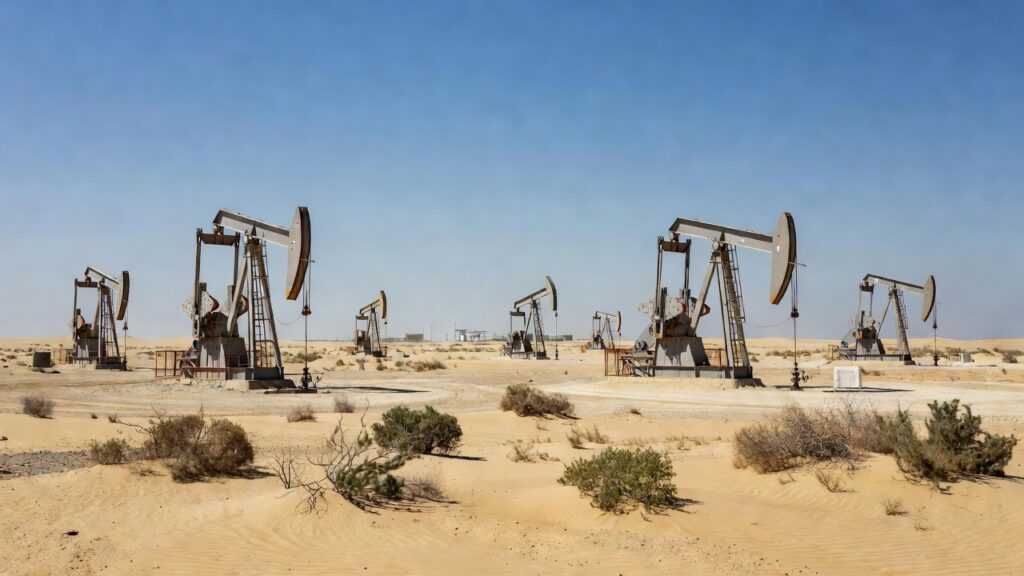
The Kuwait Petroleum Corporation reported that Kuwaiti oil settled at 68.61 dollars per barrel on July 3 after declining 3.32 dollars from the prior session’s close of 71.93 dollars. Brent crude rose 23 cents to 71.80 dollars per barrel in the same period while West Texas Intermediate advanced 11 cents to 68.69 dollars. Kuwaiti crude traded slightly below the U.S. benchmark and at a discount to Brent reflecting short-term regional pricing dynamics according to the corporation’s data.
Market sentiment stayed broadly stable despite the Kuwaiti decline with global prices supported by balanced supply and demand expectations the Kuwait Petroleum Corporation assessment found. Limited upward momentum persisted in international trading as participants weighed ongoing adjustments in Gulf grades against steadier international contracts. The corporation noted that daily volatility has not altered the underlying stability observed in recent sessions.
Reuters reported that the price drop aligned with progress in U.S.-Iran negotiations in Qatar that have eased fears of prolonged supply disruptions following earlier closures of the Strait of Hormuz. An Al Jazeera analysis tied the retreat to hopes for a permanent peace deal that could restore Gulf oil flows disrupted since the start of regional conflict earlier in the year. Analyst Vandana Hari of Vanda Insights told Al Jazeera that a steady uptick in Gulf oil exports and cautiously optimistic geopolitical sentiment drove values lower.
Kuwait sharply increased its crude production to 1.65 million barrels per day in June from 580000 barrels per day in May a source familiar with the data told Reuters. The ramp-up followed the lifting of war-era force majeure notices on June 18 and came as daily output reached as high as 1.9 million barrels per day in the final ten days of the month according to the news agency. Prior to the Hormuz disruptions Kuwait had been producing around 2.5 million barrels per day Reuters figures show.
The International Energy Agency projected that global oil supply would average 102.2 million barrels per day in 2026 after a 3.9 million barrels per day decline assuming gradual resumption of flows through the Strait of Hormuz. World oil demand is forecast to contract by 420000 barrels per day this year to 104 million barrels per day with the largest losses concentrated in the second quarter the agency assessment found. Refinery throughputs are expected to fall by 1.6 million barrels per day for the full year as operators adjust to shifting trade flows and feedstock availability.
OPEC forecasts place global oil demand growth at 1.4 million barrels per day for 2026 with non-OECD countries accounting for the bulk of the increase. Kuwait’s output recovery forms part of broader Gulf efforts to restore production curtailed by the earlier conflict the organisation data indicates. Prices have now fallen to levels not seen since before the intensification of regional hostilities according to multiple market reports.