According to a statement from the UK Foreign Commonwealth and Development Office the 22nd UK-Kuwait Joint Steering Group convened in London on October 23 with Hamish Falconer the Under-Secretary of State for the Middle East North Africa Afghanistan and Pakistan co-chairing alongside Kuwait’s Deputy Foreign Minister Sheikh Jarrah Jaber Al-Ahmad Al-Sabah. The session reaffirmed the deep historic ties between the two countries while identifying concrete actions to boost collaboration across trade investment defence and regional security matters. Ministers examined respective industrial strategies prospects for joint military training and opportunities to expand development partnerships in third countries in addition to reviewing the situation in Palestine.
The Foreign Office statement indicated that the meeting oversaw the signing of two memoranda of understanding one focused on healthcare cooperation to advance health systems and professional training. The second memorandum covers hydrographic surveying a step expected to strengthen maritime security and navigational safety in shared areas of interest. These agreements reflect a deliberate effort to translate high-level dialogue into practical bilateral initiatives that deliver tangible benefits in both civilian and security domains.
The Joint Steering Group mechanism established in 2012 continues to function as the primary ministerial platform for guiding UK-Kuwait relations a UK government assessment found. The partnership was upgraded to a full Strategic Partnership framework in 2023 with the inaugural Strategic Dialogue designed to align policies on defence security trade and cultural exchange. Thursday’s gathering forms part of this sustained architecture by concentrating on actionable outcomes that address evolving regional demands.
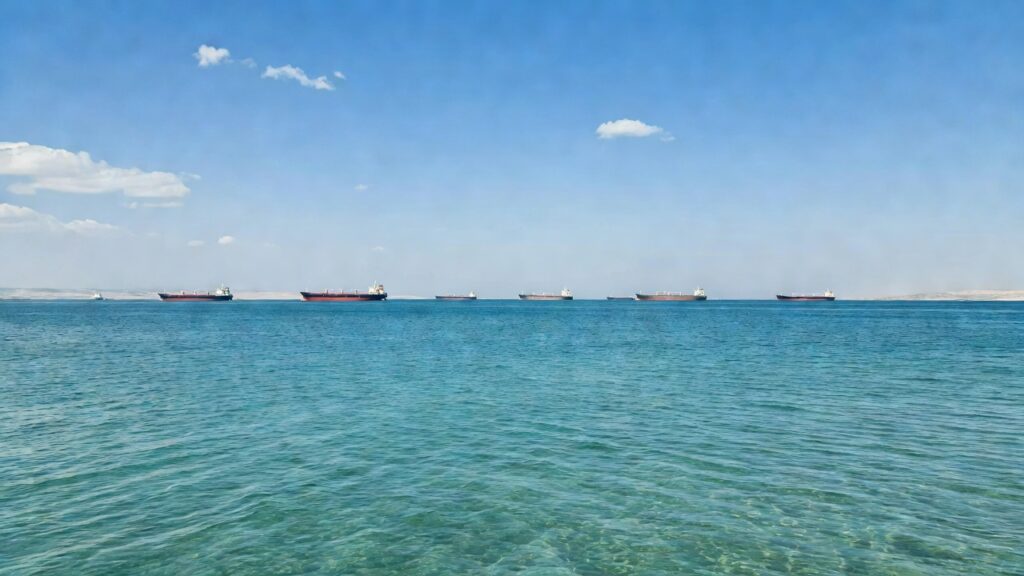
U.S. Energy Information Administration figures show that oil flows through the Strait of Hormuz averaged 20 million barrels per day in 2024 equivalent to about 20 percent of global petroleum liquids consumption. Such volumes underline the waterway’s central role in international energy security and explain why both governments have repeatedly emphasised the need for its unimpeded operation. The hydrographic agreement signed during the meeting is intended to contribute to improved maritime domain awareness and safer passage in these strategically sensitive waters.
The United Kingdom played a pivotal role in the 1991 liberation of Kuwait contributing some 35 000 troops to the international coalition that ended the Iraqi occupation. In the decades since the two countries have maintained close defence cooperation through regular joint exercises including the recurring Desert Warrior drills that enhance interoperability between their armed forces according to bilateral defence reports. These longstanding military links have been supplemented by training programmes and liaison postings that keep Kuwaiti personnel engaged with British military institutions.
Subsequent high-level visits by British defence advisors have built directly on the October understandings with discussions centring on air and missile defence coordination as well as freedom of navigation according to statements from the British Embassy in Kuwait. The pattern of engagement demonstrates the priority both capitals attach to preserving stability around critical maritime routes amid fluctuating regional conditions. Officials continue to explore additional avenues for joint work that would further reinforce the strategic partnership established over more than three decades.