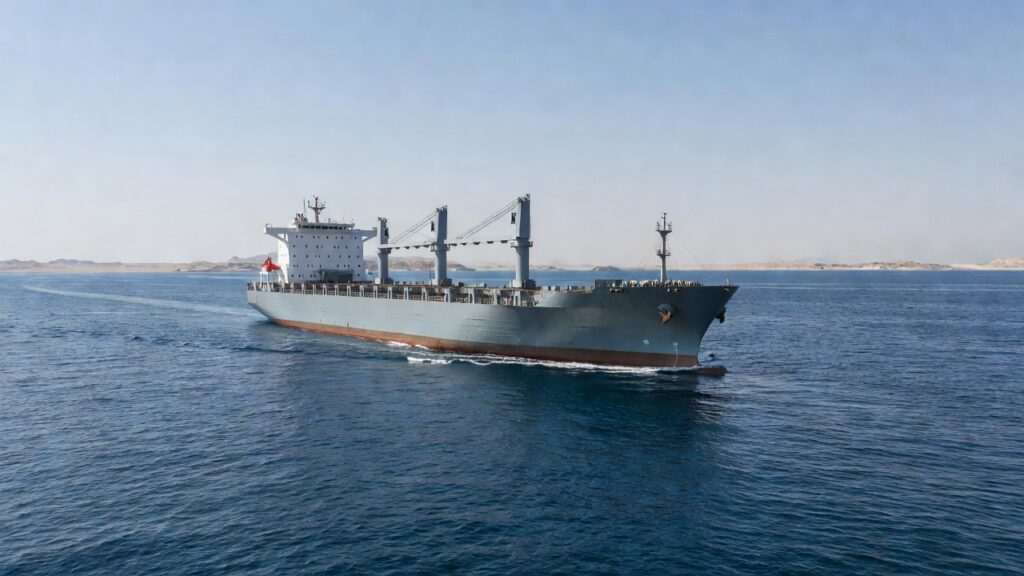
In an interview with Arab Times, Yemen’s Ambassador to Kuwait Dr. Ali bin Safaa described the fire on a Saudi commercial vessel in the Red Sea as a serious escalation that endangers international maritime security. Bin Safaa told the newspaper that Houthi militia attacks have evolved beyond isolated operations into elements of a coordinated Iranian plan targeting both regional stability and worldwide shipping. The envoy emphasized that striking commercial ships breaches international law while jeopardizing the Red Sea and Gulf of Aden, critical passages for global commerce.
According to Bin Safaa, the Houthis employ political and religious rhetoric claiming to oppose Israel and the United States in order to garner public sympathy, yet their true aim involves advancing Iranian efforts to sow instability. The ambassador added that the group coordinates with armed factions and pirates in Africa to transform the waterways into zones of influence and extortion. A monthly forecast published by the Security Council Report in July 2026 indicated that while no fresh Houthi incidents against shipping had occurred that year, persistent threats to resume targeting vessels underscored unresolved tensions in the area.
Bin Safaa noted that the Houthis find themselves in a weakened position owing to widespread rejection from Yemeni public and tribal communities. He urged the legitimate Yemeni government and the Saudi-led Arab Coalition to seize this moment to dismantle the militia and rebuild state institutions. The diplomat highlighted recent decisions by Presidential Leadership Council Chairman Dr. Rashad al-Alimi to restart oil exports as a direct rebuttal to Houthi pressure tactics that have harmed the national economy.
The ambassador called for a comprehensive Arab and Gulf initiative that would deliver political, military and on-the-ground backing to the recognized government, enabling Yemeni forces to retake key ports and border crossings including Hodeidah. He argued that genuine security for the Red Sea depends on restoring stability across Yemen itself. An assessment released by the Institute for the Study of War on July 21, 2026, reported that the Houthis had declared a naval blockade against Saudi-bound vessels days earlier, a move analysts linked to broader Iranian attempts to widen regional disruptions and raise shipping costs.
Bin Safaa stressed the need for enhanced coordination on maritime security among Gulf states, Yemen, Egypt and African nations to counter Houthi misinformation campaigns and reveal their connections to Iran. He maintained that past foreign interventions have fallen short by addressing symptoms without tackling root causes, thereby allowing the militia to sustain its narrative. The envoy’s remarks come amid heightened regional alerts, with the Security Council Report noting that warnings from both Houthi leaders and Iranian officials signal potential for renewed Axis of Resistance activities stretching from the Strait of Hormuz to the Bab el-Mandeb Strait.