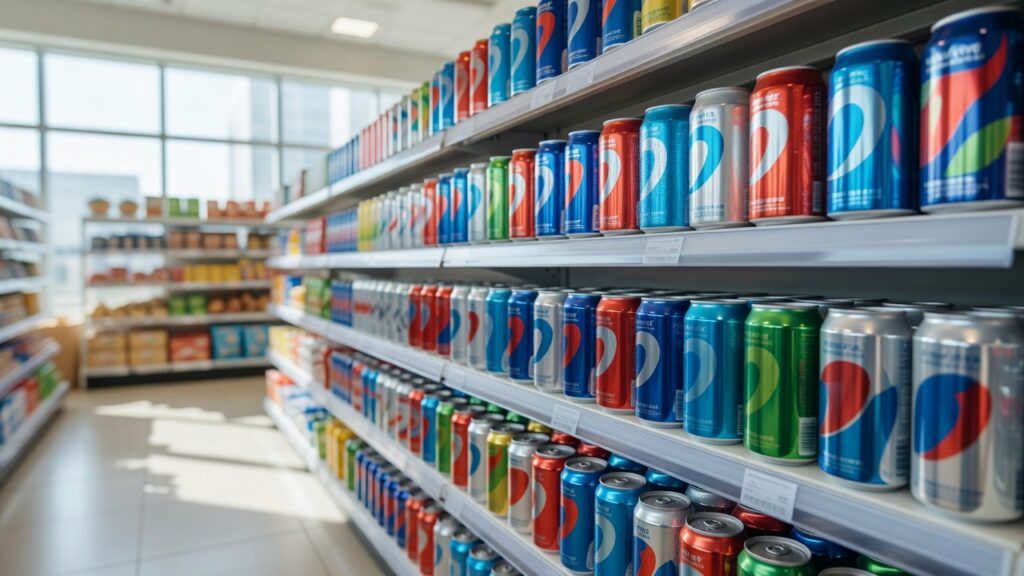
Kuwait’s Ministry of Commerce and Industry issued new rules for energy drink sales and distribution effective March 19 2026 under Ministerial Decision No. 29/2026 as authorities moved to address health concerns linked to high caffeine and stimulant intake. The regulations prohibit sales to individuals under 18 limit recommended daily consumption to two cans and confine availability to cooperative societies parallel markets and supervised designated areas while requiring prominent health warnings on all packaging according to the decision. Sales serving or distribution of the beverages is banned in a wide range of venues including government offices educational institutions and many retail settings with all forms of advertising and sponsorship also prohibited.
Ministerial Decision No. 29/2026 defined energy drinks as non-alcoholic beverages primarily composed of water that contain high levels of caffeine not less than 80 milligrams per 250 milliliters from natural sources such as guarana or produced synthetically. These products may also include other stimulants including taurine inositol or glucuronolactone as well as carbohydrates sugar sweeteners vitamins minerals and amino acids with flavorings positioned to enhance alertness physical activity or mental performance the decision stated. The parameters set the boundaries for all products subject to the regulatory framework across Kuwaiti retail and distribution channels.
The regulations outlined in the decision prohibit the sale or distribution of energy drinks to anyone under the age of 18 and bar any products whose caffeine content exceeds approved thresholds or that violate health requirements established by the Public Authority for Food and Nutrition. Consumers should not exceed two cans per day while manufacturers and suppliers must place clear and prominent health warnings on packaging the ministry’s document specified. Sales remain permitted solely in cooperative societies parallel markets and other designated areas that operate under strict supervision by the relevant authorities.
According to the ministerial decision the sale serving or distribution of energy drinks is prohibited in government agencies and public institutions as well as in public and private sports clubs. The restrictions extend to all public private and community educational institutions at every level including institutes and universities along with restaurants cafes grocery stores juice shops food trucks of any size and self-service kiosks. Delivery and takeout platforms are likewise barred from offering the beverages the decision detailed.
The Ministry of Commerce and Industry decision further prohibits all advertising promotion marketing or commercial sponsorship of energy drinks whether conducted directly or indirectly through any media outlet electronic platform or social media channel. Companies and their agents cannot sponsor or support events that promote such products the regulations stated. This measure seeks to reduce the visibility and appeal of the beverages particularly among younger demographics in line with the overall public health objectives.
Violations of the new rules can result in one or more penalties imposed by the ministry including a formal warning temporary administrative closure of the premises or license revocation in cases of repeated offenses according to Article 5 of the decision. These administrative measures apply without prejudice to any stricter penalties available under other laws the document noted. Enforcement falls under the oversight of the Ministry of Commerce and Industry in coordination with the Public Authority for Food and Nutrition on technical health standards.
An IMARC Group assessment placed the GCC energy drinks market at USD 884.2 million in 2025 with a projection for expansion to USD 1 736.8 million by 2034 at a compound annual growth rate of 7.56 percent driven by demand for stimulant beverages among younger consumers and professionals. The Kuwaiti regulations align with broader regional concerns over excessive caffeine consumption that have prompted comparable restrictions in several Gulf states in recent years a pattern reflected in multiple health ministry announcements across the bloc. The decision forms part of ongoing efforts to protect public health by limiting access to high-stimulant products especially in environments frequented by youth.