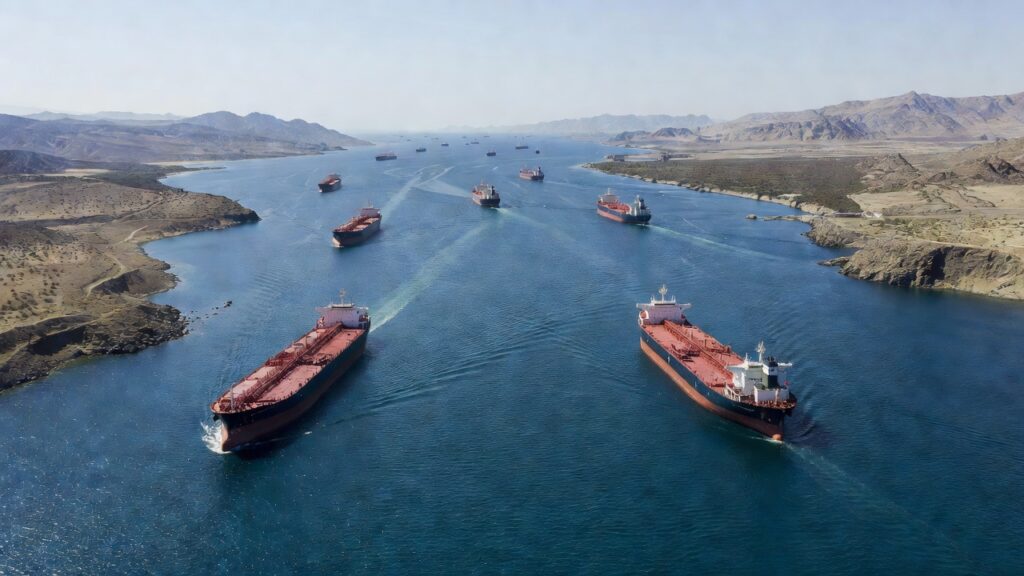
During talks in Beijing on May 14, 2026, US President Donald Trump and Chinese President Xi Jinping agreed that the Strait of Hormuz must remain open to ensure the free flow of global energy supplies, according to a White House readout. The consensus emerged against the backdrop of regional tensions tied to the US and Israel conflict with Iran, which has disrupted the strategic waterway. Xi also voiced opposition to imposing tolls on vessels transiting the strait, the readout stated.
The White House summary of the meeting, as carried by Arab Times on June 19, underscored the leaders’ shared emphasis on unobstructed navigation to support worldwide energy markets. In the first half of 2025, oil flows through the Strait of Hormuz averaged 20.9 million barrels per day, equivalent to about 20 percent of global petroleum liquids consumption and one-quarter of total global maritime traded oil, according to the US Energy Information Administration. This volume reflects a slight decline in crude shipments since 2022 that has been partially offset by rising petroleum product cargoes.
The strategic chokepoint’s role gained renewed attention following the 2026 Iran war, when up to 95 percent of traffic was diverted to avoid hostilities and global oil prices surged, Britannica reported. China receives 37.7 percent of all crude oil and condensate transiting the strait, more than any other destination, industry data from Visual Capitalist shows. Saudi Arabia accounts for 37.2 percent of those exports, followed by Iraq at 22.8 percent.
Beyond maritime security, the presidents advanced cooperation on curbing fentanyl precursor chemicals entering the United States. The discussions built on a November 2025 White House agreement in which China committed to halting shipments of designated chemicals and controlling exports of others worldwide. A Brookings Institution review noted that such efforts restarted in earnest after a 2023 diplomatic breakthrough between the two countries.
The agenda also included expanding Chinese purchases of US agricultural products to address trade balances. Commitments from late 2025 call for China to import at least 25 million metric tons of US soybeans annually through 2028, along with resumed buys of sorghum and logs, a White House fact sheet detailed. These steps continue the trajectory set by earlier phase-one trade understandings that boosted US farm exports.
Xi furthermore signaled interest in ramping up imports of US oil to lessen China’s long-term dependence on Gulf supplies routed through the Strait of Hormuz, according to a White House official. Over 30,000 vessels navigate the passage each year, carrying energy vital to Asian markets that absorb 89 percent of its flows, IMF-linked figures indicate. The leaders’ accord highlights sustained attention to safeguarding this critical route from interference or closure.