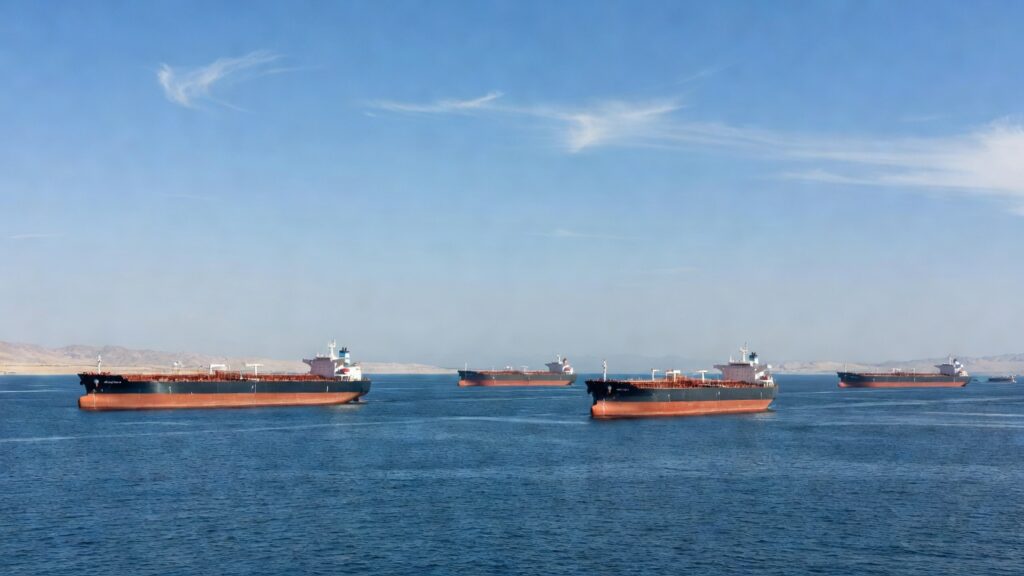
Gulf oil exports jumped more than 3 million barrels per day in June to exceed 10 million bpd as tanker traffic resumed through the Strait of Hormuz following a June 17 U.S.-Iran agreement that halted conflict and eased a blockade, according to cargo analytics firms. Kpler data placed combined crude and condensate shipments from Saudi Arabia, the UAE, Kuwait, Iraq and Iran at 10.07 million bpd, up from roughly 6.5 million bpd in May. Vortexa estimated the flows at 10.2 million bpd, also up from 7 million bpd the prior month, although both trackers noted volumes remained about 40 percent below levels seen a year earlier when shipments reached 16.5 million bpd.
The UAE drove much of the recovery with exports hitting a record 3.7 million to 3.8 million bpd in June, more than 1 million bpd higher than May figures, Kpler, Vortexa and LSEG data indicated. The surge allowed millions of barrels of stranded crude to reach international markets and enabled producers to increase output while pushing oil prices back toward pre-conflict levels, a Reuters report stated. ADNOC had maintained some exports during the disruption through a tanker shuttle service and pipeline diversions, the report added.
Saudi Arabian crude exports climbed by 768,000 bpd to 4.52 million bpd in June according to Kpler, with loadings from Ras Tanura helping average shipments reach about 6.3 million bpd last week, close to January levels. Exports from Iraq and Kuwait each recovered to around 800,000 bpd, Vortexa data showed, after the countries had limited options to bypass the strait during the conflict. Kuwait raised its crude production sharply to 1.65 million bpd for the month, a source told Reuters, while Iran increased exports more than 70 percent to 640,000 bpd as the blockade eased, according to Vortexa.
Ship broker BRS reported that 98 tankers crossed the Strait of Hormuz between June 22 and June 28, averaging 14 per day in the highest weekly traffic since the conflict began, with 47 laden outbound vessels and 41 ballast ships entering the Gulf. The increased activity signaled growing confidence among ship owners to resume operations in the region, the Reuters report noted. A Kpler analyst said the backlog of crude stranded in the Gulf had cleared more quickly since the agreement, leaving about 23 million barrels still to transit the waterway.
Floating storage in the strait had peaked at 96 million barrels in late April before the resumption of flows, the Kpler analyst Johannes Rauball added in the report. The U.S. Energy Information Administration data showed that oil flows through the Strait of Hormuz averaged more than 20 million barrels per day in 2024 and the first half of 2025, representing about one-fifth of global petroleum liquids consumption prior to the disruptions. A Bloomberg survey found that OPEC crude oil production rose 2.34 million bpd to 18.75 million bpd in June, driven by gains in Kuwait, Saudi Arabia and Iran, though output stayed well below prewar levels.
The IEA had earlier reported that the conflict triggered the largest supply disruption on record, with cumulative Middle East oil losses exceeding 1.3 billion barrels and Hormuz flows dropping to an average of 2.7 million bpd during the peak disruption months of March through May. OPEC’s monthly reports for early 2026 had tracked significant production declines across Gulf members, including drops of more than 50 percent in some cases before the June rebound. Cargo trackers and ship brokers continue to monitor the sustained resumption of exports as the region stabilizes after the brief but intense disruption period.