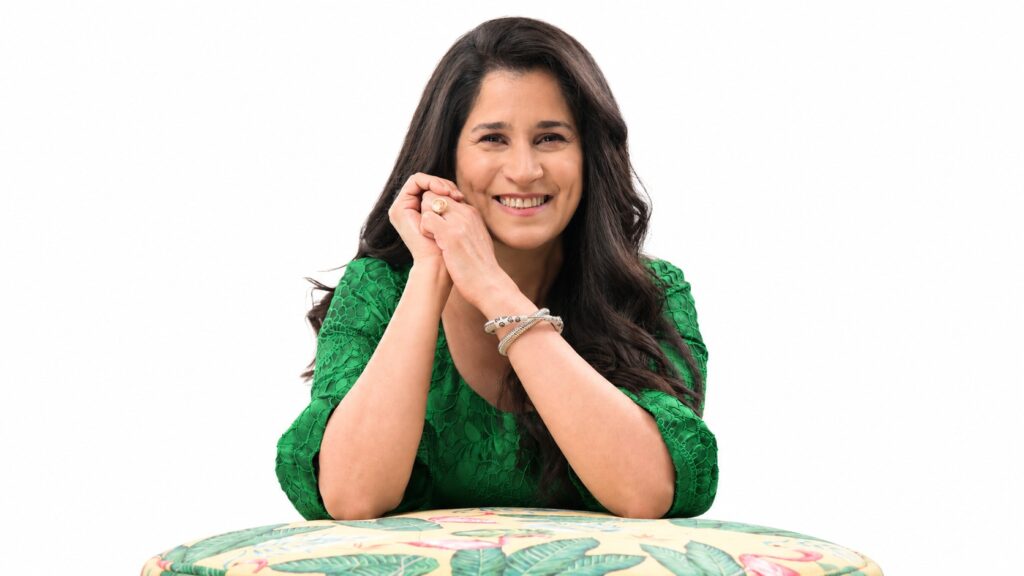
For Sheikha Intisar Al-Sabah, the psychological consequences of war are rooted in personal experience. Her work has connected Kuwait’s history with efforts to support Arab women affected by conflict, using drama, education and research.
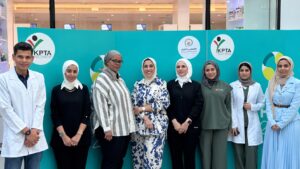
Sheikha Intisar Al-Sabah’s humanitarian work returned to the diplomatic agenda in September, when she met Georgia’s ambassador to Kuwait, Noshrevan Lomtatidze, to discuss possible cooperation. The embassy’s account, dated 23 September 2026, described discussions across the humanitarian field, without announcing a specific project or funding agreement.
The meeting offers a current glimpse into a public life that has linked women’s wellbeing, education and cultural work. Behind those interests is a more personal connection: her official biography identifies the psychological impact of Iraq’s 1990 invasion of Kuwait as a formative influence on her support for women affected by war.
That connection has shaped a particular question running through her work: what support is available after people have survived the immediate danger, but still carry its effects into their homes, relationships and daily lives?
A Kuwaiti experience behind a regional cause
In her official account of her life and work, Sheikha Intisar connects her own recovery from the invasion’s psychological impact with her commitment to women facing the aftermath of conflict. The biography documents her engagement with women in Beirut’s Shatila refugee camp and the development of the One Million Arab Women initiative.
The initiative was presented as a long-term ambition to address psychological trauma through drama therapy. Its name described a target, rather than an independently verified number of women who had received support.
Her work in Kuwait also extended into education. Alnowair developed community, workplace and educational programmes informed by positive psychology, while Bareec focused on the school environment and the role teachers can play in students’ wellbeing.
These initiatives addressed different settings and needs. Classroom activities concerned with positive learning environments are distinct from therapeutic support for women affected by violence. Their connection lies in the attention given to emotional wellbeing within institutions and communities, alongside more familiar measures of educational or humanitarian progress.
What drama therapy looked like in practice
The approach documented by Intisar Foundation used theatre-based activities as part of structured psychological support. Its programme description outlined storytelling, acting, movement and character development, allowing participants to explore experiences through different forms of expression.
The published model involved groups of no more than 20 women meeting for 12 to 16 weekly sessions, followed by monthly sessions over the subsequent year. The foundation described delivery in Arabic by Arab drama therapists, with work in Lebanon and Jordan and an online component.
The design placed considerable emphasis on context. Local organisations were involved, and the programmes included women from refugee and host communities. Language, familiarity with local circumstances and the setting of sessions were therefore part of how the support was organised.
Those details help explain the programme beyond its headline ambition. It was structured around repeated contact and group participation, rather than a single workshop. They describe the intervention’s design, however, and should not be read as proof that every participant experienced the same outcome.
Bringing women’s experiences into research
The work also developed an academic dimension. In June 2024, the Lebanese American University announced support from Intisar Foundation for its Arab Institute for Women, linking the collaboration to research, advocacy and policy concerning women, peace and mental health.
A separate university announcement put the grant at $200,000 and described plans for three annual specialist events beginning in 2025. These were announced commitments; the announcement alone does not establish which activities were subsequently completed.
The distinction matters because a programme’s reach and its contribution to knowledge are separate questions. Providing sessions establishes that a service was delivered. Understanding how participants’ circumstances changed, how long any changes lasted and which approaches suited different groups requires additional investigation.
The university partnership placed those questions within an institutional setting concerned with Arab women’s lives. It also extended the discussion beyond individual sessions to how women’s psychological needs are represented in research and public policy.
Why the issue outlasts an emergency
The wider need is well documented. The World Health Organization estimates that around 22% of people who have experienced war or conflict during the preceding decade have depression, anxiety, post-traumatic stress disorder, bipolar disorder or schizophrenia.
That is a population-level estimate, rather than a finding about women who attended Intisar Foundation programmes. WHO also distinguishes the distress experienced by almost everyone affected by an emergency, which commonly improves with time, from mental health conditions requiring further care.
Conflict can simultaneously increase demand for support and damage the systems that provide it. Disrupted facilities, shortages of staff and medicines, family separation and lost livelihoods can complicate access to care.
This context helps explain the relevance of Sheikha Intisar’s focus: psychological support belongs within the discussion of recovery, alongside the practical conditions people need to rebuild their lives.
There is an important distinction between that continuing cause and the status of a particular organisation. The Charity Commission for England and Wales records that the UK-registered Intisar Foundation was removed from its register on 23 April 2026 because it no longer operated, with funds transferred to The King’s Trust. Its online programme descriptions therefore document its approach, rather than establish current service availability.
The September meeting with Georgia’s ambassador confirms more recent humanitarian engagement by Sheikha Intisar herself. What form any cooperation will take remains to be announced. A concrete next development would be the identification of a project, its partners and the people it is intended to support.