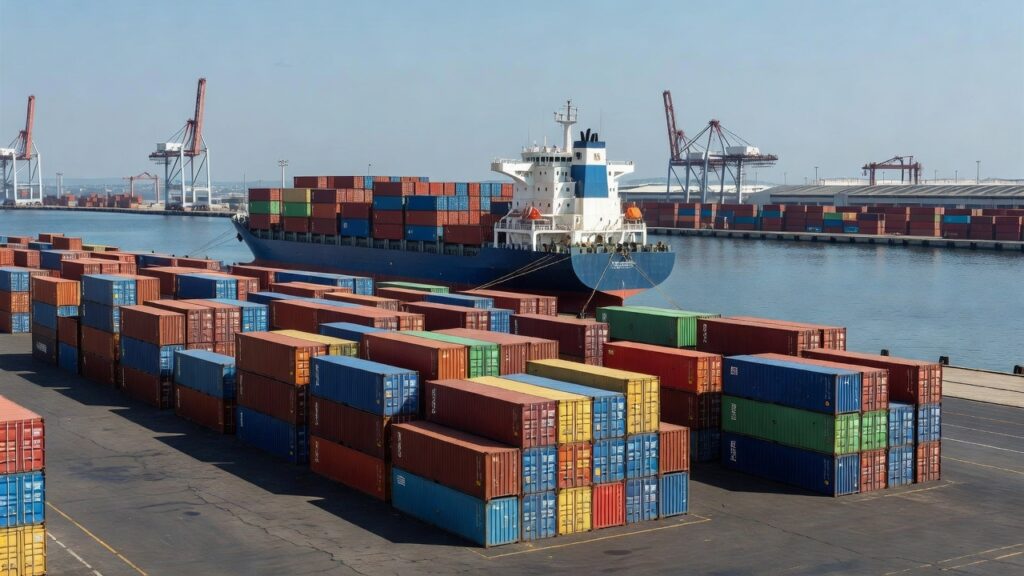
The General Administration of Customs introduced the requirement for importers to provide a written undertaking on company letterhead signed by an authorised representative and bearing the company seal as part of every customs declaration for chemical materials. This pledge commits the importer not to use sell or transfer the shipment until the General Environmental Authority finishes its examination and issues laboratory test results according to the circular. The General Administration of Customs stated that strict enforcement will apply and any breach will lead to legal measures with the circular taking effect on January 6 2025.
The structured three-step process begins with submission of complete documentation including the undertaking proceeds to temporary clearance that permits transfer to the importer’s controlled warehouse and ends with final release once compliance is verified the General Administration of Customs indicated in related instructions. This approach builds on earlier customs guidelines that seek to balance trade facilitation with regulatory checks on hazardous substances. The circular forms part of broader updates to customs procedures available on the authority’s official website.
Kuwait’s chemicals management regulations trace to Decree No. 5 of 2016 issued under Environmental Protection Law No. 42 of 2014 which the Environment Public Authority enacted FAOLEX documentation records. That decree established permit requirements for import production storage and transport of chemicals while aligning with the Rotterdam Stockholm and Basel international conventions. The 2025 customs circular adds a specific pre-clearance commitment that reinforces those existing controls.
Importers must attach the undertaking document to their electronic or paper customs declaration for chemical consignments arriving at any port the General Administration of Customs specified. The measure targets enhanced oversight of materials that could pose environmental or safety risks once released into the local market. Laboratory testing by the General Environmental Authority remains the decisive step before unrestricted distribution can occur.
Official customs instructions listed on customs.gov.kw outline parallel temporary clearance mechanisms for other regulated goods that similarly rely on pledges not to distribute pending final approval. The General Administration of Customs has pursued digital transformation and streamlined procedures in recent years to improve transparency and efficiency in trade transactions. Chemical imports fall under this framework to ensure conformity with both national law and international obligations.
The General Administration of Customs continues to publish updated circulars and instructions on its website to guide importers on documentation and compliance requirements for various categories of goods. These resources include details on electronic systems that support faster processing once all mandatory attachments such as the chemical undertaking are verified. Importers are advised to consult the full text of Circular No. 1/2025 directly through official channels before preparing shipments.