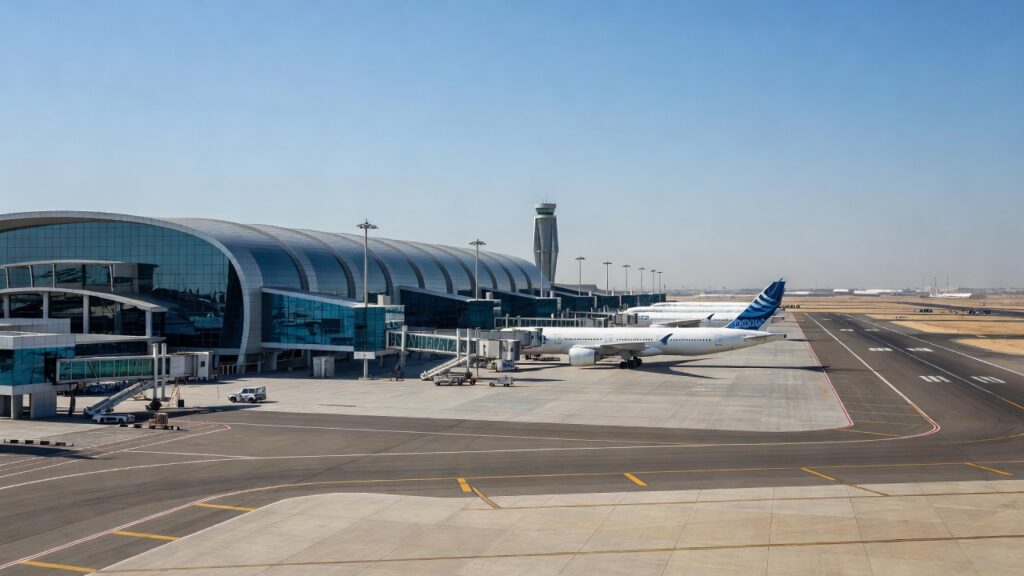
The General Administration of Customs reported that officers at Kuwait International Airport discovered 1,996 psychotropic pills concealed in the luggage of a passenger who arrived from Ethiopia. Routine screening procedures raised suspicions, leading to a detailed inspection that uncovered the substances. Officials prepared the necessary seizure documentation and referred both the individual and the confiscated material to the General Directorate for Drug and Alcohol Control for laboratory analysis and legal proceedings under applicable regulations. The authority did not disclose further details about the passenger’s identity or intended destination for the pills.
According to the General Administration of Customs, similar interceptions have occurred at the airport throughout 2026 with one operation in January resulting in the discovery of 3,458 narcotic tablets hidden in body powder containers carried by a passenger from Addis Ababa. That case involved a Beninese national employed as a domestic worker and followed the same referral process to drug control specialists. The repeated focus on arrivals from East Africa indicates targeted monitoring of specific flight routes. Officers rely on a combination of scanning equipment and manual searches to identify concealment methods.
Decree Law No. 159 of 2025 issued by the Kuwaiti government establishes strict controls on narcotics and psychotropic substances including penalties for unauthorized import. The legislation permits incoming patients to carry limited quantities of approved medications for up to one month when supported by authenticated medical prescriptions from overseas. Any excess amounts or undocumented substances must be confiscated and forwarded to the Ministry of Health for disposal after detailed reporting. The 1,996 pills seized this week exceeded permitted thresholds and lacked accompanying documentation.
The General Administration of Customs has coordinated with other agencies on multiple recent cases including an August seizure of 4,255 Captagon pills from a traveler arriving from Syria. In that instance inspectors at Terminal 5 used advanced equipment to locate the pills packed among personal belongings before completing the transfer to drug enforcement officials. These operations form part of systematic efforts to intercept controlled substances at all ports of entry. Testing of seized materials helps identify emerging trafficking patterns.
Public Authority for Civil Information figures place Kuwait’s expatriate population at roughly 3.3 million accounting for more than two-thirds of total residents and increasing the volume of international arrivals subject to customs screening. The authority applies uniform procedures across terminals to manage this traffic while maintaining focus on high-risk origins. Coordination with the General Directorate for Drug and Alcohol Control ensures that each case advances through investigation toward potential prosecution. Officials continue to process such referrals as standard procedure following discoveries like the one involving the Ethiopia flight.