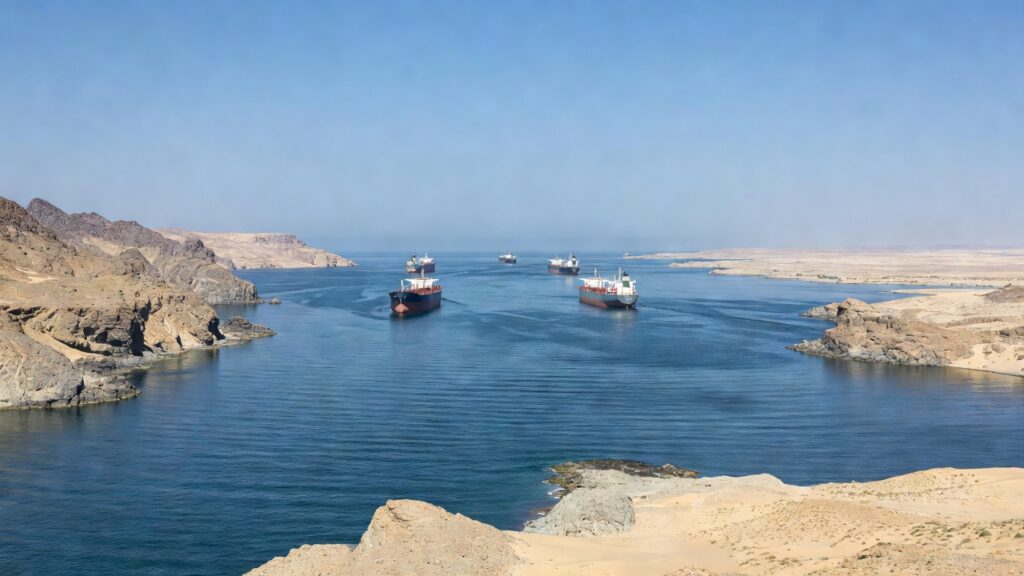
French President Emmanuel Macron has ordered the deployment of mine countermeasure vessels to the Strait of Hormuz to help secure maritime navigation in the strategic passage. Macron said France’s mine-clearing assets are prepared to work alongside allied partners to ensure the safe resumption of commercial navigation and protect maritime traffic through the strategic waterway. The operation involves minehunters, escort frigates and maritime patrol aircraft that can be activated as needed, a report published by Times Kuwait on July 4 detailed. Macron additionally announced the return of the aircraft carrier Charles de Gaulle to its home port after consultations with Omani authorities even as the specialized naval units stay on station in the region.
The deployment is set against the backdrop of the 2026 Strait of Hormuz crisis that has seen Iran block most shipping since February according to compiled timelines of the events. France and Britain have taken the lead in organizing a defensive multinational mission to reopen the waterway, Reuters reported in June. French Foreign Minister Jean-Noël Barrot was cited in that coverage stating the initiative had been readied among about a dozen militaries and would include minehunters, warships and air surveillance assets. The mission is described as strictly defensive and independent from the conflict parties.
U.S. Energy Information Administration figures show that oil flows through the Strait of Hormuz averaged 20.9 million barrels per day in the first half of 2025. This volume represented about 20 percent of global petroleum liquids consumption and more than one-quarter of all seaborne traded oil the agency assessment found. Between 2022 and the first half of 2025 volumes of crude oil and condensate declined by 1.5 million barrels per day even as petroleum product cargoes rose slightly. The data underscores the continued strategic value of the route for exporters including Saudi Arabia which accounted for 38 percent of the crude flows in 2024.
Times Kuwait reported that both France and the United Kingdom have voiced readiness to participate in a broader multinational maritime security mission if coordinated with Oman. Iran however has rejected the idea of additional Western military involvement in the area and has insisted that only regional states should oversee its security. The country has also cautioned against any foreign conducted demining operations the publication noted. This divergence in positions has added layers of complexity to diplomatic efforts aimed at normalizing transit through the gulf.
A Britannica overview of oil transit patterns placed the daily average at roughly 20.3 million barrels accounting for 25 percent of world maritime oil trade prior to the latest flare-up. Following the outbreak of hostilities in 2026 nearly all traffic was diverted or halted leading to worldwide oil price spikes and shortages in import-dependent areas of Asia the account stated. Alternative pipelines can divert only limited shares of the exports from Saudi Arabia and the United Arab Emirates making sea passage through Hormuz irreplaceable for the bulk of the volume. The challenges of land-based alternatives were highlighted as requiring vast numbers of trucks that render them impractical for the full export scale.
The French initiative follows months of heightened tensions that disrupted global shipping and energy markets according to the initial reporting. Over 30,000 vessels normally pass through the strait each year with the route serving as the sole maritime outlet for Persian Gulf oil producers a macroeconomic tracking service indicated. Such scale explains the swift international response to restore safe conditions and prevent further economic fallout from the ongoing standoff.