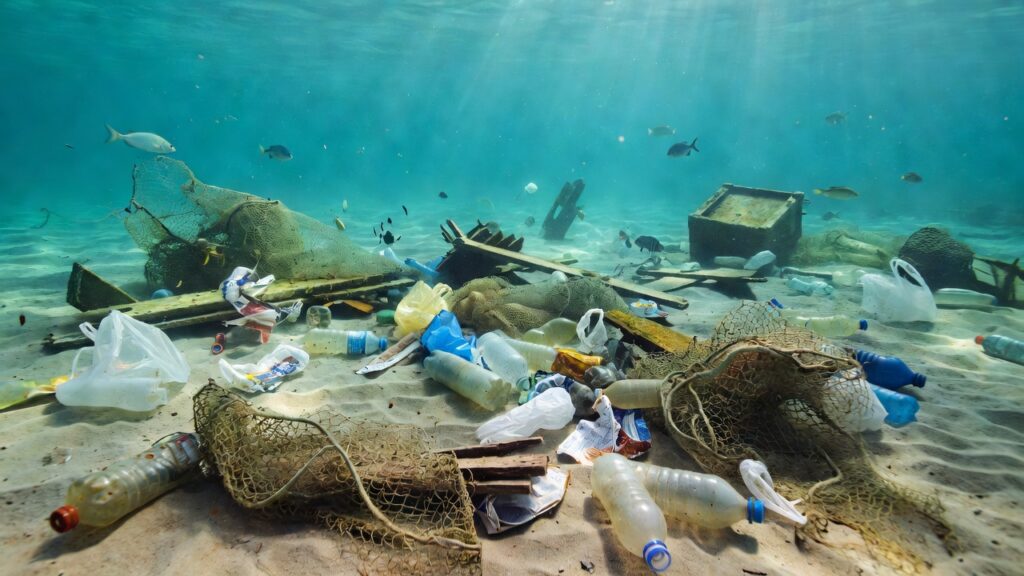
The Environmental Voluntary Foundation’s Kuwaiti diving team collected the waste alongside abandoned fishing nets and wooden debris in an area that serves as a key breeding ground for marine life. According to the foundation, its volunteers conduct such operations throughout the year to protect beaches and coastal habitats from accumulating debris. The team had previously cleared eight tons of waste from the Ashirj coast and one ton from the Jahra Nature Reserve shoreline in youth-led efforts. Foundation records also show nearly 90 tons of waste and damaged boats removed from the Fahaheel coast in earlier campaigns.
Mahmoud Ashkanani, environmental projects officer for the diving team, told Times Kuwait that plastic waste has become a direct and ongoing danger to biodiversity and environmental security, particularly in sensitive marine areas such as Kuwait Bay. Ashkanani noted that field observations pointed to floodwaters, sewage discharge and littering by beachgoers and fishermen as primary causes of the alarming pollution levels. A World Wildlife Fund assessment found that 70 percent of marine plastic originates from single-use items such as bottles and wrappers.
The foundation stressed that meaningful progress depends on accelerated implementation of environmental infrastructure projects, including deep sewer systems designed to stop pollutants from reaching the sea. Ashkanani called for stricter enforcement of existing environmental laws to address the root causes. Times Kuwait reported that the group framed these steps as essential to long-term protection of Kuwait’s marine resources.
Ashkanani warned that plastic waste poses serious risks to marine organisms, wildlife, ecosystems and human health alike. He urged individuals and institutions to cut consumption of single-use plastics while backing recycling programs. International Union for Conservation of Nature data places annual global plastic litter entering the environment at an estimated 20 million metric tons, a figure projected to rise substantially by 2040.
World Wildlife Fund figures show that 90 percent of seabirds have plastic in their stomachs, while more than half of sea turtles examined in various studies displayed similar contamination. Our World in Data estimates that between one and two million tonnes of plastic enter the oceans each year, representing about 0.5 percent of total plastic waste generated globally. The Kuwait campaign reflects wider regional concern over such pollution in the Arabian Gulf, where marine habitats face compounded pressures from coastal development and shipping activity.
The diving team’s latest effort removed the debris from a zone where pollution has visibly accumulated, reinforcing the foundation’s year-round monitoring program. Ashkanani’s remarks to Times Kuwait emphasized that collective reductions in plastic use could help safeguard Kuwait’s marine environment for future generations. Similar volunteer initiatives across the Gulf have documented comparable waste volumes in recent years, according to environmental group reports.