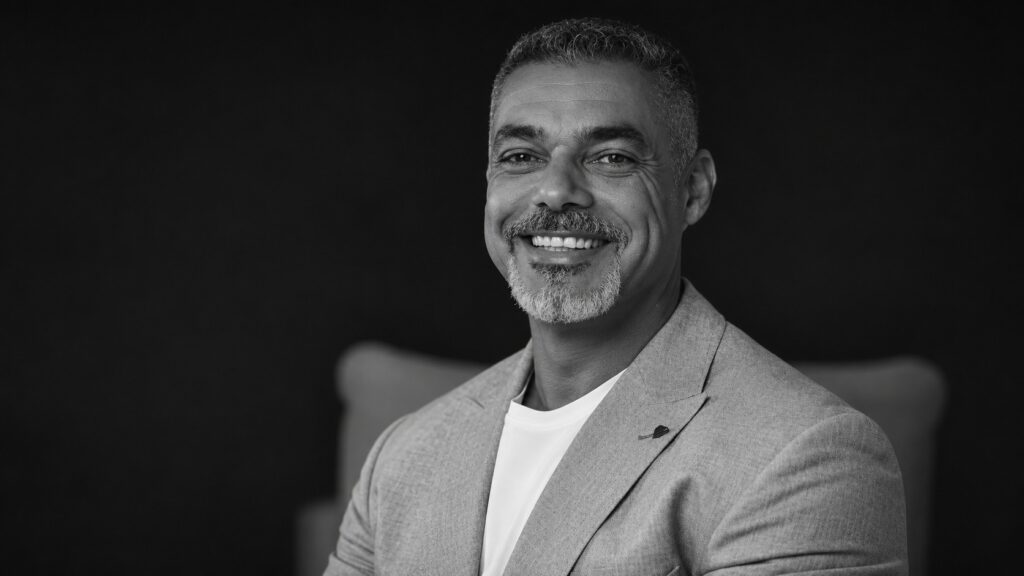
As more Kuwaitis enter private-sector employment, fitness offers a practical connection between personal interests and professional skills. Abdullah Alaskari’s work on trainer certification provides a starting point for examining that opportunity.
Kuwait’s discussion about private-sector careers has a place on the gym floor. Behind every organised training session is a professional role: someone planning exercises, explaining technique and helping participants build their abilities. For young Kuwaitis with an interest in sport, those responsibilities offer a way to think about fitness as a field of employment.
Abdullah Alaskari, whose career spans gym ownership in Kuwait and regional leadership at UFC Gym, has previously outlined a route into that profession. In 2022, he described a partnership with Kuwait’s Ministry of Youth built around trainer certification and support in finding work.
That idea has fresh relevance against a wider change in national employment. According to the International Monetary Fund’s 2025 consultation report, published in February 2026, Kuwaitis filled more new jobs in the private sector than in the public sector in 2024, the first time this had happened in a decade. Fitness provides a specific setting in which to explore what a skills-based private-sector career can look like.
A route from training to teaching
In his September 2022 interview with The Business Year, Alaskari described an eight-to-12-week certification programme intended to prepare young Kuwaitis for work as trainers. After certification, he said, UFC Gym would recruit participants or assist them in finding employment elsewhere in the sector.
The approach connected instruction with a potential workplace. It treated enthusiasm for exercise as the beginning of professional development, followed by qualification and help entering employment.
Alaskari also discussed supporting people interested in establishing gyms, placing coaching and business ownership within the same career conversation. His own background includes establishing Clubfit Gym Co. in 2009 and serving as managing partner of C Club Kuwait before taking a regional business-development role with UFC Gym in 2021.
The programme described in that interview is a historical example of an employment pathway. Its relevance today lies in the model it proposed: bringing a training provider, an employer and young people together around an identifiable occupation.
A changing employment landscape
The IMF’s findings give that model a broader economic context. Its report recorded overall employment growth of 3.4% in Kuwait in 2024, alongside the shift in where Kuwaitis were taking up new jobs. It also reported that approximately 80% of employed Kuwaitis worked for government.
Together, those figures describe both the established employment structure and an emerging flow towards private-sector work. The significance for vocational training is practical: individual industries give people identifiable roles through which to enter that wider economy.
Fitness is particularly tangible in this respect. A prospective coach can observe the work directly, understand the different disciplines offered and identify an area in which to develop expertise. Group instruction, personal training and youth coaching involve different teaching settings, while gym management introduces scheduling, staffing and business operations.
These are distinct forms of work within one sector. Discussing them separately makes the career proposition more precise, allowing the conversation to move from a general interest in sport towards the skills associated with a particular job.
The range of work inside a gym
The current programme at UFC Gym Kuwait in Assima Mall illustrates the variety of instruction delivered within one facility. Its website lists nine programmes, including mixed martial arts, Brazilian jiu-jitsu, Muay Thai, powerlifting and yoga, alongside women-only training and a youth programme.
That range brings several teaching environments together. Explaining a grappling technique, leading a strength session and delivering a children’s class each involve a different combination of subject knowledge, communication and session planning.
For someone considering fitness as a profession, this creates a useful distinction between enjoying training and choosing what to teach. A particular discipline can become the starting point for developing a professional specialism.
The breadth of everyday physical activity also matters. The World Health Organization recommends that adults undertake 150–300 minutes of moderate-intensity aerobic activity a week, or 75–150 minutes of vigorous activity, together with muscle-strengthening activities on at least two days.
These recommendations encompass a broad population and a range of abilities. They give coaching a purpose that extends across ordinary weekly routines, from learning strength exercises to participating in structured group activity. They also underline why instruction involves adapting an activity to the person taking part.
A profession within a wider economy
International research offers another measure of the economic setting. The Global Wellness Institute’s 2025 Global Wellness Economy Monitor valued the worldwide physical-activity economy at approximately $1.144 trillion in 2024.
That category includes a broad mix of participation-related services and supporting goods and technology. It is a global estimate, rather than a valuation of Kuwait’s gym market or a measure of trainers’ earnings. Its usefulness is in showing the scale of the commercial activity surrounding exercise.
Within that wider economy, coaching is one of the roles delivered directly between people. A class requires someone to organise and explain it; personal instruction requires time, professional knowledge and attention to an individual’s progress. Qualifications and practical experience give those responsibilities a professional foundation.
Alaskari’s regional work also connects his Kuwait experience with fitness operations elsewhere in the Gulf. UFC Gym UAE currently identifies him as its deputy CEO, placing him within a business that combines combat-sport instruction with strength and conditioning programmes.
For Kuwait, the career question remains grounded in the individual instructor. The pathway described in 2022 linked a defined period of study with certification and employment support. Set beside the more recent shift towards private-sector hiring, it provides a concrete example of how an interest developed through sport can become a subject for vocational education, professional practice and business ownership.