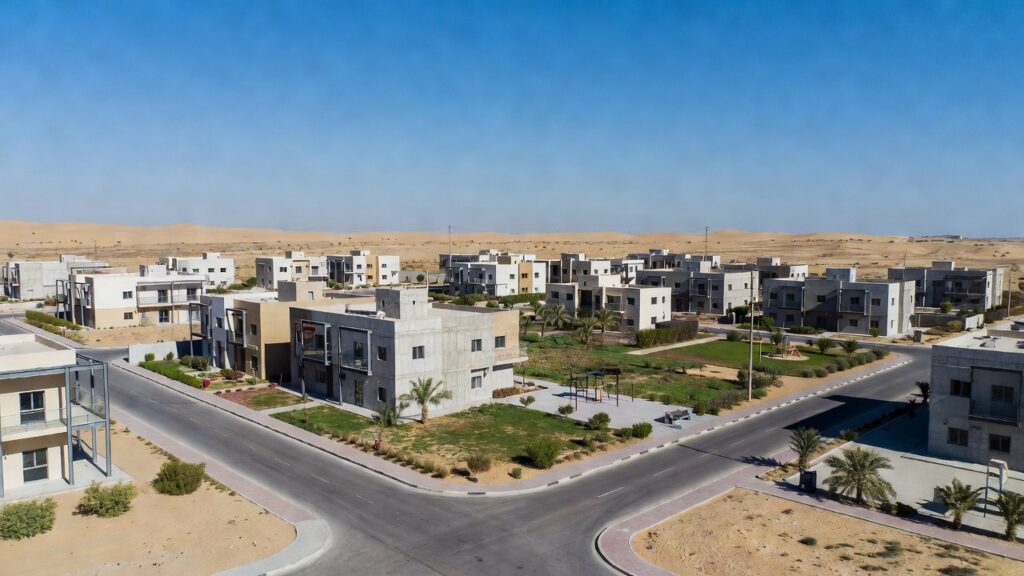
The Cabinet’s weekly meeting produced approval of the amendments that seek to balance allocations for housing with broader government needs and accelerate private sector contributions toward addressing longstanding residential shortages. According to the Kuwait News Agency, the changes explicitly enable the transfer of portions of land previously designated for the Public Authority for Housing Welfare to select state bodies when public interest justifies such moves. The agency added that the decree-law maintains the core objective of Law 27 of 1995 by opening state-owned vacant land to private development for housing projects.
Kuwait first enacted the Real Estate Developer Law in 2023 to draw private firms into constructing integrated residential cities that meet diverse family requirements beyond basic shelter. A KUNA assessment from November 2025 found that housing applications have climbed steadily since 1985, prompting authorities to shift from direct provision to a regulatory model that leverages private capital and expertise. Minister of State for Housing Affairs Abdulatif Al-Meshari told participants at a university lecture that the legislation reflects recognition that sustainable solutions depend on sound resource management and private participation rather than funding alone.
The Public Authority for Housing Welfare began rolling out the developer system in March 2025 by contracting consultants for three residential sites, a step the Kuwait News Agency described as foundational to sustainable housing expansion. Al-Meshari noted in the same presentation that an August 2025 amendment to the law introduced clearer qualification processes for developers and mandated full disclosure of project plans to buyers. Ahmad Al-Ansari, director of investment at the authority, stated that under the framework the state focuses on strategic oversight while developers assume responsibility for design, financing, construction, operation and sales.
Broader economic planning under Kuwait Vision 2035 has consistently highlighted private sector dynamism as essential for diversification and job creation, according to multiple KUNA dispatches issued throughout 2025. A August 2025 KUNA review of the development blueprint stressed legislative incentives to raise Kuwaiti employment in private firms alongside measures that reduce reliance on public sector hiring preferences. Officials have tied these efforts to parallel reforms including updates to company law, smart licensing initiatives and public-private partnership regulations that collectively aim to attract investment and ease bureaucratic hurdles.
Implementation of the amended developer provisions aligns with ongoing government attempts to reorganise idle state land and tighten controls on informal construction that has contributed to safety concerns in recent years. The Kuwait News Agency reported that related housing initiatives now incorporate requirements for technical compliance, environmental standards and community amenities in new developments. Authorities continue to evaluate mortgage law revisions that would complement these land-use changes by improving financing access for citizens seeking homes in privately developed communities.
Separate Cabinet actions in recent months have targeted infrastructure bottlenecks that affect housing delivery, including accelerated road maintenance and wastewater treatment projects that support new residential zones. A KUNA summary from October 2026 indicated that timely execution of such supporting works remains a priority to prevent delays in overall development timelines. These coordinated steps underscore the government’s strategy of integrating private sector capabilities across the housing value chain while preserving regulatory authority over strategic land resources.