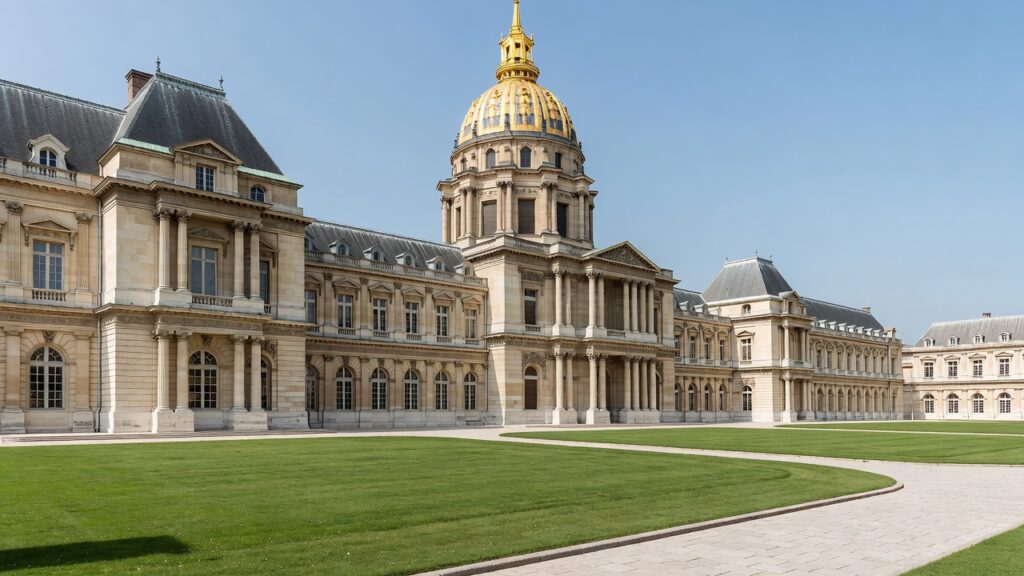
The gathering at Les Invalides was co-chaired by Jordan’s King Abdullah, French President Emmanuel Macron and Lebanese President Joseph Aoun with discussions centred on operational challenges facing Lebanese security institutions and mechanisms for international assistance ahead of a donor conference. A Jordanian Royal Court statement noted that the session examined priorities for the Lebanese Armed Forces and Internal Security Forces while emphasising the need to keep all weapons under state control. Participants included senior military figures and experts from more than 15 countries and organisations ranging from the United States and United Kingdom to Saudi Arabia, the United Arab Emirates, Egypt and the European Union.
Kuwait was represented by Lieutenant General Khaled Al-Shuraiaan whose attendance formed part of the broader multilateral framework. The Kuwaiti commander’s involvement reflects ongoing Gulf engagement in initiatives aimed at regional stability. Al-Shuraiaan leads an institution that in February unveiled a national military strategy running through 2030 focused on enhancing readiness and inter-agency coordination according to earlier Kuwaiti military announcements.
The Aqaba Process itself dates to 2015 when King Abdullah launched the initiative to promote military cooperation and counterterrorism efforts across participating states. Subsequent rounds have built on that foundation by addressing specific capacity gaps in partner nations. A Reuters dispatch indicated that this session specifically targeted the security vacuum that may emerge as the United Nations Interim Force in Lebanon begins drawing down from January.
Lebanese officials outlined plans for wider army deployment across the south and other areas while requesting support including spare parts, anti-drone systems and aerial monitoring capabilities. Lebanese President Joseph Aoun told the assembled delegates that his country had chosen the path of state authority and sought sustained partnership to translate that choice into reality according to accounts from the Lebanese presidency. The meeting stopped short of making specific funding pledges but prepared the ground for a larger international conference expected in late 2026 or early 2027.
Diplomats involved described the Paris talks as a technical assessment of both military and financial requirements needed to equip Lebanese forces adequately. Coverage in The National highlighted the importance of ensuring the army can command respect as it assumes greater responsibilities in line with agreements intended to reduce tensions along the Israeli border. Additional participants from Italy, Spain, Germany, Turkey, Pakistan, Cyprus, Canada, Greece, the Netherlands and the United Nations contributed expertise drawn from their respective operational experiences.
The format allowed for detailed exchanges on logistical hurdles and training needs while reinforcing the principle that legitimate state institutions alone should hold monopoly over armed force. Jordanian officials reiterated their country’s commitment to Lebanese stability without specifying exact forms of bilateral aid. Such preparatory sessions have become a hallmark of the Aqaba Process enabling coordinated positions before larger funding gatherings take place.