Sheikh Fahad Yousef Saud Al-Sabah, Kuwait’s First Deputy Prime Minister and Minister of Interior, issued Ministerial Decree No. 895 of 2026 that amends provisions of Ministerial Decree No. 81 of 1976 governing traffic law regulations. The text, which appeared in Monday’s edition of the official gazette Kuwait Al-Youm, modifies Article 212-bis to let judges select alternative sanctions instead of jail time for qualifying violations. The General Directorate for the Execution of Judicial Rulings will supervise implementation, matching penalties to the nature of each offense and the convicted person’s background while coordinating across government bodies. The decree lists 43 distinct alternative penalties that emphasize public benefit and behavioral change.
Alternative sanctions include community service, mandatory attendance at awareness sessions, rehabilitation courses and direct compensation for damages caused by the violation, according to the decree. Convicted individuals may join traffic safety campaigns, vocational workshops or environmental projects that replace custodial terms with constructive obligations. Rehabilitation components feature educational lectures, training sessions and psychological programs intended to correct irresponsible driving habits. These options aim to integrate offenders back into society through supervised contributions.
The decree directs the Ministry of Interior to assign participants to traffic awareness initiatives, General Traffic Department duties and civil defense activities where appropriate. The Ministry of Health would involve them in appointment coordination and public health campaigns while the Ministry of Education would allocate tasks such as library organization, student awareness drives and facility cleaning. The Ministry of Social Affairs focuses on welfare support, aid distribution at development centers and cooperative society work, ensuring placements align with each entity’s operational needs.
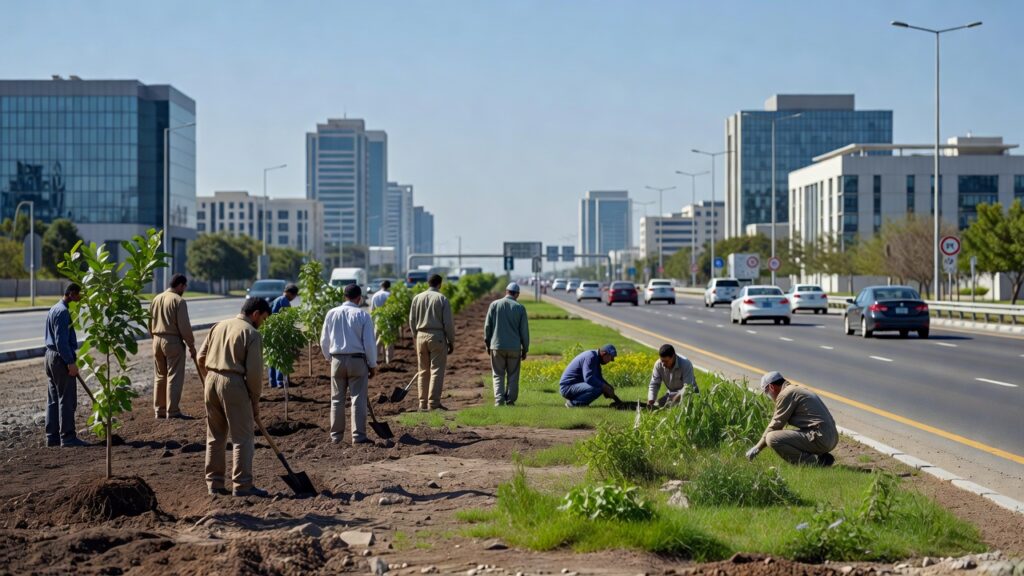
Further assignments cover the Ministry of Islamic Affairs for Quran organization, mosque maintenance and religious event assistance, the decree states. The Environment Public Authority would oversee coastal cleanups, tree planting, waste removal and related awareness efforts, and Kuwait Municipality would handle cemetery management, funeral affairs and general cleaning. Public authorities for applied education and training, manpower and agricultural affairs would provide vocational skill sessions, expatriate worker orientation, translation services, park maintenance and tree planting as part of their designated roles.
Coordination between the General Directorate for the Execution of Judicial Rulings and the General Traffic Department determines exact placements, with implementing entities required to submit compliance reports at regular intervals. When violations involve property damage, officials must consult the affected party on restoration, repairs or financial compensation, with values calculated jointly by traffic authorities and the owning entity. Noncompliance or breach of conditions triggers referral to the original court for completion of the prison sentence. The framework also encompasses charitable work, humanitarian aid and administrative support at public benefit associations as well as duties at Ministry of Oil fuel stations.
Ministry of Interior figures show that related legal reforms enacted in 2025 have already cut fatal road accidents by 55 percent, recording 10 deaths in May 2026 against 22 a year earlier. Red-light violations fell 63 percent and speeding cases dropped 65 percent in the 12 months after the stricter regulations took effect, the ministry data indicate. Automated camera detections for these offenses declined 83 percent within the first month of enforcement while seat-belt and mobile-phone violations decreased 75 percent. The latest decree builds on that progress by expanding non-custodial options that maintain accountability while reducing reliance on incarceration for traffic matters.