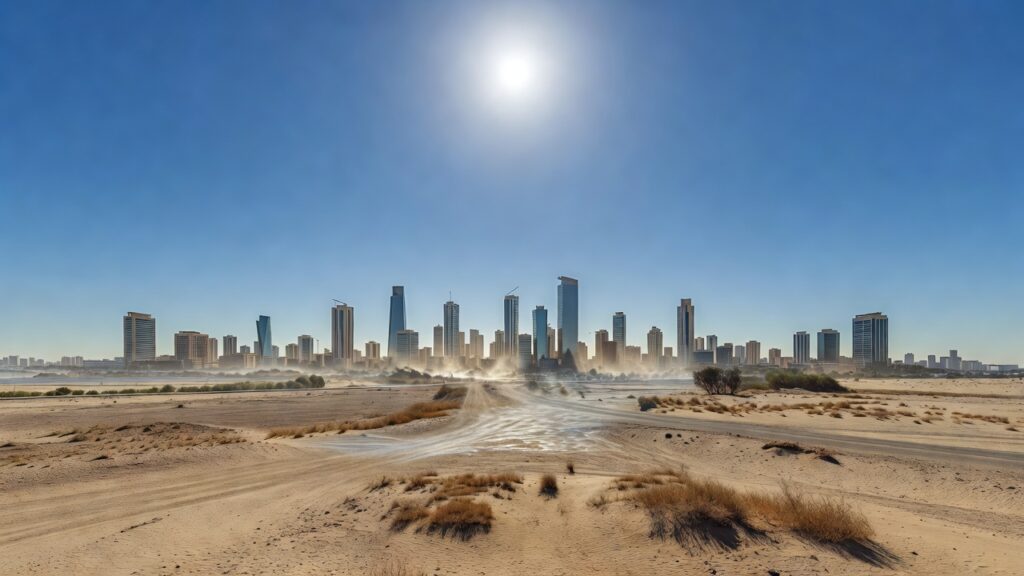
The Public Authority for Manpower conducted field inspections throughout the summer and cited 155 companies along with 415 workers for breaching the annual prohibition on outdoor labor during peak heat hours. According to the authority, the violations occurred despite repeated warnings and follow-up visits aimed at securing compliance before penalties took effect. The tally reflects enforcement of a regulation that has been in place for more than a decade to shield laborers from heat stress and related health risks in a climate where summer temperatures routinely surpass 45 degrees Celsius.
A ministerial resolution sets the ban each year from June 1 through Aug. 31, barring work in exposed areas between 11 a.m. and 4 p.m. The Public Authority for Manpower noted that employers receive an initial notice and a short grace period to reorganize shifts, with repeat offenders referred for legal measures that can include fines or suspension of their files. Data from earlier seasons, including a 2025 inspection round that recorded 33 workers in breach during one month, show the authority maintains consistent monitoring across construction, maintenance and other open-air sectors.
The authority has designated a hotline, 24936192, for the public to report suspected violations, underscoring the role of community cooperation in sustaining enforcement. In a statement marking the end of the 2026 ban period, the Public Authority for Manpower reminded employers that they remain responsible for providing shaded rest areas, cold drinking water and first-aid resources even outside restricted hours. Officials added that the rule forms part of eight prohibited working conditions that also cover sandstorms, heavy rainfall and other environmental hazards.
A review by law firm Clyde & Co of midday-work restrictions across the Gulf placed Kuwait’s five-hour daily window among the more extensive in the region, aligning it with international occupational-safety benchmarks. The assessment noted that penalties under Law No. 6 of 2010, which range from 100 to 200 dinars per affected worker, aim to deter non-compliance while allowing essential operations with prior approval from labor inspectors. Similar frameworks in neighboring states vary in exact timing and exemptions but share the objective of reducing heat-related occupational injuries.
The Public Authority for Manpower indicated that most cited companies corrected their practices after initial warnings, though a smaller subset required further action. Human Rights Watch reporting from the previous year pointed to studies showing elevated injury risks during extreme heat, even with bans in force, and called for continued strengthening of protections for the large expatriate workforce employed in outdoor trades. The authority’s latest campaign reflects that ongoing focus on aligning enforcement with both local legislation and broader labor standards.
Following the ban’s expiration on Aug. 31, the Public Authority for Manpower stated it would sustain random inspections to ensure workplaces meet general health and safety requirements year-round. Companies found non-compliant in future checks face the same graduated penalties, beginning with corrective notices and escalating where necessary. The approach, the authority added, supports safer conditions across sectors that rely heavily on manual labor while maintaining operational continuity for critical infrastructure projects.